
 German (DE)
  English (US)
  Spanish (ES)
  French (FR)
  Hindi (IN)
  Italian (IT)
  Russian (RU)
  22 hours ago
The Trump administration has so radically transformed the Department of Homeland Security (DHS) independent watchdog teams that thousands of cases related to conditions in immigration detention, deaths in custody and officers’ use of force are not being investigated, according to court records reviewed by the Guardian.
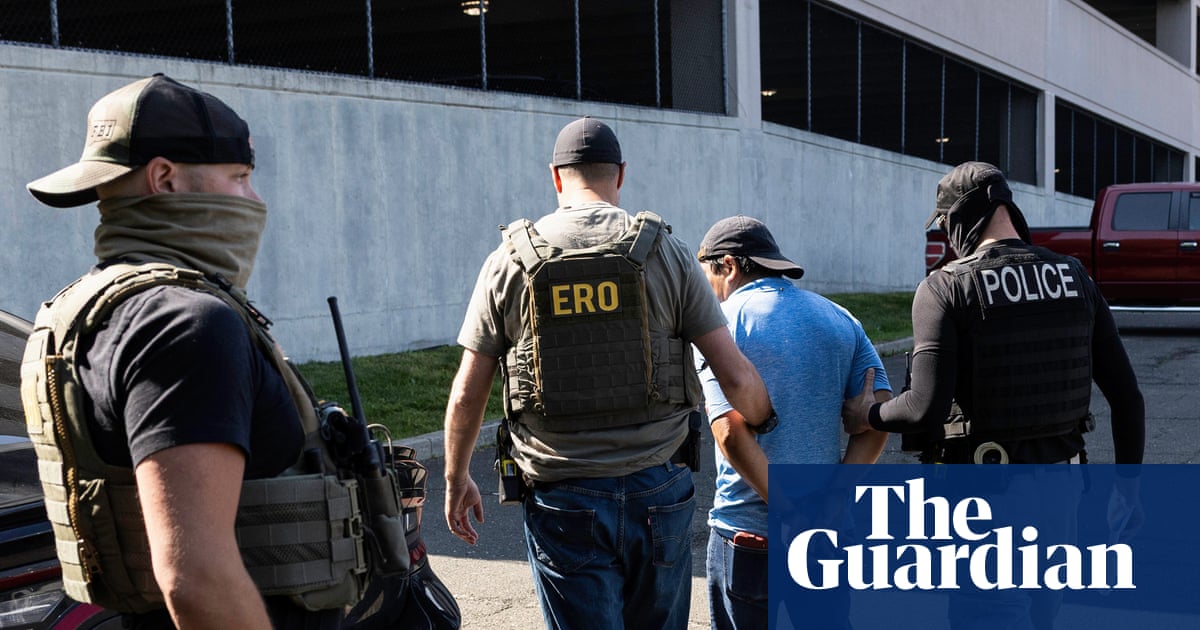
Hundreds of pages of court filings in a key legal battle in federal court serve to contradict the Trump administration’s repeated claims that the DHS watchdogs are performing “all required functions”. The allegations of failings within the shrunken oversight offices at the DHS, tasked by Congress with investigating civil rights and related concerns, come as the department grapples with public criticism of killings by immigration agents, escalating arrest tactics and plans to increase immigrant detention.
The latest documents in the case were submitted in February this year as part of a lawsuit in federal court in Washington DC brought last year by the Robert and Ethel Kennedy Human Rights Center and immigration advocate organizations the Southern Border Communities Coalition and the Urban Justice Center, against the DHS and the newly ousted homeland security secretary, Krisi Noem. The action came after the DHS dismantled the independent watchdog teams last March.
At the time, the DHS said the offices “obstructed immigration enforcement” and were being closed. After the lawsuit was filed last April, the department backtracked and allocated a very small number of people to run them, court filings from last August and last month show.
The plaintiffs accuse the DHS and Noem of having exceeded their powers “to eliminate” the watchdog offices and say such actions “violate the constitutional separation of powers” and are illegally “arbitrary and capricious”.
Now filings reviewed by the Guardian give the first glimpse inside the Trump administration’s transformation of three watchdogs and the fallout that followed.
The records show that:
-
From late March to 12 December 2025, the civil rights watchdog office within the DHS received nearly 6,000 complaints, including many from detained immigrants, their families and advocacy groups, ranging from complaints about detention conditions to agents’ use of force. Trump officials disclosed that office investigated a total of 554 complaints, but said it only “directly” investigated 183 of them, or 3%, according to a legal memo filed by the defense in the civil suit on 13 February this year. This compares with a 20% investigation rate by the DHS office of civil rights and civil liberties (CRCL) in years past, according to a February filing. The administration did not elaborate on the difference between a “direct” investigation by the CRCL versus an investigation in which a complaint is referred to another office or agency within the DHS, when asked by the Guardian for clarification and comment.
-
There are now fewer than 40 people working at the DHS CRCL , including between 25 and 30 outside contractors, according to an early February declaration by a DHS official. Watchdog office staff numbers have fluctuated over the years, but just before Donald Trump returned to the White House last January there were 147 full-time employees at the CRCL. They were all ousted by the new administration.
-
One of the other watchdog offices, the office of the immigration detention ombudsman (OIDO), which reviews immediate detention-related problems, currently only employs five people, down from 118 at the start of 2025, according to a declaration filed on 6 February of this year by Ronald Sartini. Sartini is the ombudsman at Citizenship and Immigration Services (CIS), acting deputy officer for the CRCL and the acting deputy ombudsman at the OIDO, the three watchdog offices within the DHS.
-
All the new officials at the offices began working in August 2025, meaning there was little to no independent oversight within the DHS from late March, when the offices were gutted, to August, a court record filed in the case on 17 January of this year showed.
-
The CRCL reviewed “about 10” reports of people who died in immigration jails in 2025 but decided to investigate only one death, according to two separate filings by the DHS – one marked “defendants’ counter-statement of disputed facts” and a separate memorandum, both filed on 6 February this year. A total of 32 people died in immigration custody in 2025, the agency’s deadliest year in more than two decades, with the toll continuing to rise.
-
The Trump administration radically limited the methods people can use to submit civil rights complaints, including, for example, that complaints to the watchdog teams are now only accepted in English.
-
A top DHS official in charge of the detention oversight office had not heard of the office before he became its acting ombudsman. He also had never seen the 15-year-old manual that outlines the standards used to manage conditions in immigration detention centers, according to a transcript of a deposition given on 3 December by the official, Joseph Guy, deputy chief of staff to Noem and acting ombudsman for the OIDO.
-
An immigrant rights group submitted a formal complaint last year about immigration agents’ alleged use of force in San Diego that injured a pregnant woman and at least two children among those protesting a raid on a business in California by Immigration and Customs Enforcement (ICE). According to a filing from 6 February this year by the plaintiffs in the case, the group said it had not received an acknowledgment by the civil rights office that it had received and was reviewing the complaint.
In the court records of the ongoing lawsuit, the Trump administration has repeatedly argued that the DHS civil rights-related offices are functioning appropriately, despite data they themselves submitted suggesting otherwise. The administration also claims the reduced number of staff members is sufficient to investigate civil rights complaints.
Sartini, the DHS official overseeing the watchdog offices’ transformation, said in his court declaration: “I am confident that the current staffing level is appropriate for CRCL to protect our homeland while preserving individual liberties, fairness and equality under the law,” adding: “The offices are actively working to perform their statutory functions with the above-referenced staff.”
Last March, when hundreds of watchdog officials were ousted from the department, the Trump administration called them “internal adversaries”. An internal DHS memo showed the agency requested that the watchdog offices be “eliminated”, but a recent filing argues the offices were never being shut down, only restructured for efficiency.
In stories published by the Guardian, former watchdogs and experts expressed alarm that gutting independent internal oversight, paired with its escalation of immigration enforcement, paves the way for grave abuses.
“The gutting of watchdog offices is incredibly dangerous,” said Eric Welsh, an immigration specialist and partner at Reeves Immigration Law Group. Welsh previously worked as an attorney at the Department of Justice, providing legal advice to a California immigration court. “When the executive removes themselves from oversight, there is an extremely large risk of misbehavior.”
Welsh added that the DHS “is an agency that has demonstrated a willingness to exceed the boundaries of law – almost gleefully, almost gladly, willing to flout the law. By removing those guardrails, there is a real danger that this could be an incredibly corrupt government that is capable of doing anything it wants to.”
The DHS was sent a detailed list of questions and requests for comment.
In response, an unnamed spokesperson at the department sent the following statement: “DHS remains committed to civil rights protections and is streamlining oversight. In the past, these offices had obstructed immigration enforcement by adding bureaucratic hurdles and undermining DHS’s mission by going beyond their statutory missions. Rather than supporting law enforcement efforts, they often functioned as internal adversaries as opposed to neutral oversight bodies.”
The watchdogs include the CRCL, which investigates civil rights concerns; the OIDO, which investigates conditions inside immigration jails; and the office of the ombudsman of CIS, which resolves problems within the naturalization and immigration system.
For years, immigration advocates had already complained that those offices’ work was inadequate when investigating rights abuses in immigration enforcement. Now the work is further limited, submissions in the lawsuit show.
The watchdog offices “weren’t perfect, they never were perfect”, said Anthony Enriquez, vice-president of US advocacy and litigation at the Robert and Ethel Kennedy Human Rights Center. “But they had value and they were doing something to constrain unlawful abuses of civil rights and civil liberties.”
The newest court records from this February, Enriquez said, confirmed what he already believed: that the watchdogs “were not being reorganized but shut down and disassembled because they stood in the way of immigration enforcement”.
The nearly 6,000 civil rights complaints received by the CRCL in less than nine months is almost double the number submitted under previous administrations, according to testimony provided by Sartini, who did not specify which administrations.
Enriquez, however, is doubtful of the quality of even the small number of investigations the CRCL says it has completed, arguing that the administration’s claims are a “litigation strategy” and “a ploy”.
“There comes a time where enough is enough, where you look at the evidence before you and the only reasonable conclusion is: they’re not complying with the laws that mandate that these organizations actually protect civil rights and civil liberties,” Enriquez said.
In the case of the protesters in California last summer, the court document relating to that element of the case said that the Southern Border Communities Coalition, an immigrant rights organization based in San Diego, filed a civil rights complaint with the watchdogs in June of last year regarding an alleged “excessive use of force” by ICE and Homeland Security Investigations (HSI) federal personnel there. According to the document, officials deployed flash-bang grenades against a small group of what the plaintiffs called “peaceful protesters”, injuring a pregnant woman and knocking down at least two children in the process. According to a filing from 6 February this year, the group said they never even received an acknowledgment by the civil rights office that it had received and was reviewing the complaint.
Meanwhile, the 6 February court records reveal that as of that time the CRCL was investigating only one of the deaths in custody in 2025, one of the deadliest years in US immigration detention history, without specifying which one.
Additionally, in an early December deposition by Sartini, he admitted the CRCL “had not been consulted about policies for care of pregnant or transgender detainees”, even as federal judges are increasingly sounding the alarm about the treatment of pregnant detainees in ICE detention.
The records also show that the mechanisms for people to submit complaints have dramatically changed. Historically, people could submit civil rights complaints through an online portal, via email or by calling a telephone hotline. Now all must go through the online portal, despite limited internet access inside ICE detention centers. Officials are also now only accepting complaints in English, with DHS officials saying that non-English speakers can use “a number of free online tools” to translate their complaints. Previously, 10 languages were accommodated through the online portal.
For years, staff at ICE detention centers have been instructed to follow certain standards for safety, health, security, general care and management, among others, which have been outlined in the ICE’s “performance-based national detention standards” (PBNDS). Attorneys and DHS watchdogs, including the OIDO, have relied on the manual for years to highlight problematic conditions inside ICE detention.
During the December deposition hearing, Joseph Guy, the OIDO director appointed by Trump last year, revealed how limited his knowledge was about the required standards for ICE detention centers, where record numbers of people rounded up in the anti-immigration crackdown are being held, the largest group having no criminal history.
An attorney during the deposition gave Guy a copy of the PBNDS manual. “Have you seen this document before?” the attorney asked.
“I have not,” Guy responded.
“OK. So I will represent to you that this is a complete copy of the 2011 performance-based national detention standards. Are you familiar with the PBNDS?” the attorney asked.
“I am not,” Guy replied, instead saying his “dedicated and knowledgable staff” working under him knew what the exact detention standards were and how they applied. When asked who those were, he cited only Sartini.
Guy also told the court, according to the transcript, that he was working “roughly 50” hours a week as Noem’s deputy chief of staff and “roughly five” hours a week as acting immigration detention ombudsman.











Comments