
 German (DE)
  English (US)
  Spanish (ES)
  French (FR)
  Hindi (IN)
  Italian (IT)
  Russian (RU)
  2 hours ago
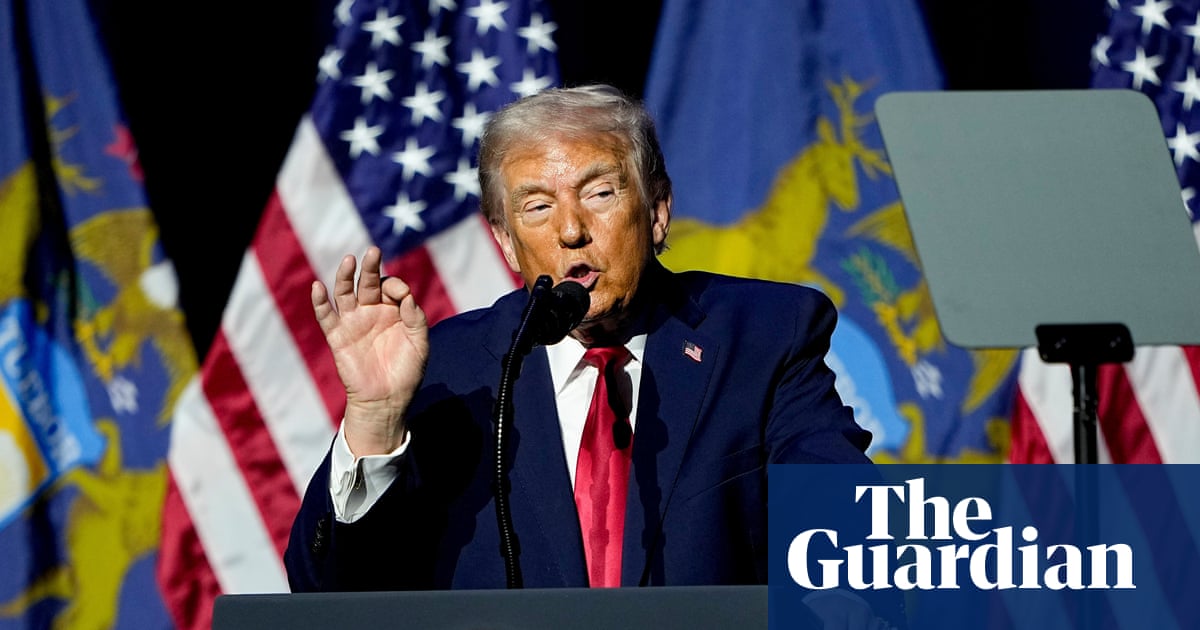
There are a few reasons that Donald Trump – now self-anointed acting President of Venezuela, as well as the United States – might be so excited about appropriating Venezuela’s oil.
Trump may be counting on some boost from cheap oil to the US economy: he is obsessed with the price of gas. As the midterm elections approach, he has become concerned about unemployment. Deeply imprinted memories of scarcity during the oil crises of the 1970s may prime his belief that cheap oil cures it all.
The US president may also consider Venezuelan oil as an easy source of cash, either for the US government – to add to the tariff bonanza that he implausibly claims is being paid by foreigners – or for his own personal stash, which he may want to diversify away from crypto.
My guess is he’s dreaming: dreams built from Upton Sinclair tales of wildcatters striking it rich at the turn of the 20th century, mixed in with ingrained images from the Beverly Hillbillies, which debuted on CBS when Trump was 16, and visions of gold-plated palaces, so common in the oil fiefdoms of the Middle East. A child’s lust for buried treasure.
None of this makes any sense.
The world is awash in oil, much of it fracked from shale in the US. Prices are at their lowest since 2021, when the global economy was recovering from the Covid pandemic. The US took out the president of Venezuela, sitting atop the world’s largest oil reserves. Street protests raged across Iran, another large producer. The price of oil barely blipped.
The price of oil is so low, in fact, that pulling more of the sticky, heavy Venezuelan crude out of the ground in the Orinoco belt has become uneconomical. According to Wood MacKenzie, Brent crude would have to cost at least $80 a barrel to justify greenfield investment in Venezuelan wells. The last time it hit that number was a year ago. Over the last month it has hovered between $58.7 and $62.3.
For all its vaunted oil reserves, without further major investment to restore its decrepit infrastructure, Venezuela can’t produce much oil. Last year it produced 880,000 barrels a day, 1% of world oil production. That amounts to only 4.3% of what the US pumped that year.
Even if there was oil for Trump to snatch, getting hold of it will be no walk in the park. As notes Emily Meierding, of the Institute for Regional and International Security at the Naval Postgraduate Shool in California, “crude oil is not a quickly or easily lootable resource.”
What oil company would invest billions in Venezuela based on a contract with Trump or the puppet regime put together in Caracas from the pieces left behind by president Nicolás Maduro? Chances are the contract would be abrogated once a new government took over. That’s if the facilities weren’t bombed first.
This is probably why George W Bush didn’t seize Iraq’s oil resources for good during the US occupation of Iraq, but returned the oil infrastructure to the Iraqi government. It’s probably related to why ExxonMobil CEO Darren Woods told Trump that Venezuela was, at the moment, “uninvestable”.
The economic case for Venezuelan oil is even weaker, as the US economy has become gradually and consistently less dependent on it.
Some economists posit that oil shocks have imposed, at worst, only a modest drag on the economy. They argue that even the poor economy, from the mid-1970s through the early 1980s, had little to do with the sharp increase in oil prices. In any event, the economy has become much less reliant on oil since then.
The US produces about three times as much GDP per unit of energy consumed than it did at the turn of the century, as the energy efficiency of industry has increased and, critically, industry’s share of the economy has shrunk as services have grown dramatically in importance. Oil, moreover, plays a smaller role in the US’s energy mix, accounting for 38% of energy use, down from 40% in the year 2000 and 50% in the mid 1970s.
Gains in energy efficiency, alongside the increase in domestic oil production, have driven a two-decade decline in the country’s reliance on foreign oil.
The US has a long history of meddling in other countries’ business to secure access to oil. In 1953, American intelligence services had their hands all over the ouster of prime minister Mohammad Mossadegh, who had nationalized Iran’s oil reserves, to install Shah Reza Pahlavi in power.
In 1957, then president Dwight D Eisenhower asked Congress to offer economic and military support to any effort to prevent the Middle East from aligning on the Soviet side of the cold war. As oil prices soared during the war between Iran and Iraq, the Reagan administration pushed a national security directive to increase the US military presence in the Persian Gulf – facilities that came in handy when George HW Bush ejected Iraqi forces from Kuwait in 1990.
Multinational oil companies have been swift to close in on oil assets on the heels of regime change. Western oil concerns piled into Russia after the demise of the Soviet Union. They rushed to bid on Iraq’s oil assets during auctions in 2008 and 2009.
Venezuela may seem to offer a similar opportunity. And yet, Iraq may prove to be a relevant precedent. By now Western oil firms have largely left – pushed away by production disruptions amid political turmoil, as well as payment arrears from the cash-strapped government.
While Trump is sure there is treasure to be snatched under the Venezuelan soil, it’s probably safer, easier and cheaper for US companies to procure whatever oil the US economy needs at home.














Comments