
 German (DE)
  English (US)
  Spanish (ES)
  French (FR)
  Hindi (IN)
  Italian (IT)
  Russian (RU)
  2 hours ago
A bipartisan group of lawmakers is calling on Donald Trump to allow the US government to help open up internet access in Iran, which the country’s Islamic regime has blocked in an effort to suppress an eruption of unrest.
With deaths soaring into thousands after days of protests across Iran, Democrats and Republicans from the House of Representatives have written to Trump asking him to authorize the state department to collaborate with the Open Technology Fund, a congressionally funded non-profit dedicated to supporting technologies designed to overcome censorship.
The move would effectively implement legislation – known as the “feasibility review of emerging equipment for digital open media” (Freedom) act – that was introduced in Congress last month to address Iran’s internet-censoring practices but which has not yet been passed.
Members of Congress say the dire urgency of the situation in Iran calls for emergency measures to circumvent the legislative process.
They write: “The scale and intensity of these demonstrations, coupled with the regime’s use of force to violently quell peaceful protests and isolate the Iranian people from the outside world, warrant immediate attention.
“While Congress works to advance legislation like this through regular order, we are confident that the executive branch has the ability – and responsibility – to immediately begin interagency coordination, resume and leverage the Department of State’s collaboration with the Open Technology Fund, harness existing technologies like virtual private networks (VPNs), and fully assess emerging technologies such as direct-to-cell networks.
“Your strong support for measures like these are critical to helping the Iranian people bypass regime-controlled terrestrial communications infrastructure and providing them with a lifeline to the outside world at a time when the regime is cutting off access to traditional communication channels.”
The Freedom act was initially introduced last month by two House members, Dave Min, a California Democrat, and Claudia Tenney, a Republican from New York, and two senators, the Pennsylvania Republican Dave McCormick, and Jacky Rosen, a Democrat from Nevada.
It received the support of the National Union for Democracy in Iran, which said the regime was regularly using internet blackouts to silence dissent.
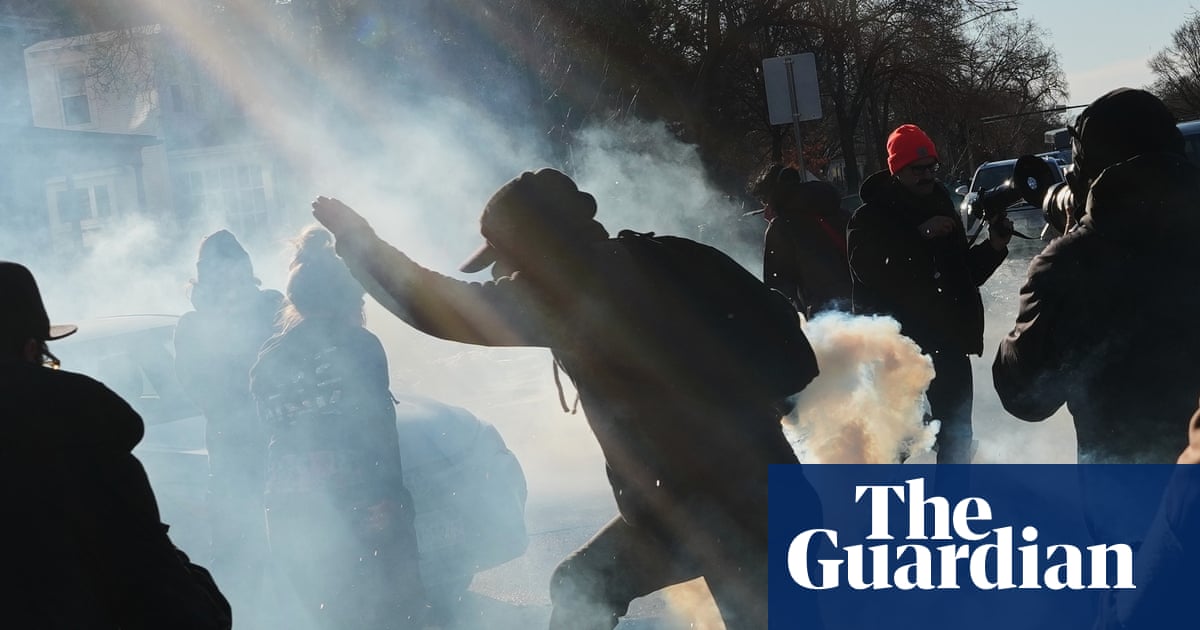
But calls for the legislation’s provisions have been given fresh impetus by a crackdown that has closed off communications networks at a time when demonstrators have been clashing with heavily armed security forces in towns and cities throughout Iran.
Min and Tenney head a bipartisan group of 17 Congress members who have signed the letter to Trump – which has also been sent to Marco Rubio, the US secretary of state.
Human rights groups say about 2,500 people have been killed in confrontations that began on 28 December. Unconfirmed reports from inside Iran have estimated the death toll at 12,000.
Trump has vowed that “help is on its way” to Iranian protesters but has not been specific. He has also promised to take “very strong action” against the regime if it executes protesters. The authorities have responded to previous outbreaks of unrest by resorting to waves of executions.
Groups including Human Rights Watch and Amnesty International estimate that between 1,000 and 1,500 executions were carried out during 2025 – the highest figure in decades – with a surge coming after last June’s 12-day war with Israel and the bombing of three nuclear installations on Trump’s orders by the US.
















Comments