
 German (DE)
  English (US)
  Spanish (ES)
  French (FR)
  Hindi (IN)
  Italian (IT)
  Russian (RU)
  2 hours ago
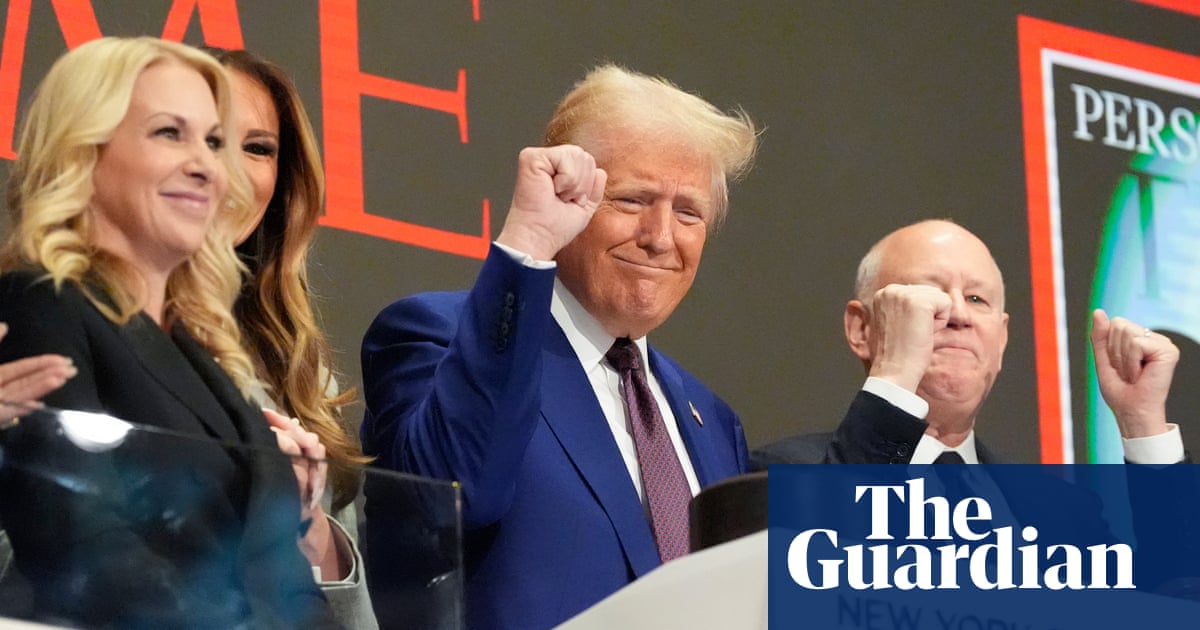
Donald Trump’s latest tariff threat, in pursuit of his goal of seizing Greenland, is a political nightmare for European leaders, but it could create a severe economic headache, too.
As the International Monetary Fund (IMF) has repeatedly pointed out since Trump’s trade war began in earnest last year, whatever the ultimate level of tariffs, uncertainty takes its own toll.
And as IMF managing director Kristalina Georgieva put it in October, in the Trump era, “uncertainty is the new normal”.
Businesses tend to hold back from new investment when they are unsure what the policy landscape will eventually look like – as the UK learned to its cost during several years of Brexit wrangling after the 2016 referendum.
And this latest threat comes just as businesses in the UK and the EU believed they could plan with certainty, after much-vaunted trade deals with the US were struck and signed with ceremony last summer.
If Trump goes ahead with 10% tariffs in February – rising to a punitive 25% on 1 June – it will throw sand in the wheels of the economy at a fraught moment, with France deep in a budgetary crisis, and Germany hoping for an economic upturn after stagnating in 2025.
For UK chancellor Rachel Reeves, the timing could not be worse, just as she had cause to hope for a modest upturn after a difficult 12 months.
Yet, ironically, one of the most significant risks of Trump’s latest tantrum lies at home, with the threat of resurgent prices.
The tariffs already imposed over the last year are the highest since the second world war – though lower than Trump initially threatened. So far, inflation has barely budged, though the soaring cost of important food imports, from coffee to avocados, prompted Trump to reduce tariffs on them in November.
Some analysts have been warning for a while of a further leg-up in prices, as pre-tariff stocks of imported parts and products are run down, and US companies have less margin to absorb additional costs.
Higher inflation would put the brakes on further cuts in interest rates from the Federal Reserve – defeating one of Trump’s central economic goals, for which he has harried and cajoled Fed chair Jerome Powell for months.
Finally, there is the risk that this latest outrageous move by Trump, severing economic policy decisively from any logic whatsoever, is the thing that rocks US financial markets.
Bond and stock markets responded dramatically to last year’s threat of across-the-board “reciprocal” tariffs, prompting Trump to row back significantly on the policy – and causing the FT to coin the phrase “Taco”, which stands for “Trump Always Chickens Out”.
Since then, investors – particularly in stock markets – seem to have been largely unmoved by Trump’s on-off economic decisions – up to and including the launching of legal action against Powell, which prompted an extraordinary expression of solidarity from the world’s central bankers.
There have been some signs of a “flight to safety,” including an epic run-up in gold and silver prices, but the AI boom has continued to push stock indices to record highs.
Investors may well assume “Taco”, and brush this latest drama off, too. But if they do decide that using tariffs as a weapon against major economic allies will have costs – including, perhaps, higher interest rates – there could be turbulent times ahead. Or, as Georgieva succinctly put it back in October, “buckle up”.














Comments