
 German (DE)
  English (US)
  Spanish (ES)
  French (FR)
  Hindi (IN)
  Italian (IT)
  Russian (RU)
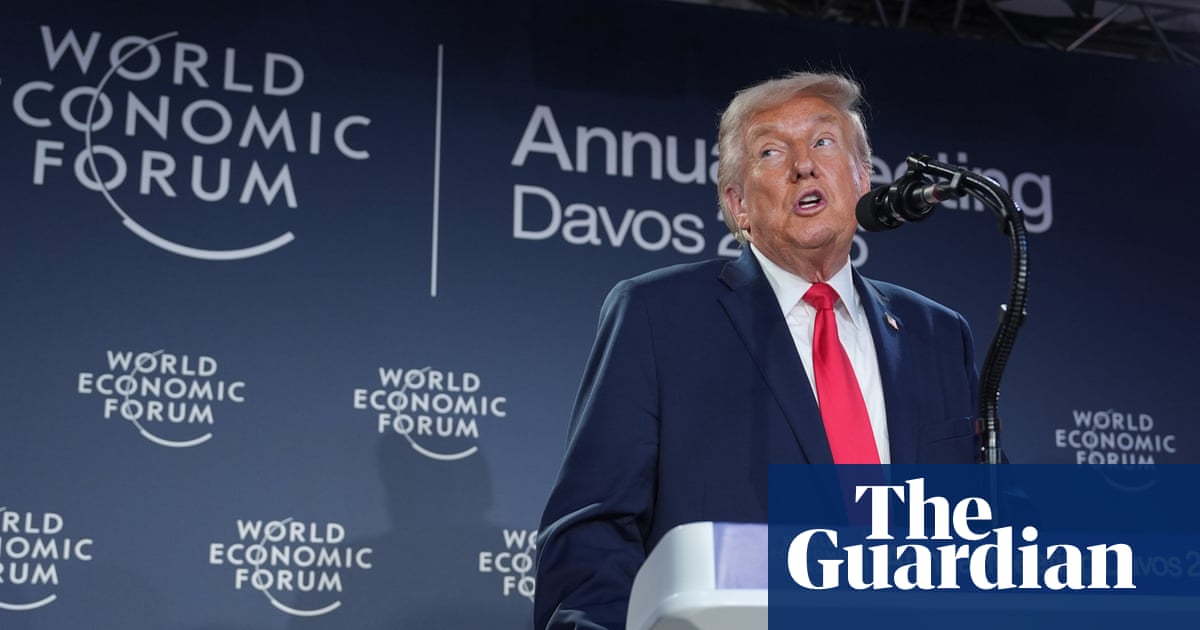
 President Donald Trump is returning to one of his most reliable political proving grounds: Iowa.
Only this time, the trip comes less as a victory lap than an attempt to reinvigorate voters in territory where Republicans are surprisingly playing defense.
The president’s Tuesday swing through the Des Moines suburbs, where he will visit a local business, give a speech on the economy and meet with lawmakers, is the latest example of the White House deploying Trump to energize the GOP in districts he carried. It reflects a bet that his physical presence, more than any specific policy message, will boost turnout among voters who showed up for him in 2024 but are less likely to vote in a midterm election where he’s not on the ballot.
Trump’s visit comes amid a moment of growing political strain for the White House as Trump faces flagging poll numbers, persistent voter frustrations about the economy and mounting backlash over his immigration agenda, which has only grown after the shooting death of a protester in Minneapolis over the weekend.
A White House official, granted anonymity to share details of the trip, said that Trump will discuss “how this administration has and continues to deliver economic prosperity for the American people, despite whatever contrived scandals the mainstream media and Democrats would rather focus on instead” during the Iowa visit.
“Inflation has cooled, economic growth is accelerating, and real wages are up for American workers,” the official said. “President Trump has always been most in his element when he’s interacting with everyday Americans.”
Still, that could be a challenge for a president who has repeatedly stepped on his own affordability push, including by insisting that it's a "hoax" created by Democrats. He’s also in the last month veered into headline-grabbing fights over a surprise military operation in Venezuela and created alarm over renewed threats to take over Greenland.
The stakes of losing what should be safe House districts for the Republican Party are high. The GOP majority in the House is particularly narrow, and losing that majority would complicate Trump's final two years in office, with Democrats likely to again pursue impeachment inquiries against him, use Congress’ subpoena power to conduct investigations and block many of his policies.
“Injecting a little energy there, focusing the message … it’s a net benefit to have the president in town in a year when we know there are going to be some headwinds, just based on political history,” said David Kochel, a longtime GOP strategist in Iowa. “He definitely has a bunch of superfans in Iowa and the one thing we know about this president is when he’s not on the ballot, sometimes people stay home, and you know that’s going to be the risk this year.”
It’s a path Trump followed late last year through Pennsylvania and North Carolina, traveling not just to familiar states but a specific type of district: ones Trump carried decisively but House Republicans won by narrower margins. In Iowa’s 3rd District, where Trump will be Tuesday, the president won by 4.5 percentage points, while Rep. Zach Nunn, whose seat Democrats have repeatedly targeted, carried it by 3.9 points.
Democrats are also eyeing two other Iowa districts Trump carried by even wider margins. Republican Rep. Mariannette Miller-Meeks held onto her seat in 2024 by just 798 votes, despite Trump winning the district by roughly 8 points, a mismatch that has made Iowa a quiet focus of early Democratic recruitment and Republican defensive planning.
Democrats are already preparing to weaponize Trump’s visit against Nunn, Miller-Meeks and other Republicans like Rep. Ashley Hinson, who is running to replace Joni Ernst in the Senate, arguing it underscores how closely GOP candidates remain tethered to the president, even in districts where voters have chafed at some of his policies. His visit, Democrats say, helps them frame vulnerable Republicans as extensions of the White House rather than local moderates.
“The reality is that we are here in Iowa, where we're seeing the effects of Trump's policies, and it's not been positive,” said Rita Hart, chair of the Iowa Democratic Party, mentioning the high cost of health care premiums and groceries. “What are these Republicans going to do about all these ways that people are struggling here in Iowa?”
Beyond the district math, Iowa also offers Trump a chance to test pitching his “America First” agenda in a state where he remains personally popular but where some voters and industry groups have also been hurt by his policies, particularly on trade. Agriculture remains central to Iowa’s economy, and last year’s tariff fights rattled export markets for crops like soybeans, even as the Trump administration has argued that tougher trade enforcement ultimately benefits farmers.
White House allies, however, argue the stop will also allow the president to more directly sell how his policies have benefitted Iowans, including the EU’s agreement to purchase $750 billion in U.S. energy, including ethanol; China’s commitment to purchase 25 million metric tons of soybeans each year for the next three years, and a rural health care program that will support Iowa with a $209 million federal grant.
“Republicans like Ashley Hinson, Zach Nunn, and Mariannette Miller-Meeks have worked hand-in-hand with the White House to make life more affordable for hardworking Iowans,” said Zach Kraft, a spokesperson for the Republican National Committee. “Families and farmers are already reaping the rewards, and the best is yet to come thanks to the largest tax cut in history.”
Oliver McPherson-Smith, who worked on energy policy at the White House at the start of Trump’s second term, and is now vice chair of the America First Policy Institute’s Center for Energy and Environment, added that it’s a “strategic” move to invest time in Iowa, which he described as “front line in the president’s energy and trade agendas.”
Trump allies also contend the travel is more than just political: It can shape policy priorities by pulling the president back to bread-and-butter domestic concerns, like affordability and the cost of living, and keeping him connected to voters outside of Washington.
Trump pollster John McLaughlin pointed to the “campaign folklore” of how Trump’s no-taxes-on-tips policy arose from a conversation with a waitress in Las Vegas.
“There's been lots of other examples where he would travel to a place, talk to normal people about what they need, and the next thing you know, he'd make a pronouncement,” McLaughlin said. “Fortunately, his gut is a good indicator of what needs to be done. But on the other hand, his gut is better when he's in touch with everyday people.”
Trump allies say the trips also give the president a chance to explain how his foreign policy decisions translate into domestic benefits, an argument they believe resonates more when made in person, not from the Oval Office or abroad.
Dan Naylor, chair of the Republican party in Lackawanna County, Pennsylvania, where Trump visited in December, said the president needs to connect the dots for voters on why the U.S. captured Venezuelan dictator Nicolás Maduro and why he’s so interested in acquiring Greenland.
“The average person is like, ‘What in the world is he doing all these crazy things for?’ and I think when he gets out on the trail, he’ll be able to define those issues a little bit better,” Naylor said.
Still, strategists across multiple states described the same dilemma: Trump remains central to the party’s turnout strategy, even in races where his presence complicates the path to victory. Candidates in competitive races must balance driving up enthusiasm among the base without alienating independents who could decide close races.
“The real question is, to me, are they going to go to these areas to gin up the base while repairing the damage in the middle on domestic policy as it relates to the economy — or are they just going to try to take care of the base?” said Paul Shumaker, a GOP strategist in North Carolina.
Samuel Chen, a GOP strategist based in swingy Lehigh Valley, Pennsylvania, home to one of the closest House races in the country in 2024, described the calculation as unavoidable but fraught.
“This is almost a double-edged sword,” Chen said. “If he doesn’t do this and Republicans lose the midterms, he’s going to get the blame.”
Erin Doherty, Zack Coleman and Andrew Howard contributed to this report.














Comments