
 German (DE)
  English (US)
  Spanish (ES)
  French (FR)
  Hindi (IN)
  Italian (IT)
  Russian (RU)
  1 hour ago
When Immigration and Customs Enforcement agents detained Liam Conejo Ramos, a 5-year-old boy who is an asylum seeker, in Minneapolis on Jan. 20, 2026, the photos quickly became a flash point in the Trump administration’s aggressive immigration enforcement activity.
In one image, a man wearing a black uniform holds onto a gray and red Spider-Man backpack that the worried-looking young boy, wearing a blue bunny hat with floppy ears, has on his back.
Meanwhile, ICE and Customs and Border Patrol operations near schools have become increasingly common over the past year, spreading from Texas to Maine. While some parents in Minnesota have set up patrols around schools, there are families choosing to keep their kids home for days or weeks.
We are scholars of migration and children and childhood adversity.
Our research shows that exposure to severe immigration enforcement experiences during childhood carries long-term, significant consequences: These children are twice as likely to suffer from anxiety in young adulthood.

Why this matters
There is well-documented research showing how immigration enforcement has immediate negative effects on children and adults
Children whose immigrant parents are arrested, detained or deported often experience emotional and behavioral problems, including separation anxiety, school absenteeism, hyperactivity and other behavioral issues.
Yet, until recently, it has not been well understood how experiencing or being subjected to immigration enforcement actions affects children once they grow up to become adults.
That said, over three decades of research shows the clear links between traumatic childhood events and mental health problems in adulthood. Studies show, for example, that adults who experienced temporary separation from their parents as children are more likely to say they’ve experienced depression symptoms years later.
We decided to investigate whether a child being exposed to immigration enforcement actions – meaning the arrest of a parent, or detention of a close family member, for example – is associated with mental health problems among young adults who grew up in immigrant families.
How immigration enforcement unravels families
Our study first combined interviews and open-ended survey questions to define what it means to experience severe immigration enforcement during childhood.
We then examined the link between severe immigration enforcement actions and anxiety among 71 young adults – all U.S. citizens age 18 to 34 – who were raised in immigrant households in New York.
As children, all of these young adults witnessed or experienced the arrest, detention or deportation of an immigrant family member or a member of their communities. Three-quarters of the participants identified as Hispanic.
We analyzed our interviews to develop several criteria to determine what constitutes severe exposure to enforcement during childhood, considering factors like whether they witnessed a detention or arrest more than once, and how old they were when these experiences took place.
We found that approximately 26% of the survey participants – all of whom in this group were Hispanic, except one – had severe exposure to immigration enforcement actions during childhood. Not all of them had a parent who has been deported.
Some of these young people had relatives who had drawn-out cases in immigration court, or felt constant fear that their parents might be deported.
When we linked our interviews with survey data, our results were striking.
We found that young adults who experienced severe immigration enforcement actions as children were twice as likely to have anxiety, compared with young adults who did not have this experience when they were growing up.
Exposure to severe immigration enforcement actions as a child was not independently associated with depression as a young adult. But all the survey participants who said they were experiencing depression also reported anxiety symptoms – further evidence of a connection between severe immigration enforcement actions and anxiety among young people.

Lasting impact of today’s policies
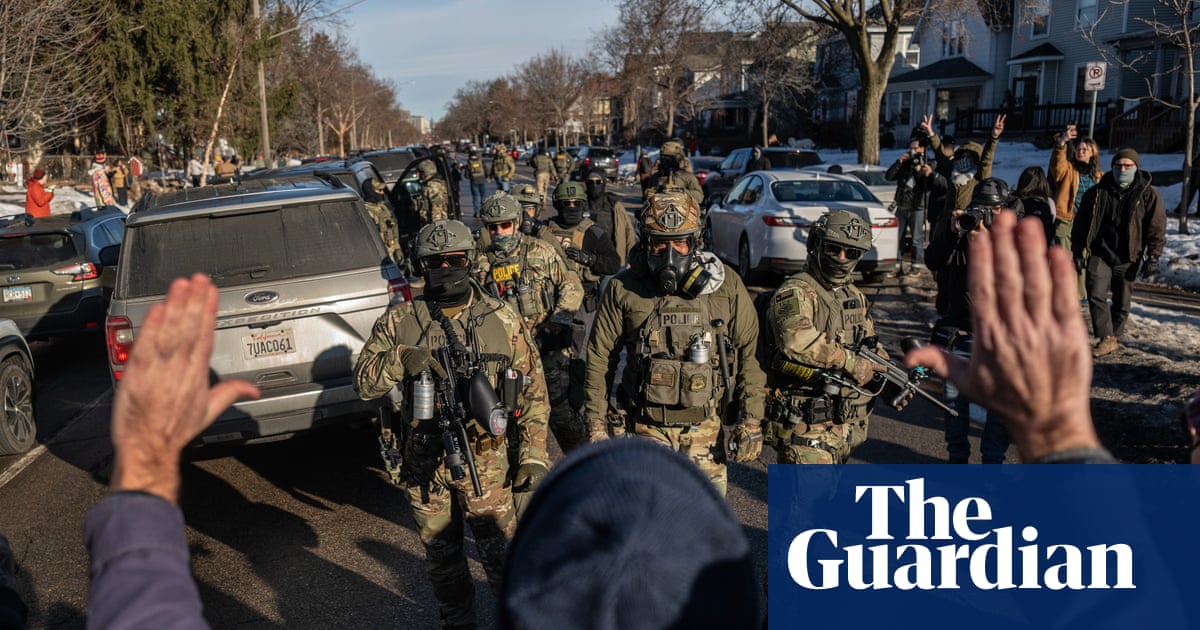
Many legal experts and political observers say that the Trump administration’s immigration enforcement tactics in Minneapolis and in other cities are designed to intimidate and instill fear among civilians.
Children are not immune to these tactics, either as witnesses or as targets.
Federal immigration officers deployed tear gas, for example, on students at Roosevelt High School in Minneapolis on Jan. 8. Experiences like this constitute a major adverse childhood event, exposing children and adolescents to significant trauma.
We believe that we can learn from decades of adverse childhood experiences research, which clearly shows the link between childhood adversity and physical and mental health outcomes in adulthood.
The enforcement tactics ICE is using in Minnesota and other places in the U.S. today are likely, our research suggests, going to harm the next generation of U.S. citizens and residents.
As trauma researchers have long known, our bodies keep score over a lifetime. The question facing policymakers is not whether these enforcement tactics will cause lasting harm – our research suggests they would – but what human costs we, as a nation, are willing to bear.


















Comments