
 German (DE)
  English (US)
  Spanish (ES)
  French (FR)
  Hindi (IN)
  Italian (IT)
  Russian (RU)
  3 hours ago
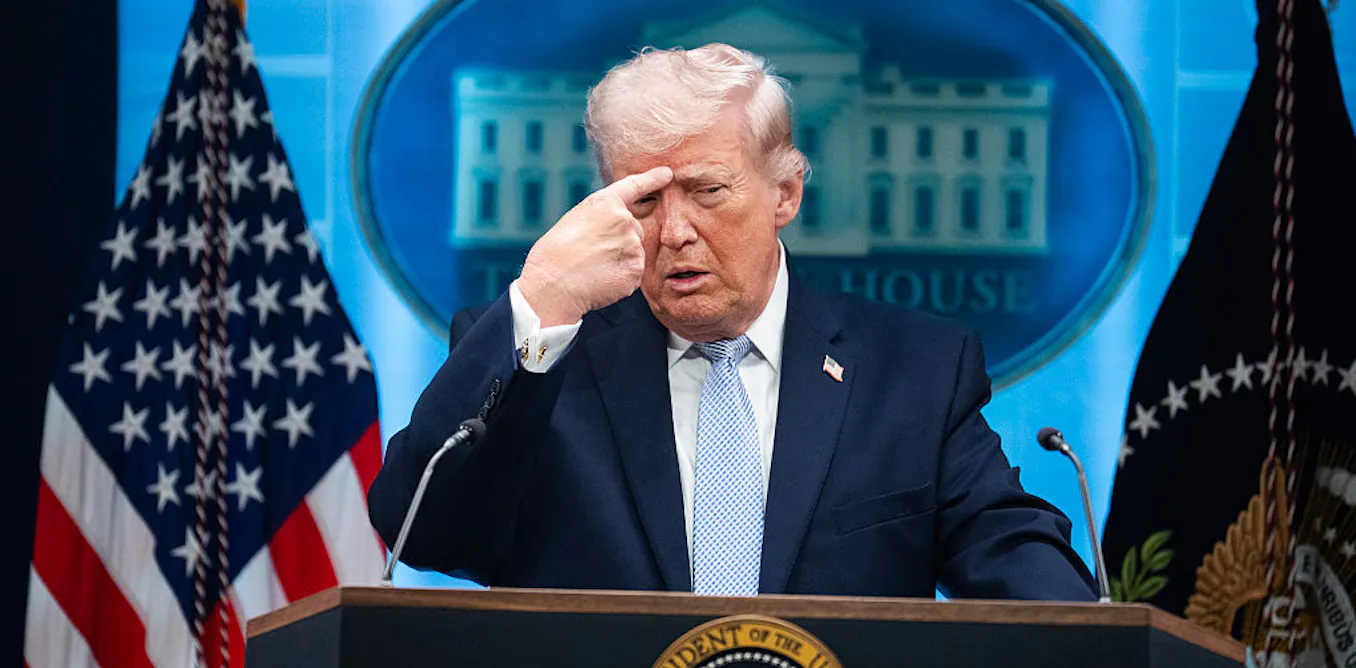
Donald Trump’s Tuesday morning comments threatening that “a whole civilization will die tonight, never to be brought back again” in Iran have raised alarms among military observers and retired officers, who called them “likely war crimes”.
“I have to hope that this is bluster, and a negotiating tactic on his part,” said retired admiral Michael Smith, who commanded a carrier strike group in the US navy. “He must understand that those types of threats themselves are likely war crimes.”
Trump’s post on Truth Social came on the heels of a profane tirade over the weekend, in which he referred to the Iranian regime as “crazy bastards” while demanding that it cease blocking oil transshipment through the strait of Hormuz. On Monday, Trump threatened to bomb infrastructure in Iran if his demands were not met.
“While his comments previously on the bridges and electric power plants might have had military utility that would make it a justifiable target, his current claims have no legal standing,” Smith said. “And yet, we have to have faith that the current military leaders will do what is legal.”
Speaking to reporters at the White House on Monday, Trump said he was “not at all” concerned about committing possible war crimes, and again threatened to destroy Iran’s bridges and power plants if Tehran did not meet his Tuesday deadline to reopen the strait. He also refused to say whether civilian targets were off limits.
Congress has incrementally surrendered its prerogative to declare war and direct military spending, said Gary Corn, a retired army staff attorney who teaches national security law and the law of armed conflict at the American University Washington College of Law and directs the technology, law and security program for the Center for a New American Security, a bipartisan thinktank in Washington DC.
“When you have the efforts in Congress failing, one can interpret it as an implicit acquiescence if not endorsement to what’s gone on in the last 30 days,” he said.
By narrow margins, the House and Senate rejected measures in early March to require congressional approval for military operations against Iran. Corn noted that Richard Nixon effectively ignored the repeal of the Gulf of Tonkin resolution and continued waging war in Vietnam 55 years ago.
The threat to kill a “civilization” in a day implies the use of nuclear weapons, even if the word was not used, said Shawn Harris, a retired army general running for Congress as a Democrat in the Georgia seat formerly held by Marjorie Taylor Greene. The runoff for the election is Tuesday.
The firing of three generals last week by the defense secretary, Pete Hegseth, suggests that there may have been internal pushback from senior military leaders against Trump’s war plans. None of the fired officers have made public comments since their forced retirements.
Separating Trumpian bluster from business has become difficult, Harris said: “I think what he’s basically saying is he’s going to follow through on his plans of things he talked about two or three days ago of blowing up bridges, blowing up power facilities and all those type things ... Hopefully we will get to a diplomatic agreement, but you know the Iranians, they’re no pushover.”
Naveed Shah, political director for the left-leaning veterans group Common Defense, called Trump’s bluster “unhinged”.
“I know we have gotten used to Trump’s locker-room talk, but even the most jaded must recognize that his latest screed today is unhinged,” Shah said. “As an army veteran who served in Iraq, this type of rhetoric puts our troops in the region in greater danger. If we don’t de-escalate, we will be dragged into another forever war in the Middle East that we can’t afford.”
Democratic members of Congress expressed their alarm at Trump’s comments.
“Targeting civilians en masse would be a clear violation of the law of armed conflict as laid out in the Geneva conventions, as well as the Pentagon’s Law of War Manual,” said Senator Elissa Slotkin, a Democrat from Michigan and former defense official whom Trump unsuccessfully targeted for prosecution after circulating a video calling on service members to refuse illegal orders last year.
“This kind of focus on civilians is exactly what we accuse our adversaries of doing and what our military trains to avoid. It’s built into the rigorous drilling and routines that our military are trained on from their first weeks. If they are today or have been asked to do things that violate the law and their training, it puts them in very real legal jeopardy.”












Comments