
 German (DE)
  English (US)
  Spanish (ES)
  French (FR)
  Hindi (IN)
  Italian (IT)
  Russian (RU)
  2 hours ago
For US Democrats seeking rays of light in the dark landscape of Donald Trump’s authoritarian onslaught, illumination has arrived from the unlikely source of Budapest.
Viktor Orbán’s stunning defeat in Hungary’s general election – ending 16 years of unbroken rule for his governing Fidesz party – carries symbolic and psychological significance for American politics out of all proportion to the central European country’s modest size and distance from the US.
For years, Orbán has been the inspiration, lodestar and muse to US Republicans, drawn to his heady mix of electoral success, concentration of increasingly autocratic power, and populist messaging blending anti-immigrant xenophobia with conservative Christian values.
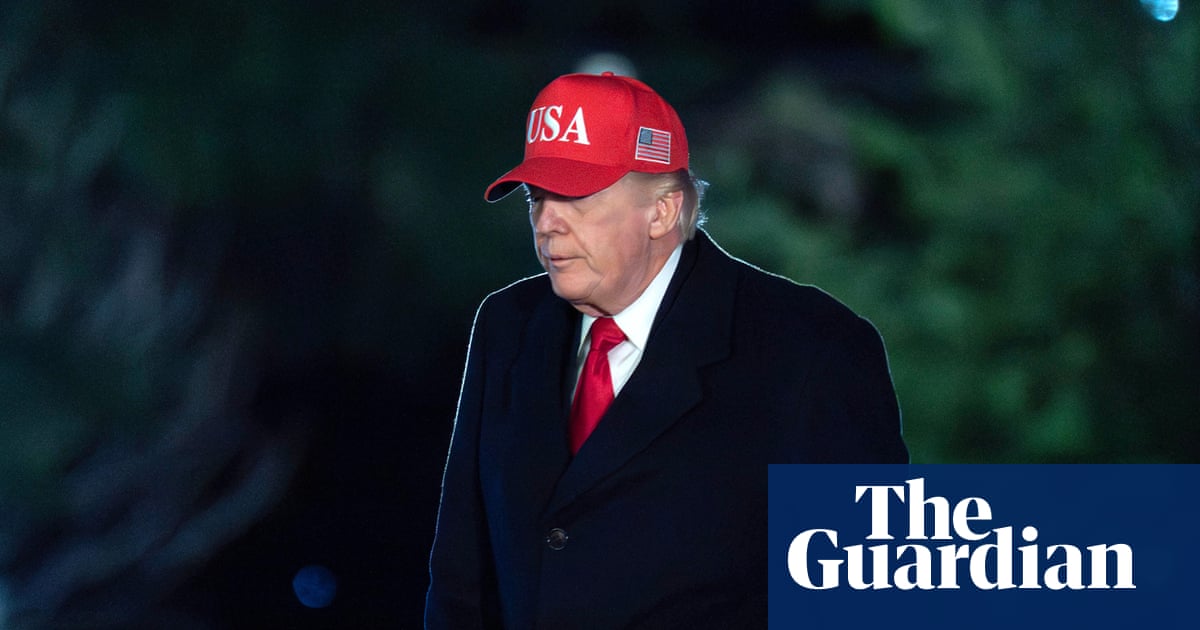
Orbán visited Trump at Mar-a-Lago and the White House three times during 2024 and 2025, with the US president frequently paying homage to the Hungarian prime minister in important forums – including a presidential debate with Kamala Harris. Among the many things on which the two saw eye-to-eye was a shared admiration for Russia’s president, Vladimir Putin.
So keen was the White House that Orbán should retain power, that Vice-President JD Vance was despatched to Hungary last week in an appeal to Hungarian voters that may in the end have been counterproductive.
Now the strutting, self-styled “illiberal” strongman on the Danube has gone, swept away by an accumulating public groundswell against the growing corruption of his rule that ultimately united liberals with conservatives and urban communities with rural districts.
Also vanquished is the air of invincibility that Orbán acquired over four successive terms, as he and his allies consolidated power over the media, judiciary and universities in their hands.
Opponents of Trump duly took note.
The Steady State, an organization of retired national security officials dedicated to opposing Trump, hailed Orbán’s defeat as “signal event” that could serve as a template for the US.
“Orbán is not only an autocrat whose loss demonstrates the resilience of democratic opposition; he is also directly relevant here,” said Steven Cash, the group’s executive director.
“The message from Hungary is unmistakable: when citizens mobilize in large numbers, even entrenched authoritarian leaders can be defeated. Autocrats may rise, but they are not invincible. In the end, they fall when confronted by the sustained force of democratic participation.”
The victory of the Hungarian opposition party, Tisza, led by Péter Magyar, is particularly striking because it occurred in the face of ruthless gerrymandering that tilted the playing field in favour of Orbán’s Fidesz. Observers characterised recent Hungarian elections as free but not fair.
Democrats concerned about Trump’s repeated signaling of his intention to meddle in next November’s congressional midterm election can draw encouragement from that success, said Steven Levitsky, a politics professor at Harvard University.
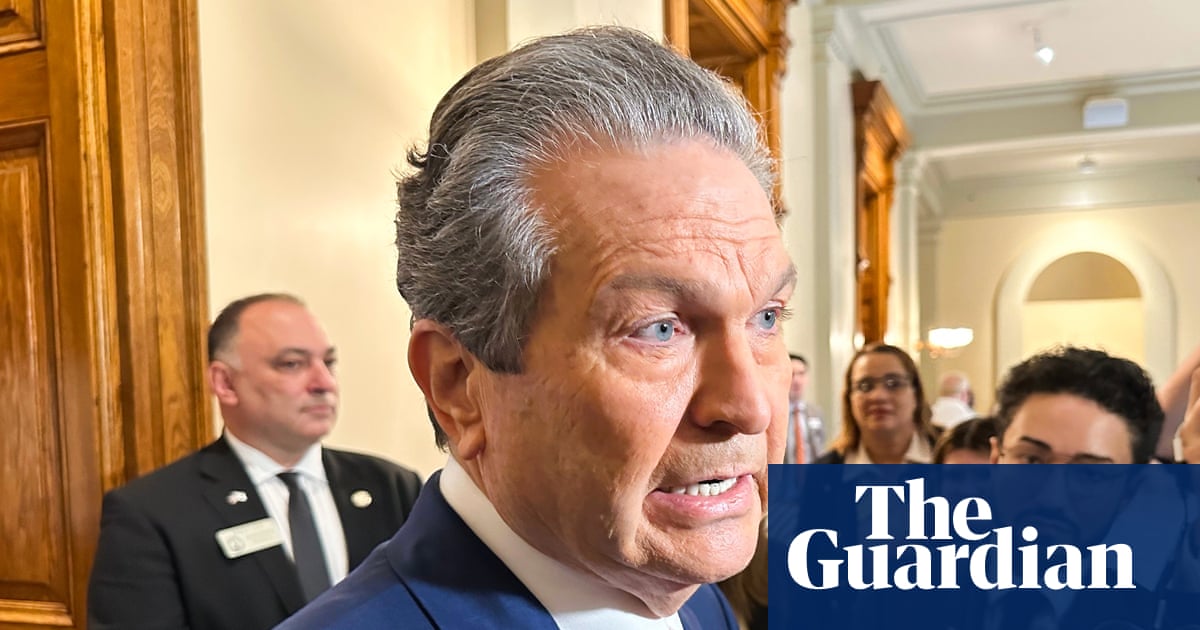
“The electoral system was heavily gerrymandered in favour [of Fidesz] but it is entirely possible in what I call competitive authoritarian regimes for oppositions to win,” said Levitsky, the author, with Daniel Ziblatt, of How Democracies Die.
“There’s a tendency for Democrats in the United States to get discouraged by the degree to which the government is trying to manipulate the election, possibly getting a hold of voter rolls, making it harder to vote, maybe harder to vote by mail. Those are challenges but it does not in any way prevent oppositions from winning.”
Yet amid the optimism, there are notes of caution, with commentators warning against overstating the parallels between the US and Hungary, a country of under 10m people and a cold war history of communist rule.
Levitsky pinpointed important differences between Orbán, a one-time liberal who campaigned against the former communist regime, and Trump.
“We’re accustomed to calling Hungary an autocracy and the United States, a democracy, but there are ways in which Donald Trump is much more nakedly authoritarian than Orbán,” he said.
“Orbán has never refused to accept defeat. He’s never tried to prosecute his opponents. He has in many ways been less repressive than Trump. If Democrats can take comfort in the fact that it’s still possible to win despite a tilted playing field, they can’t get overconfident, because Trump is capable of doing things that Orbán has never done.”
That raises the ominous possibility that while Democrats may try to draw solace, Trump may learn lessons of his own – and try to become more repressive.
“This is an old story,” said Eric Rubin, a former US ambassador to Bulgaria and veteran diplomat in Moscow during Putin’s era. “This happened with Indira Gandhi [the former Indian prime minister] in 1977, when she lifted a state of emergency, held free and fair elections – and lost.
“A lesson for authoritarian is, if you can avoid free elections, it’s always better. That’s Putin’s modus operandi. He’s been avoiding free elections for 27 years. It’s potentially an omen for the US midterm elections.”
An alternative consequence of Orbán’s defeat is that it would remind Republicans that “even authoritarians lose from time to time”, argued Levitsky.
“One of my biggest concerns in the last decade is that the Republican party was effectively forgetting how to lose,” he said. “Trump really accelerated this process by which the Republican party was was increasingly not willing to legitimately accept defeat and accept its rivals as a as a legitimate alternative. That’s incredibly dangerous for democracy.
“My optimistic hope, is that Orbán’s accepting of defeat could be a positive role model for Republicans, that even their idol has accepted defeat.”
Either way, Hungary’s sea-change election – whatever its implications for harmony in the EU and unfettered support for Ukraine, something Orbán repeatedly tried to block – is unlikely to sound the death-knell for authoritarianism.
“The fact that Hungary was a lodestar does make this particular reversal very important,” said Levitsky. “But there are many relatively unstable political regimes in the world, including the United States, and those regimes will continue to careen back and forth. The game is not up – not in Poland, not in Hungary, not in Brazil. And not in the United States.”











Comments