
 German (DE)
  English (US)
  Spanish (ES)
  French (FR)
  Hindi (IN)
  Italian (IT)
  Russian (RU)
  3 hours ago
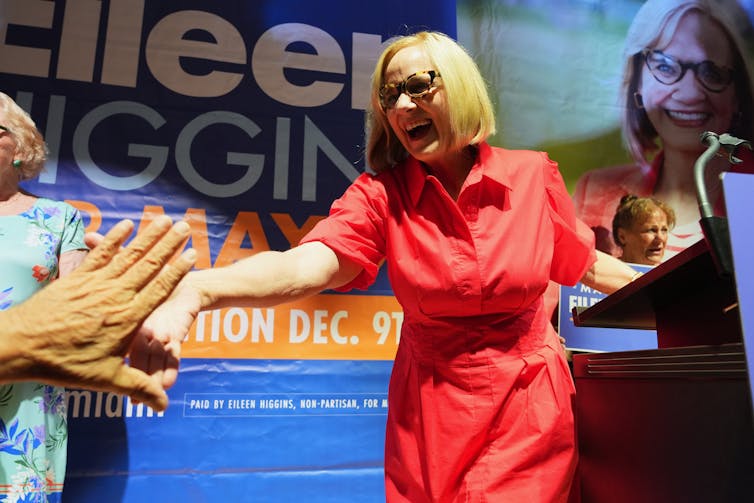
Eileen Higgins won a historic victory in December. She became the first woman ever elected mayor of Miami, as well as its first Democratic mayor since 1997.
Although the stakes in the city’s Dec. 9, 2025, runoff election were high, interest was not − 4 in 5 registered voters stayed home.
Low turnout is common in municipal elections across the country. While much of the nation’s political attention stays focused on Washington, the leaders who control the nation’s streets, schools and neighborhoods are typically chosen by a small fraction of citizens.
Although many Americans can identify their U.S. senators or members of Congress, far fewer can name even one of their local elected officials, such as a city council member. To cite one example, a North Carolina study, found that 86% of state residents could not identify their own elected leaders, including local government officials.
Turnout in local elections regularly falls below 20%, often leaving critical decisions in the hands of small, unrepresentative groups, creating an electorate that’s disproportionately white, elderly and affluent.
My research as a political scientist suggests an overlooked factor explains why some people engage with their communities while others tune out: local patriotism, or how they feel about their town.
The power of local patriotism
For my book “Patriotism and Citizenship,” I commissioned a nationally representative survey of 500 Americans. We asked a simple question: How do you feel about the town you live in? Those who responded could choose from five options, ranging from “hate it” to “love it.”
About half said they “liked” their town, 20% loved it, but a full quarter expressed no positive feelings whatsoever; 3% said they outright “hated” where they lived.
Such attitudes have real-world effects. Even after accounting for factors such as age, education, income and general interest in politics, loving one’s town strongly predicted participation in local politics.
People who loved their town were more likely to attend city council meetings, contact local officials, volunteer for campaigns and discuss local issues with friends. The same pattern held for civic participation – from volunteering with community groups to organizing neighborhood cleanups.
Local patriotism also correlated strongly with trust in local government.
Determining the stakes
To test whether these feelings actually change civic behavior, I ran two experiments.
Participants were first asked to identify the biggest problem facing their town. Some mentioned traffic congestion, others cited crime or homelessness. Then came the test: Would they donate $1 they’d earned for taking the survey to help solve that problem?
In the first experiment, one group was asked “Thinking about feelings of love or hate toward your town, would you like to donate this $1 to help your town solve the problem that you just listed above?” The other group received no such prompt about their feelings and was just asked to donate to solve the problem.
The results were striking. Among those primed to consider their feelings about their town, 18% gave away their payment. In the control group, just 3% donated – a sixfold difference.
A second experiment replicated this finding. When people were prompted to think about loving their town, 8% donated. Even asking them to consider feelings of hate led 5% to give. But in the control group with no emotional prompt? No one donated.
Why this matters for democracy
Local patriotism appears to address a fundamental puzzle in political science: why anyone participates in local politics at all. The time and effort required almost always exceed any tangible benefit an individual would receive.
But when people care deeply about their community, the calculation changes. The emotional reward of helping a place you love becomes a plus. The sacrifice feels worthwhile not because it will definitely make a difference, but because you’re investing in something that matters to you.
This has important implications. The positive feelings people have toward their community translate directly into civic engagement, without the risk of increasing negative feelings such as jingoism or xenophobia.
For local leaders frustrated by low turnout and apathy, the message is clear: Before asking residents to show up, give them reasons to care. Build pride of place, and engagement will follow.
The good news is that local attachment isn’t fixed. My experiments showed that simply prompting people to think about their feelings toward their town could motivate civic action.
A few ways to foster local patriotism
Here are some strategies that can help foster local patriotism:
• Create civic rituals: Regular community events, from farmers markets to fireworks, build emotional ties to place.
• Celebrate iconic places: Whether it’s a waterfall, clock tower or mountain view, promote the landmarks that symbolize your community. These shared images give residents a common point of pride and visual shorthand for what makes their town special.
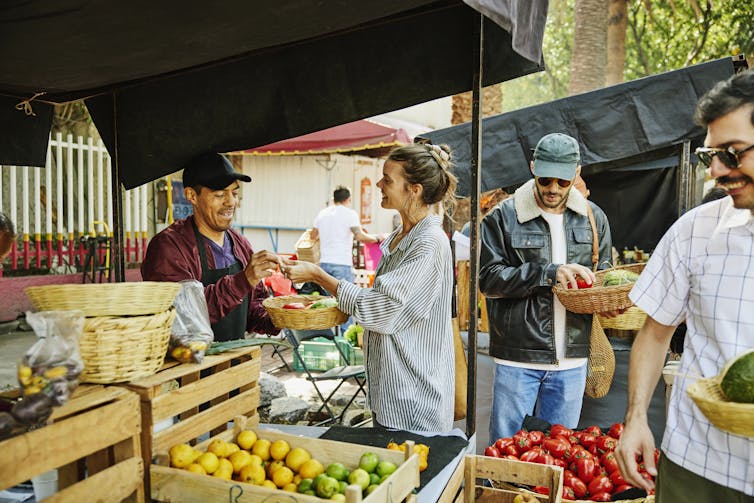
• Bring children to community events and have them participate in local organizations: Parents who take their kids to town festivals, parades and events, or sign them up for youth art and sports programs, aren’t just keeping them entertained. They’re building the next generation’s emotional connection to place and creating civic habits that can last a lifetime.
The evidence shows that emotional connection to community is a powerful but largely untapped resource for strengthening democracy from the ground up.
In an era of declining civic engagement and deepening partisan divisions, fostering local patriotism might be exactly what the country needs.













Comments