
 German (DE)
  English (US)
  Spanish (ES)
  French (FR)
  Hindi (IN)
  Italian (IT)
  Russian (RU)
  2 hours ago
Donald Trump has comprehensively failed to meet a key election promise to slash Americans’ energy bills in half within the first year of his presidency, with power prices instead surging across the US.
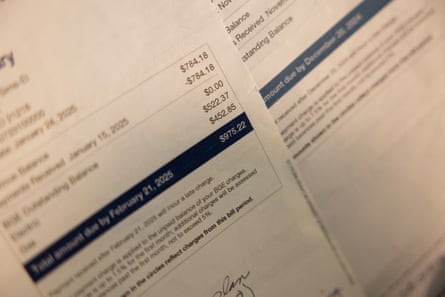
The average household electricity bill in the US was 6.7% more expensive in 2025 compared with the previous year, according to a Guardian analysis of data from the Energy Information Administration (EIA), the Department of Energy’s statistical arm. The increases meant that, on average, US households paid nearly $116 more across 2025 than they did in 2024.
The power bill increases have been extreme in many parts of the US, with residents of Washington DC experiencing the biggest increase, a 23% jump in electricity costs, followed by Indiana, with a 17% rise, and then Illinois, with a 15% increase, the EIA data shows. The midwest is the region of the US that has been hit by the steepest bill rises, which include utility costs laden on top of an underlying 4.9% average increase in the unit cost of the electricity itself.
On top of soaring electricity bills, US households have also been confronted by rising gas prices, which have jumped 5.2% on average in the past year, according to the EIA. As a result, there has been a spike in power disconnections for unpaid bills across many states – in New York the rate of disconnections rose fivefold from a year previous – with some households having to forgo other essentials in order to keep the lights on.
This all means that, with just days until the first anniversary of his inauguration, Trump has missed his self-imposed target of cutting bills in half in his first year. The president’s promise to slash power bills was, along with similar pledges to cut grocery costs and to reduce immigration to the US, a key pillar of his 2024 election triumph.
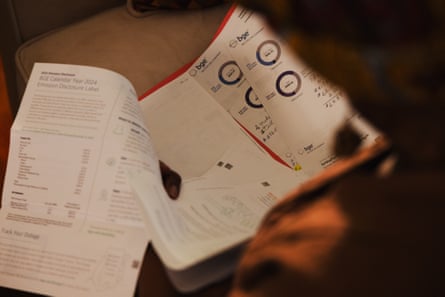
“You have some states where the power bills are instead up 10% or 20%, which is why so many people are angry about this now,” said Mark Wolfe, executive director of the National Energy Assistance Directors Association (NEADA).
“Instead of reducing electric bills by 50%, the president’s actions have raised the cost of home energy for all Americans. It used to be the poorest Americans who struggled with their power bills, but now we are seeing more and more middle-income families who have to make sacrifices to avoid being shut off. But there’s a limit to how much people are able to sacrifice, which we are very concerned about.”
During his election campaign, Trump repeatedly vowed to tackle power bills. “I will cut the price of energy and electricity in half,” he said at one rally in Detroit in October 2024. “12 months from January 20 – I take office on January 20 – your electric bill, including cars, air conditioning, heaters, everything, the total electric bill will be 50, 5-0 per cent, less.”
Trump told voters at a separate event that “your energy bill within 12 months will be cut in half. I’ll have your energy bill down within 12 months, throughout the country … That’s my pledge, all over the country.”
But this rhetoric has sharply reversed as electricity has replaced eggs as the most-talked-about area of inflation, with Trump recently claiming that the affordability crisis is a “hoax” and a “fake narrative” invented by his political enemies. On Tuesday, the president said he had overseen the “greatest first year in history” for the economy.
“The administration is tone-deaf about this – the president said it’s all made up, when it is in fact quite clear,” said Wolfe. “Families are struggling to pay energy bills and yet the Trump administration’s actions have made it worse.”
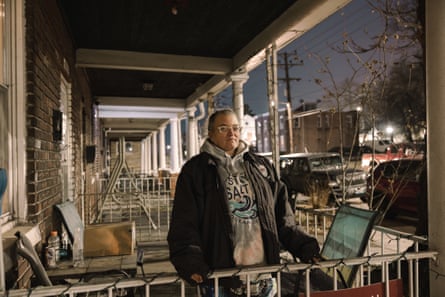
Angie Shaneyfelt, a 52-year-old resident of Baltimore, Maryland, has seen her bill shoot up rapidly this year, from less than $300 in December 2024 to $400 last month. In an effort to keep up with the increases, Shaneyfelt has considered taking up a second job, even signing up to deliver food with DoorDash last month.
More work hours would give her even less time with her twin 13-year-old daughters, but with another gas and electric rate hike planned for next month, she may be forced to bring in more income. “I’ve already slimmed back so much stuff,” she said. “And now I have to give up my time with my family?”
Trump pushes oil and gas – and AI
The administration’s energy policy has centered on ramping up the drilling of oil and gas – already at record levels in the US – while tearing up environmental rules that delay projects and limit the amount of pollution Americans are exposed to.
Trump has also embarked upon the aggressive promotion of an artificial intelligence industry that is raising US electricity demand for the first time in decades, while at the same time blocking numerous renewable energy projects he calls a “scam” and a “con job” but were set to provide electricity for millions of American homes.
This agenda – coupled with administration edicts to reverse the closure of ageing coal plants and to restart the overseas export of liquified natural gas, both actions that can raise costs for domestic consumers – has ensured that Trump’s election promise to cut bills had little chance of being met, experts say.
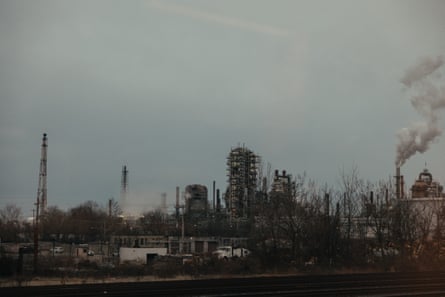
“The fundamental dynamic is that we are using more electricity than we did 12 months ago and the infrastructure isn’t keeping pace with that extra demand – if anything, we have fallen further behind,” said Abe Silverman, an expert in the energy transition at Johns Hopkins University.
The cost of Americans’ power bills largely matched overall inflation until around 2020, when they started to diverge, driven by a constellation of regionally varying factors such as utility upgrades of transmission lines, Russia’s invasion of Ukraine and disruption from extreme weather events worsened by the climate crisis.
The rapid advance of AI has accelerated this trend, Silverman said, only for the administration to block available clean-energy projects, particularly offshore wind, from meeting soaring demand. In December, Trump halted construction of five windfarms off the east coast, a move that has been challenged in the courts. “We have not approved one windmill since I’ve been in office, and we’re going to keep it that way,” Trump said this month.
“If you think of it as a race, the demand-growth horse has got a shot of adrenaline and is galloping around the track at a faster pace,” Silverman said. “The supply horse is losing, by a lot. Unfortunately with the ideologically driven attack on certain technologies, such as wind and solar, it’s made it very difficult for investment to proceed and get the extra electrons we desperately need.”
As stress grows over bills, help is being cut
Electricity bills are now a “major” source of stress for more than a third of all Americans, polling has found, with colder-than-expected temperatures this winter pushing up heating bills by 9.2% on average compared with a year ago. The average household will pay $995 on heating this winter, an increase of $84 from last winter, as families struggle with electricity prices that are the highest in a decade, according to the NEADA.
As more Americans face higher bills, the Trump administration has slashed federal assistance, eliminating tax credits for home energy efficiency upgrades and attempting to scrap a federal program that helps low-income people with their energy bills, a move that would affect more than 6m households that rely on this support for heating and cooling.
Trump’s promise to bring down gasoline costs has seen more success, with retail prices at the gas pump falling by 6% on average in the last year. This decrease, the third year in a row in which gasoline prices have dropped, is due to a global glut of crude oil and a fall in demand due to concerns over an economic downturn, according to the EIA. Trump has claimed that the US seizing control of Venezuela’s oilfields will help drive down the cost of gasoline for American drivers.
Perhaps cognizant of a growing political backlash to persistently high power bills, Trump said this week he is pressing tech companies to foot the bill for the rising costs associated with their datacenters. “We are the ‘HOTTEST’ Country in the World, and Number One in AI,” the president posted on Truth Social. “Data Centers are key to that boom, and keeping Americans FREE and SECURE but, the big Technology Companies who build them must ‘pay their own way.’”
The overall cost of living is likely to remain a salient topic for voters this year, though, before the midterm elections in November that will determine the balance of power in Congress. Democrats and their allies have warned Trump that his broken promise on energy bills will haunt his fellow Republicans.
“Trump and Republicans are making life more expensive by taking energy options off the grid while demand skyrockets,” said Jesse Lee, senior adviser to Climate Power, a climate advocacy group. “We’re going to make sure that every Republican who rubber-stamps Trump’s anti-energy agenda pays the political price in 2026.”
A White House spokesperson said that lowering energy prices is a “top priority” for the president and said that Democratic-run states have seen higher costs than Republican-led states.
“The Trump administration will continue to aggressively implement President Trump’s energy dominance agenda because cheaper energy can unleash unprecedented growth in every facet of our economy,” she said.
“Are blue states going to adopt President Trump’s commonsense energy agenda to bring energy prices down in their states?”
-
The Guardian receives support for visual climate coverage from the Outrider Foundation. The Guardian’s coverage is editorially independent















Comments