
 German (DE)
  English (US)
  Spanish (ES)
  French (FR)
  Hindi (IN)
  Italian (IT)
  Russian (RU)
  3 hours ago
The United States seems determined to turn its back on the rest of our planetary neighbors. The Trump administration’s recent decision to withdraw from 66 international treaties, conventions and organizations is striking for the range of its rejections. Everything from the global treaty on climate change to multilateral efforts to address migration and cultural heritage, clean water and renewable energy, and the international trade in timber and minerals has been summarily dismissed as “contrary to the interests of the United States”.
It’s no surprise that an administration hellbent on physical walls around the United States would also put up such walls of indifference, as if all of these longstanding collective efforts were simply “irrelevant” to our interests as a country, as the US secretary of state, Marco Rubio, put it in a public statement. And yet, as we know, the reality of contemporary life on Earth is so profoundly otherwise. How has the truth of our interconnectedness with others elsewhere become so difficult to grasp in the United States?
Over the last decade, I’ve been studying this problem as a cultural anthropologist. In a recent book, Something Between Us: The Everyday Walls of American Life, and How to Take Them Down, I show how profound patterns of isolation and division have crept into the everyday texture of American life. Increasingly fortified homes and neighborhoods, bulked-up cars and trucks, visions of the body as an armored fortress, media that shut out contrary views: these interlocking walls have sharpened the divide between insiders and outsiders, separating Americans on an everyday basis and encouraging us to disregard our relationships with others.
My research is informed by exchanges over many years with Americans from many walks of life: realtors and urban planners, salesmen and consumers, activists for social and environmental justice. I think of the way that a home improvement podcaster framed the value of home security technologies at a 2021 builders convention I attended: “Now it’s not your problem,” he said, describing how smart lights would lead burglars down the street to someone else’s home. Or the troubling lesson an automotive designer I met in California learned from focus groups about SUV design: “If there are two cars in an accident,” people kept telling him, “I want my kids in the bigger car.”
With everyday life organized in such antagonistic terms, it becomes difficult to see the complex ways in which our own individual interests are bound up with the interests of others. Social and environmental problems are more easily set aside as the concerns of others elsewhere, rather than as matters of shared concern and common responsibility. When the divide between self and other becomes as stark as it has in everyday American life, efforts to address collective predicaments or to respond to the suffering of others can meet with deep skepticism.
The rejection of climate diplomacy and the celebration of fossil fuels by our leaders and policymakers are troubling indeed. But these developments represent more than a policy framework catering to powerful lobbies and industries. They also reflect habits of thought that address our wellbeing and the freedom to pursue it in sharply individualistic terms. To make meaningful change on these matters, we have to address these ways of living and thinking.
For here is the reality acknowledged in so many of the global arrangements spurned by our national leadership these days: our future is caught up with the welfare of others beyond our bounds. Economic inequalities and environmental instabilities propel migrants to distant places, including our own borders. The vicissitudes of global weather will increasingly take the shape of natural disasters, as they did one year ago with the Los Angeles wildfires.
These problems are interconnected. And if our instincts in the face of challenges like the climate crisis are to bar the door and turn up the air conditioning, the air will only grow warmer and more unpredictable outside.
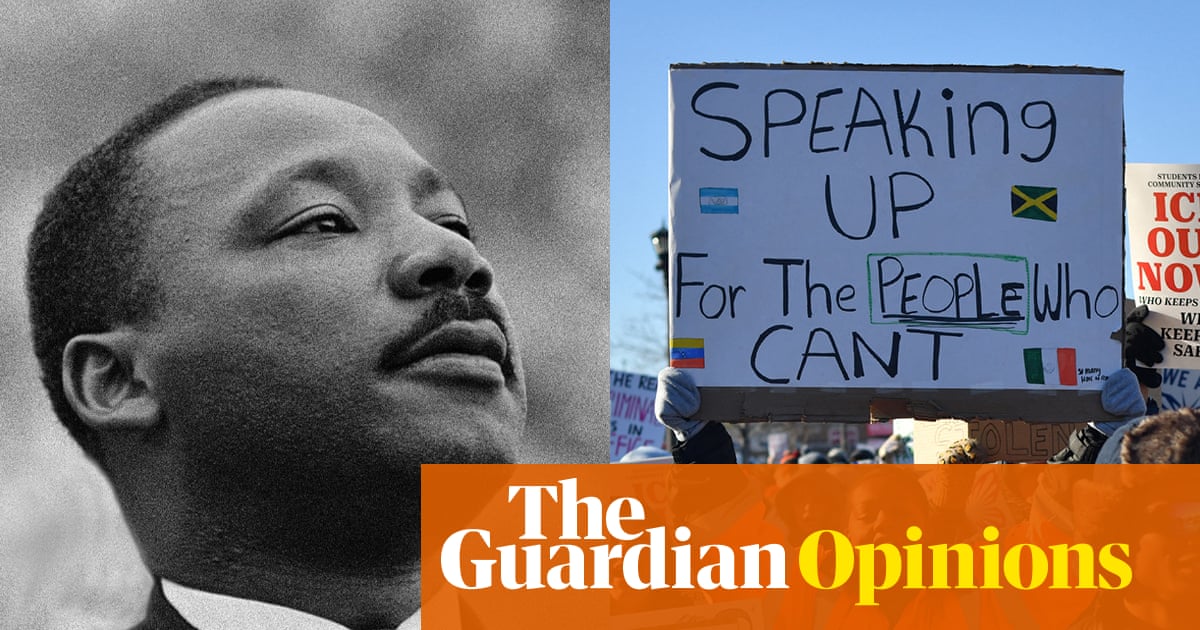
Martin Luther King Jr confronted such truths many years ago in his 1963 letter from the Birmingham city jail, memorably evoking that “inescapable network of mutuality” through which “whatever affects one directly affects all indirectly”. The “single garment of destiny” that King wrote about may indeed be fraying now, but it can be stitched back together more fully, by leaning once again into an attitude of mutual aid and collective solidarity.
I think, for example, of the clean water activists I spoke with in the city of Newburgh in the Hudson River valley. Organizing against the contamination of their municipal water supply by “forever chemicals” from a nearby air national guard base, these activists have worked to develop a sense of watershed awareness, the idea that choices made upstream will affect the lives of those downstream. They held a series of public conversation circles on the theme of “I Am Water”, encouraging participants to reflect on their own intimate relationships with water as a way of imagining themselves as elements in a wider shared ecology.
“We had to start with our own bodies before going to the body of water itself,” the Newburgh activist Gabrielle Hill explained to me. And there was something deep to absorb in these words of hers, for we all share the substance of our lives with the environment that sustains us, here in United States and in the larger world beyond.
Like many others, Hill has been galvanized by recent threats to our democracy. She decided to run for a district post in her local Orange county legislature, and won the Democratic party nomination last year. The night of that victory, she shared an African proverb with her supporters: “If you want to go fast, go alone. If you want to go far, go together.” This communal spirit was reflected in the priorities at the heart of her successful campaign platform: clean public water, accessible public transportation, affordable housing for Newburgh’s diverse working-class communities.
Going it alone is a path to autocracy, not autonomy. Repressive powers ask us to reject our interdependence and imagine our security in isolated and suspicious terms. But the collective movements that have mobilized in these fraught times teach us something else instead: our wellbeing is best conceived as a communal resource. Our fates are bound together, whether or not it interests us to acknowledge this truth.
-
Anand Pandian is Krieger-Eisenhower professor of anthropology at Johns Hopkins University










Comments