
 German (DE)
  English (US)
  Spanish (ES)
  French (FR)
  Hindi (IN)
  Italian (IT)
  Russian (RU)
  8 hours ago
This time last year, women’s rights organisations were bracing themselves for a second Trump term. Few were prepared for the chaos that would be unleashed in January. The volume and speed of executive orders coming out of the White House were seen as a deliberate tactic to overwhelm and create panic. In many ways it worked – there was confusion, anger and exhaustion as organisations scrambled to fill the gap left by the USAID freeze. But that was just the beginning.
The US administration has been the key driver, supported by intense advocacy work by ultra-conservative groups using the moment to strengthen global ties with political allies.
What is the anti-rights movement?
ShowThe anti-rights movement – also known as the anti-gender movement – refers to a global network of political leaders, religious institutions, civil society groups as well as billionaire families and individuals that seek to undermine progress across a wide spectrum of issues. These include abortion, LGBTQ rights, trans rights, non-traditional family structures and comprehensive sexuality education.
They do this by lobbying governments, supporting court cases, discrediting international efforts to advance equality, spreading disinformation, and funding non-profit organisations that align with their values.
Until Everyone is Free, a report by Purposeful, an organisation focused on girls’ activism in Africa, described the “anti-rights tide” as a “transnational and orchestrated rollback of rights and freedoms fuelled by far-right extremism and authoritarianism on a scale unseen in modern history”.
Many influential groups, including Family Watch International, C-Fam and the Alliance Defending Freedom are ultra-conservative US-based Christian fundamentalist organisations with strong links to governments in Africa, Asia and Latin America. There are similar groups in Europe and Australia.
Such organisations have gained prominence in recent years, with support from governments including those of the US and Hungary. They spend hundreds of millions of dollars on advocacy, lobbying, litigation and media campaigns.
While independently funded and run, they use similar tactics and rhetoric, emphasising national sovereignty, “family values”, parental rights, freedom of speech and religious freedom, which they promote among partners in poorer countries by speaking at international conferences, particularly in Africa, and training policymakers and campaigners in the US.
We look at five moments that affected the safety, dignity and lives of women and girls.
USAID dismantled
In March, six weeks after USAID is frozen, causing turmoil around the world, US secretary of state Marco Rubio confirms that 83% of the agency’s programmes will be eliminated. US diplomats, former presidents and humanitarian and health experts condemn the news, warning that people will die as a result. Rights defenders say that the demise of USAID is more than a funding crisis, it is a savage attack on human rights and family planning and reproductive care. Many organisations say women and girls will be disproportionately affected by diminishing aid, especially in conflict areas. As the year ends, data shows how hundreds of thousands of people have already died from disease, starvation, lack of access to maternal care and gender-based violence, with millions more to come. The UK and the Netherlands, the two largest funders of family planning aid after the US, follow with their own cuts. Nick Dearden, director of Global Justice Now, says Kier Starmer’s decision to slash about £6bn of overseas assistance is a move to appease Trump.
Christian-right groups raise voices during UN Women
In March, several Christian-right organisations meet in an upmarket New York hotel for a two-day conference held in parallel with the annual UN Women gathering. It is an opportunity to share tactics on how to defeat the UN’s “radical agenda”. They are in high spirits as they applaud Trump’s second term and changes in US policy on gender, diversity and abortion. Meanwhile, the UN secretary general, António Guterres, opens the women’s summit with a stark warning that “the poison of patriarchy” is back, after a report shows that anti-rights actors are actively undermining longstanding consensus on key women’s rights issues around the world.
African ‘family values’ conferences
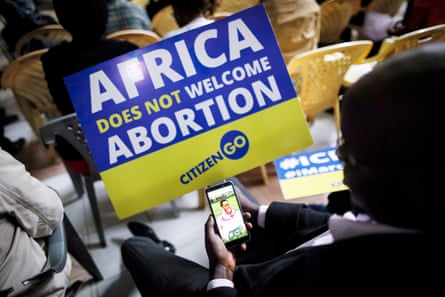
Over the summer, a series of conferences in Africa focused on the traditional family and national sovereignty sparks alarm among rights advocates. On 9 May, Uganda’s president and first lady open the third Interparliamentary Forum on Family, Sovereignty and Values in Entebbe to push back on criminal foreign forces eroding traditional family values. A few days later, the Pan-African Conference on Family Values is held in Nairobi. Both events are attended by leading US and European anti-rights figures, including president of Family Watch International, Sharon Slater; Austin Ruse, president of the Center for Family and Human Rights (C-Fam); and Jerzy Kwaśnewski, co-founder of Poland-based “extremist religious organisation” Ordo Iuris, who calls on African NGOs to push back against “radical global social engineering” of the UN and EU. In June, the Mormon church hosts the Strengthening Families conference in Sierra Leone, an event, reproductive rights advocates say that has become an anti-LGBTQ, anti-gender platform. It is not the first time Americans and Europeans have flown in to strengthen ties with their African allies but campaigners say the scale of their presence has grown significantly.
US threat to burn contraceptives
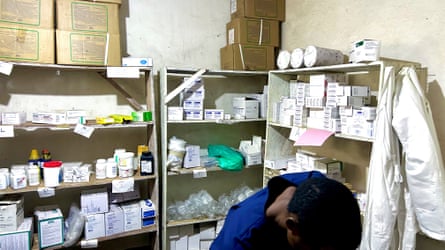
As clinics in sub-Saharan Africa say they are running out of contraceptives, including emergency kits for survivors of sexual violence, the US announces in July plans to destroy $10m of contraceptives held in a warehouse in Belgium. The International Planned Parenthood Federation (IPPF) says their destruction will deny more than 1.4 million women and girls contraceptive supplies, and lead to 174,000 unintended pregnancies and 56,000 unsafe abortions in the five African countries it surveyed. IPPF says the plan is an ideological decision “about imposing an anti-rights agenda on the entire world” and “an intentional act of reproductive coercion”. Médicins San Frontières (Doctors Without Borders) calls it “callous” and “reckless”. NGOs offer to buy the contraceptives so that they can reach their intended destinations but the US refuses all offers. Today, the situation is at a standstill as the Flemish government will not allow usable products to be destroyed.
‘Global gag rule’ expanded
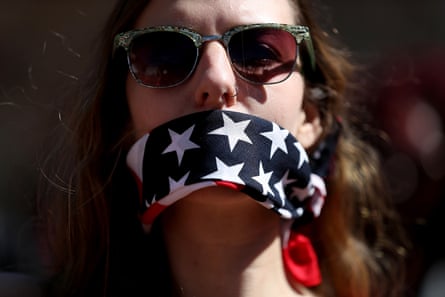
Reviving the global gag rule, which halts US aid to groups that provide, advocate for or advise on abortion services overseas, is standard practice for republican administrations, so it came as no surprise when President Trump reinstated the rule in his first week of office in January. He also rejoined the Geneva Consensus Declaration, an anti-abortion agreement created by former Trump health adviser Valerie Huber that has gained support from about 40 countries. But in October, the US announces it intends to expand the global gag rule to include governments and multilateral organisations in addition to NGOs, and to cover diversity programmes. More details on the expansion of the global gag rule are expected in early 2026. Rajat Khosla, director of the Partnership for Maternal, Newborn and Child Health, says widening the scope of the rule will have “unimaginable effects”. Reproductive justice campaigners fear that new US aid packages being negotiated with countries in Africa will become conditional on accepting the expanded global gag.













Comments