
 German (DE)
  English (US)
  Spanish (ES)
  French (FR)
  Hindi (IN)
  Italian (IT)
  Russian (RU)
  1 hour ago
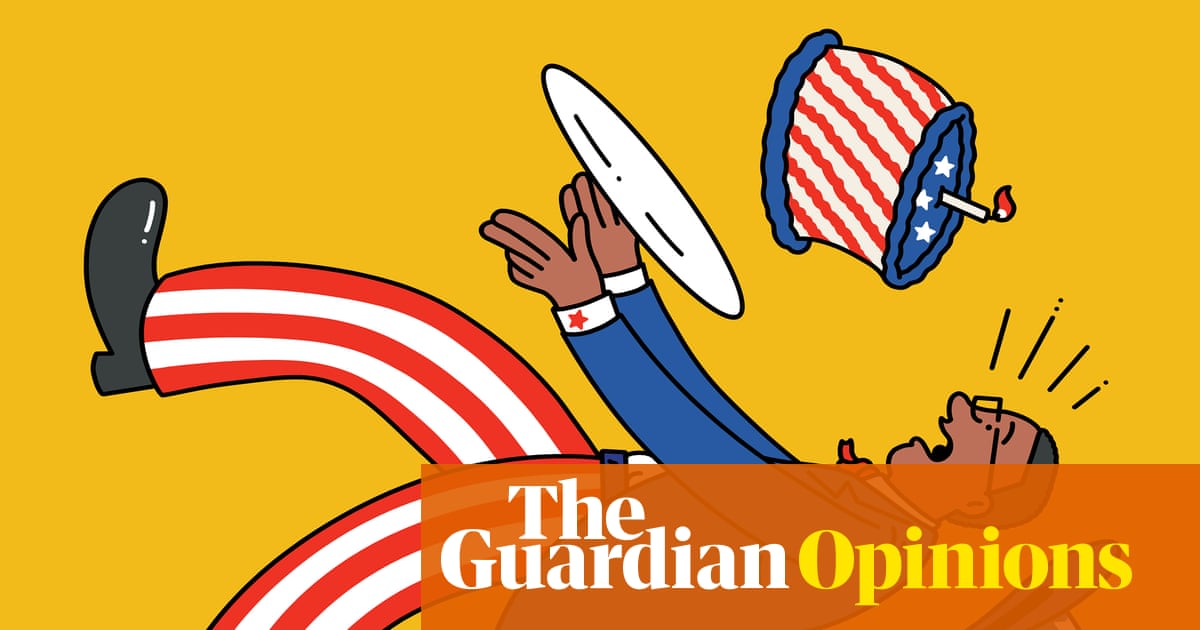
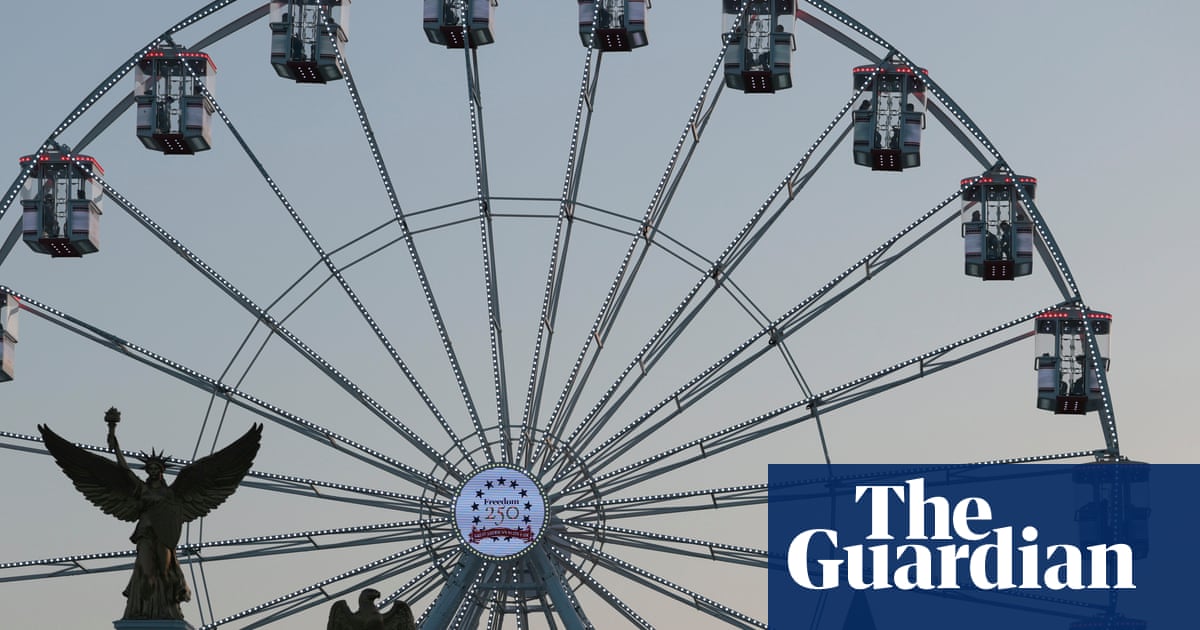
This Fourth of July, the United States will mark the 250th anniversary of its independence from Britain, a milestone that the Donald Trump administration is commemorating with a series of events and celebrations across the National Mall.
The anniversary arrives against a backdrop of civil rights rollbacks, immigration crackdowns and strained international relations. For some Americans, however, the date carries an added layer of significance: it is also their birthday.
Speaking to the Guardian, several readers born on 4 July said they had mixed feelings about celebrating their birthdays alongside Independence Day. While many said they had long enjoyed sharing their birthdays with the national holiday, this year’s 250th anniversary has left them reflecting on the country’s direction, with some calling it “difficult” to reconcile with what would otherwise be a personal celebration.
For Maria Ashot, a 69-year-old writer and Harvard University graduate currently based in Brussels and Barcelona, 4 July has always held deep personal meaning.
“I identified with the principles enshrined in the Declaration of Independence … What it means to be an American is to live up to those ideals … This year, Trump has appropriated a significant number … and his utter lack of class & sophistication means all he can come up with is a mass brawl at the White House he has half-demolished,” Ashot said.

“I am not celebrating with him,” she added.
Jo Haemer, a 73-year-old high-end gold and platinum smith based in Portland, Oregon, was born in Germany to American parents during the cold war. Like Ashot, she said this year’s anniversary has brought feelings of frustration.
“As a military child, my siblings and I … see the world in a very different way. We are much more adventuresome and flexible. Sadly when my birthday comes around, most folks I know leave town for vacation,” said Haemer, who usually bakes some pies and has a few friends over for drinks and desserts.
“The 200-year bicentennial was more meaningful than 250. Especially since the onslaught of the corrupt Trump administration.”
Craig Allen, a 71-year-old retired research scientist based in Connecticut, also compared this year’s anniversary with the country’s bicentennial celebrations.
“I enjoyed seeing the tall ships in Philadelphia in 1976 and felt a sense of pride in our country’s achievements,” he said, adding that this year’s milestone “is … difficult for me”.

“It feels like the country has lost its way and all the gold plating and cheap gaudy events make me want to head for the woods.”
Like Allen, Bill Combs, a 74-year-old retired professor based near Bryce Mountain in Virginia, said that “for decades, I always knew that the 4th of July wasn’t about me”.
“Sure, everyone loves cake and ice cream, picnics, and fireworks, but during all the holiday hoopla I still sometimes stop and think, ‘Hey, it’s my birthday, too.’ Just a neat day to have a birthday,” Combs said, adding that, despite it all, “This year, I’m not looking forward to observing the Fourth at all. It’s become a self-serving, tawdry event that’s cheapened the meaning of ‘America.’ Our 250th anniversary has become a Shakespearean ‘tale told by an idiot, full of sound and fury, signifying nothing.’”
Bertram P Dowd, a graduate student based in Arizona whose father was also born on 4 July, in the late 1950s, said the anniversary has left him similarly conflicted.
“This particular birthday is frustrating, because I want to be able to enjoy the festivities and cultural commemorations for the 250th anniversary … But the … trappings of patriotism in general have been so thoroughly captured by Trump and MAGA that I want nothing to do with what’s actually being done for the anniversary,” Dowd said.

“Maybe in another fifty years, once the stain of Trump and Trumpism has been washed away, I’ll be able to feel proud of America and happy to go to the parties and parades on my birthday again. But this year, I think I’ll go get a hamburger and stay home minding my own business.”
Brian O’Reilly, a 77-year-old retired journalist based on the New Jersey shore, also shares his birthday with a family member: his identical twin brother. He said the coincidence had long reinforced a sense of national pride that has faded over time.
“Frankly, identical twins grow up thinking that they are pretty darn special … so our sense of ourselves [my twin and I] as special just for being twins, and special again for being born on Independence Day, and being part of this special country, all got rolled together into a sense of personal and national pride. The Vietnam war eroded a lot of my pride in the good ol’ US of A, and Donald Trump has made it worse,” O’Reilly said.
“It was more fun to share a birthday with the USA when it was seen as this shining star sixty and 70 years ago. I’m not a big fan of Donald Trump and his self-centered celebration designed to focus attention on himself this year takes some of the joy out of it all.”
Another respondent, a retired university employee based in Arlington, Virginia, described the anniversary as “complicated”.
“It is complicated, especially now when our political landscape is so stressed and we are forced to face the deep faults in our democratic structures … We have never solved the basic problem of the white elites successfully pedaling the white supremacy buyout to poor whites so that they will never identify with their fellow exploited workers in the black, Asian American, Latino American communities,” she said.









Comments