
 German (DE)
  English (US)
  Spanish (ES)
  French (FR)
  Hindi (IN)
  Italian (IT)
  Russian (RU)
  2 hours ago
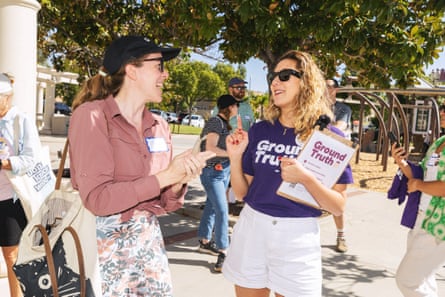
In the run-up to the US midterm elections, Swing Left – a grassroots political group focused on electing Democrats to office – has spent time canvassing in dozens of districts across the country to hear from hundreds of thousands of voters.
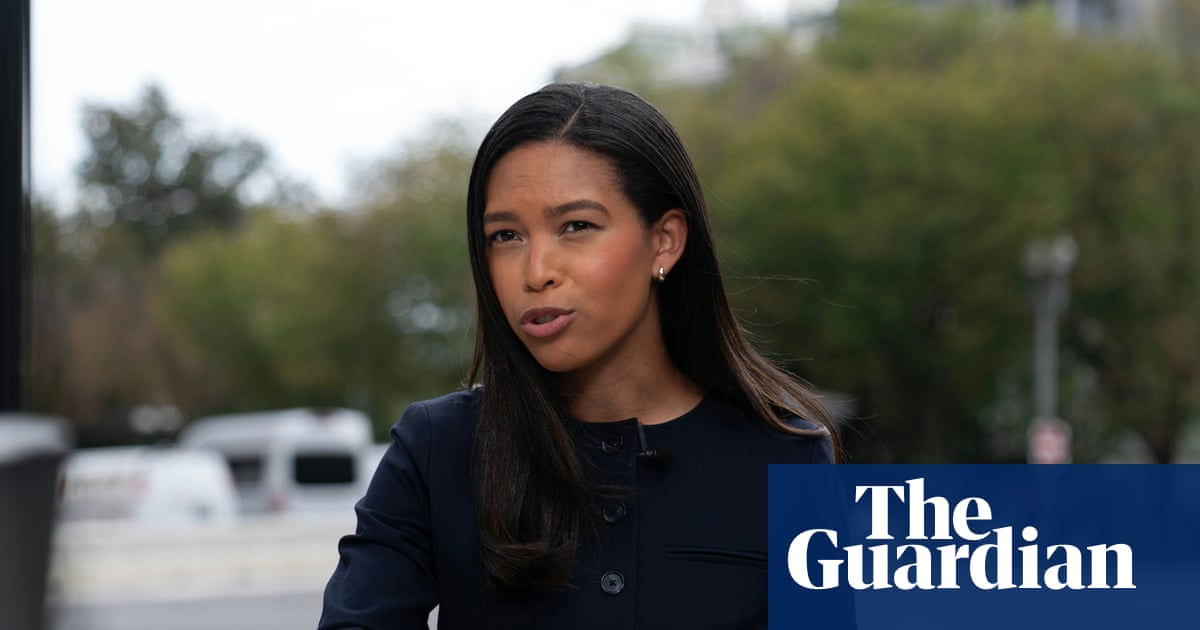
Now, with fewer than 40 days until the US midterm elections, the group’s executive director, Yasmin Radjy, sets out what she feels Democrats have been getting right and wrong this election cycle, and why these races are vital for the party’s future control of the US Congress in the years to come.
We are now five weeks out. What do you feel have been, and will continue to be, the defining issues of these midterm races?
Yasmin Radjy: The two things head and shoulders above everything else that we’re hearing about: one is a feeling like the system is broken, and soon after that are various issues around cost of living. The two are often related, but there are very few conversations where one or both of those issues are not coming up. Everyone’s gotten the memo that we need to talk about affordability. I don’t think there’s a Republican or a Democrat who’s not aware of that. The candidates who are really standing out this cycle again across the ideological spectrum, from Abdul El-Sayed [in Michigan] to Mary Peltola [in Alaska]. And on the House map, Paige Cognetti [in Pennsylvania], to Amish Shah [in Arizona]. They are connecting those dots in a way that is specific and that is also mirroring the nature of those districts.
What do you think the party needs to focus on to regain trust, and establish a clear sense of identity with voters moving forward – particularly after 2024?
We have to follow up with people when they express urgency around the very real and material concerns that they have. When they express disappointment, we can’t pretend like everything is going great. We also need to acknowledge that a lot of the things we’ve been doing aren’t working. That requires having tough, not just conversations, but introspection, and openness to trying new things, testing new things and taking bigger, riskier swings than we’re accustomed to.
On one of the must-win races you mentioned – the open Senate seat in Michigan – what do you feel voters are responding to with a candidate like Abdul El-Sayed? What do you think he needs to do in order to win over voters in that state that Trump won?
I think something he is modeling is a “talk to everybody and engage with everyone” approach, not just talk to the people who already agree with you. I think he really won his primary because of organizing. In terms of the issues and themes in Michigan, what we’re hearing is very similar to elsewhere with subtle differences: both parties suck, and no politician cares about that voter, their community and people like them. That is ubiquitous. What he is able to speak compellingly on with a lot of authority is his feeling like the system is broken, and he is doing a good job of tying that to affordability and a whole host of other issues.
I’m curious what you think might be the biggest obstacle for Democrats in this cycle? What could be getting in the party’s way?
One is that we continue to not have a sufficiently clear answer, for a time when the winds are not blowing in our direction, of what Democrats stand for besides being anti-Trump. We need to start answering that now – and it’s OK if that answer has shades of difference in Michigan, Alaska and North Carolina. The second piece is we cannot assume our base will be with us again because of anti-Trump sentiment in a way that can sustain durable power.
Something under-discussed that keeps me up at night is if we are not building long-term, durable power, by 2030 we are going to wake up to an election where, if we don’t have power in the states, we will not be able to win congressional majorities because of how bad redistricting will look. Population shifts are clear in California and New York – two big blue states essential for presidential math – and they will be losing electoral college votes starting in 2030. Texas and Florida are the inverse – they are going to gain power. If we don’t treat the midterms as our most important moment to build infrastructure while there’s money pouring in, while there’s energy to have a shot at winning tough Republican seats in a way we can sustain, we are going to lose without question in the future, because we will have squandered an opportunity.
I want to discuss the concerns about progressives, from establishment Democrats. What’s your response to those in the coalition who question whether these progressive candidates have a real shot in battlegrounds that the party wants to either retain or flip?
We have members who are Democratic Socialists of America members. We have members who think DSA is a huge threat to democracy – we’ve got the full gamut. Our perspective is that the fixation on ideology and the DSA-versus-centrist divide is a completely false binary. We need to win a majority, and there is a level of pragmatism among the grassroots that is underappreciated. The binary will crumble, not because it doesn’t exist in our institutions, but because that’s not how voters are. We talk to voters every day who might be DSA-aligned on healthcare and Blue Dog-aligned on the border, and it’s the same person. If we lead with genuine curiosity and openness to listening to voters, we immediately see that voters are idiosyncratic, strange and full of contradictions because they’re human.
Linked to this, I’m thinking about James Talarico [the Democratic nominee for the US Senate seat in Texas] and Rob Sand [the Democratic gubernatorial nominee in Iowa]. They are showing a pivot in their messaging, particularly when it comes to trans rights. Do you feel that is a necessary strategy right now to court those swing voters, independents and moderates in newly competitive battleground states?
I think when you go out and really talk to people, specifically on the issue of trans rights, most Americans want trans people to have rights – and the areas of discomfort range from lack of knowledge. Their worldview on trans issues is curated by Fox News, so there is an information gap. Most voters, including many Democrats, have complicated feelings about the trans people in sports issue. The answer is not to start repeating Fox News talking points. The way to talk about these issues – and this is what the data shows – is to break down the pieces: all Americans want every American to have a certain set of freedoms. The trans and sports issue is complicated, and it is not really a decision for governments, it’s a decision for the leagues.
I think Sarah McBride is a perfect example of this – leading with grace, recognizing that changing hearts and minds takes time, and that people use clunky language along the way.
Looking ahead, do you think Democrats are doing enough to respond to Donald Trump’s efforts to undermine elections in this cycle in particular?
I would say there is an asymmetric investment in election protection right now. And that asymmetric investment is on the litigation front, it is on the donor-organizing and on the grassroots-organizing fronts. And I feel really confident and really relieved, candidly, that the amount of investment of time, talent and strategy has been placed on that. The flip side is the progressive ecosystem, overall, has not invested as much in the actual act of winning the election, and there is nothing more important for election protection than winning each competitive race by a big enough margin that Trump doesn’t have the incentive to try any kind of funny business. We are not where we should be in some of the most competitive races in the country in terms of dollars invested and volunteers ready to help that candidate, and to me, that is the most essential ingredient to election protection.
This interview has been edited for length and clarity.















Comments