
 German (DE)
  English (US)
  Spanish (ES)
  French (FR)
  Hindi (IN)
  Italian (IT)
  Russian (RU)
  1 hour ago
The Venezuelan man who was shot by a federal immigration officer in Texas on Sunday spoke out from detention on Monday afternoon when he was able to call his lawyer, in the middle of a press conference, and plead for better medical care.
Wilber Rafael Garcés Pérez, 28, was taken from a hospital in Austin into Immigration and Customs Enforcement (ICE) detention, even though he apparently still has a bullet lodged near his spine and is in much discomfort.
“I haven’t received any medical attention. I’m in a lot of pain,” Garcés Pérez said, in a phone call to his attorney, Kate Lincoln-Goldfinch. “I have expressed my pain [to the guards].”
He recounted that he had spent the night sleeping on the floor of a cold room in a detention center about 140 miles from Austin, where he was taken hours after being shot by an ICE officer after a traffic stop on Sunday afternoon.
Lincoln-Goldfinch had told the Guardian earlier on Monday that the federal officer’s bullet was still inside her client. Garcés Pérez said he had been told it is too close to his spine to operate on to remove at this time.
The Department of Homeland Security (DHS), which oversees ICE, has not responded to requests for more information and comment. In an initial statement issued shortly before midnight on Sunday night, DHS said Garcés Pérez was in stable condition and that he was “in federal custody pending removal” out of the US.
The shooting did not come out of the blue, amid an immigration enforcement surge in Austin.
ICE had already been active in the Texas capital of late, but then matters escalated dramatically on Sunday as shots rang out.
Garcés Pérez was in the process of delivering a DoorDash food order on the city’s north side when ICE encountered him shortly before 1pm on Sunday. Video posted online appears to show an ICE officer getting out of his car and shooting at Garcés Pérez’s car three times.
His car, as later visible at the scene, had a large dent on the front passenger side. Garcés Pérez, who was hit once in the back between his shoulder blades, is a Venezuelan national who has lived in the United States for two years, according to his lawyer, but had been ordered removed from the US. Garcés Pérez told onlookers who rushed to the scene that he had been shot because he hadn’t stopped.
Garcés Pérez was taken to a downtown hospital for treatment but, according to lawyer Kate Lincoln-Goldfinch, was whisked away from there by ICE late Sunday afternoon.
For a few hours, his partner and the lawyer could not locate him, then on Monday morning Lincoln-Goldfinch told the Guardian he’d been located at the South Texas ICE Processing Center, in Pearsall.
“Bullet still lodged in his back. No pain meds,” Lincoln-Goldfinch said by text on Monday.
Garcés Pérez said when he called the attorney on Monday that what appeared to be a normal car had pulled up next to him before veering in his direction. When he eventually stopped and spoke to what turned out to be an ICE officer, he said he asked to move his vehicle to a nearby parking lot because he wanted his car to be there if he was arrested. He was told he could not and when he drove further the ICE vehicle crashed into him and then he was shot, he said.
Austin, the politically liberal capital city of conservative Texas, has repeatedly found itself at the crossfire of the immigration debate.
The state’s Republican leadership has often sought to make an example out of the city, forcing local leaders to weaken Austin’s policy of not collaborating with ICE.
Local leaders said this summer has marked a low-profile but aggressive surge in immigration enforcement in the region, spurred by a jump in ICE acting alone, relying less on state troopers to stop people and hand them over.
“As mayor of the city of Austin, I’m very angry about this,” Kirk Watson, a Democrat, said on Sunday. “A person being shot on the streets of Austin by someone purporting to be law enforcement, particularly when it’s ICE, is something that causes me to be unhappy and angry..”
TDHS said that it was leading the investigation into the shooting, alongside the Federal Bureau of Investigation (FBI). However Austin leaders have called for local and state involvement, citing public distrust of ICE.
The exact details leading up to the shooting remained unclear on Monday.
Video posted on social media shows a man running out of the black SUV and shooting at Garcés Pérez’s almost stationary blue sedan from behind it. Three gunshots ring out. A witness, Nedavia Bolaños, got closest to the scene and shared video with the Guardian of ICE officers standing next to the car as the man clutched his chest, before Austin police officers arrived and were the ones to render first aid.
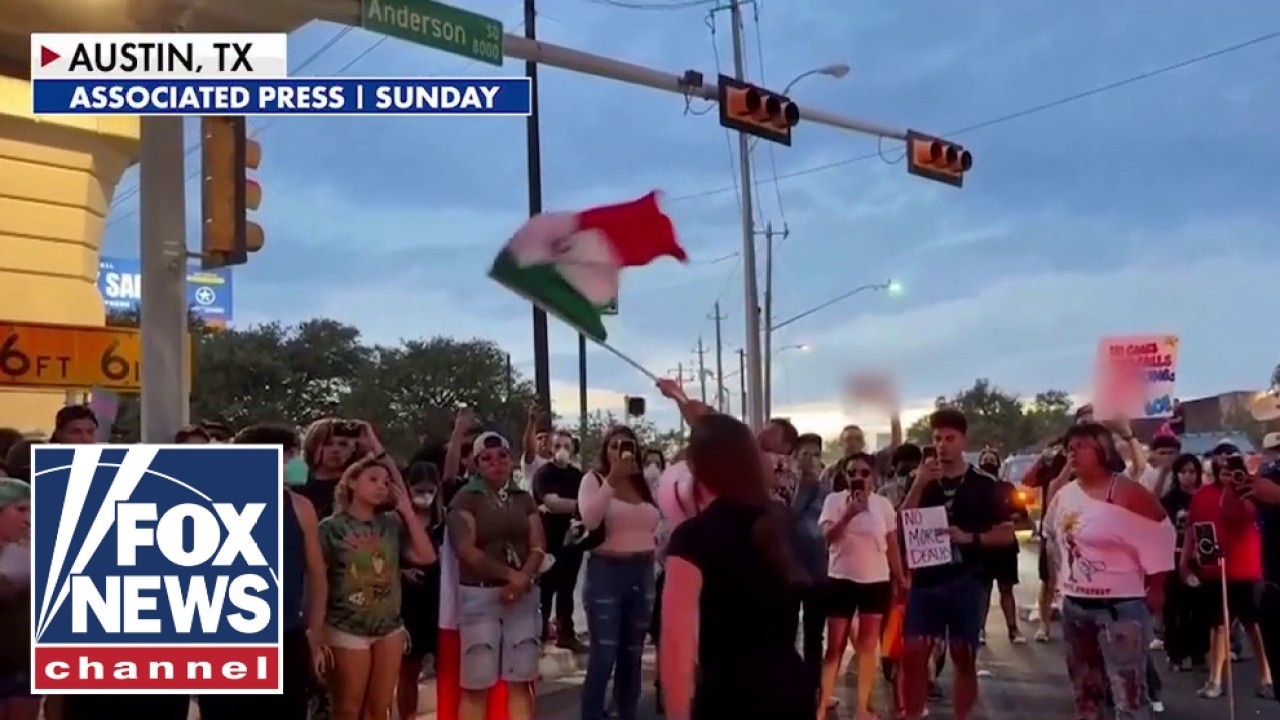
Within an hour, more than a hundred protesters had gathered at the site, chanting expletives against ICE and waving Mexican, American and Guatemalan flags. Several protesters could be seen washing their eyes and mouths in pain, after they were sprayed with what they said was teargas or chemical spray.
The shooting came after several months of increased immigration enforcement, particularly in immigrant-heavy neighborhoods, suburbs and exurbs.
Austin city council member José “Chito” Vela, who represents the neighborhood where Garcés Pérez was shot, said that he has heard constituents describe an enforcement bump driven by a rise in unilateral action by ICE. While ICE was largely seen making immigration arrests after Texas Department of Public Safety traffic stops for the first year or so of the second Trump administration, they have begun to act increasingly on their own, Vela said.
City leaders had previously raised concerns over the increased action. Congressman Greg Casar, an Austin Democrat who leads the Congressional Progressive Caucus, has sent a letter to DHS demanding cooperation in an “immediate, independent investigation” into the shooting, the full release of any footage the federal authorities have of the shooting, and “accountability for any wrongdoing by the agent responsible”.
Later on Monday, lawyers representing Garcés Pérez filed both a writ of habeas corpus and an injunction motion in court, hoping to stave off any attempt to deport him before an investigation is complete. In the application for the habeas petition requesting his release, Garcés Pérez’s lawyers argued that he qualified for a type of visa given to victims of crimes.














Comments