
 German (DE)
  English (US)
  Spanish (ES)
  French (FR)
  Hindi (IN)
  Italian (IT)
  Russian (RU)
  2 hours ago
US supreme court ruling on Trump's tariffs could come as early as Tuesday
Yohannes Lowe
Good morning, and welcome to our live coverage of US politics. The much-anticipated US supreme court ruling on the legality of Donald Trump’s tariffs is expected in the coming weeks, and possibly as early as Tuesday, according to the Reuters news agency.
Those challenging the tariffs, which include some small businesses and US states, argue the president exceeded his authority when imposing the sweeping levies last year.
Two lower courts have already found that the president did not have the authority to impose global tariffs, which were brought in using emergency powers allowing the president to issue immediate orders and bypass Congress.
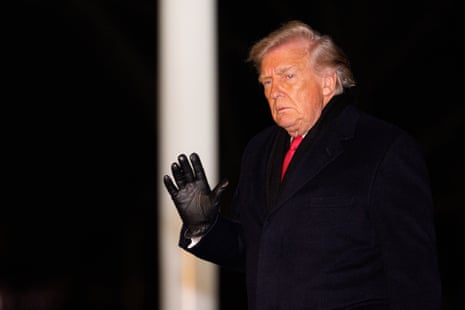
The supreme court, which is dominated by conservative justices, could throw out the tariffs – the cornerstone of Trump’s economic agenda – and force the president to send refunds to the US importers that paid them.
But if the supreme court does rule Trump overstepped his authority under the International Emergency Economic Powers Act, or IEEPA, to impose the tariffs, the White House has other ways it can bring in import taxes.
In a 15 January interview with the NY Times published on Monday, the US trade representative, Jamieson Greer, said the administration would “start the next day” to replace the tariffs with other levies if the ruling went against Trump.
“The reality is the president is going to have tariffs as part of his trade policy going forward,” Greer said. Last week, Trump said it would be “a complete mess” if the court were to strike down his trade tariffs, which he said would be difficult to reverse because businesses and countries could claim refunds.
Key events Show key events only Please turn on JavaScript to use this feature
Judge refuses to block new DHS policy limiting Congress members’ access to ICE facilities
Yohannes Lowe
In other news, a federal judge has refused to temporarily block the Trump administration from enforcing a new policy requiring a week’s notice before members of Congress can visit – and thereby inspect – immigration detention facilities.
Judge Jia M. Cobb of the Federal District Court for the District of Columbia concluded that the Department of Homeland Security (DHS) didn’t violate an earlier court order when it reimposed a seven-day notice requirement for congressional oversight visits to Immigration and Customs Enforcement (ICE) facilities (you can read her judgment here).
Judge Cobb, an appointee of Democratic former president Joe Biden, had blocked a virtually identical policy by the DHS last month, citing a clause in the appropriations law that funds the department and requires facilities to be open to congressional scrutiny.
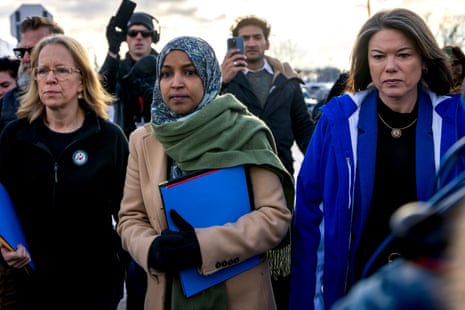
However, ICE reestablished the visitation policy on 8 January 2026, with the homeland security secretary, Kristi Noem, ordering the DHS to re-impose the seven-day notice requirement – but “exclusively with money appropriated by the (One Big Beautiful Bill Act),” not regular appropriations, effectively bypassing the previous court order.
The background to this is that last June, a dozen House Democrats who were blocked from visiting immigration detention facilities sued the Trump administration, accusing it of unlawfully obstructing their efforts to visit federal immigration detention centers.
Members of Congress had tried to visit the facilities amid reports of inhumane and unsanitary conditions. Thirty-two people died in ICE custody last year, the highest number of fatalities in two decades. At least five people have reportedly died in ICE custody so far this year.
In her ruling on Monday, Judge Cobb said the plaintiffs’ attorneys representing Democratic members of Congress used the wrong “procedural vehicle” to challenge the new policy and said the lawmakers would need to revise their complaint. She did not rule on the legality of the policy.
Donald Trump will head to the World Economic Forum in Davos, Switzerland later today.
He’ll be joining several of the ally countries that he’s been lambasting, and threatening with tariffs, in recent days over his longstanding goal to annex Greenland.
The president is due to leave the White House after a closed-door signing. We’ll bring you the latest in case he decides to speak to the press before he heads off.
Later today we’ll also hear from Karoline Leavitt when she holds a briefing for reporters at 1pm ET. We’ll be covering that and provide updates here.
US supreme court to hear challenge to Hawaii’s strict gun law
Eric Berger
Hawaii, which has some of the strictest gun laws in the United States, will see its regulations challenged before the supreme court on Tuesday.
The court will consider the legality of the state’s law that bans people from bringing firearms on private property open to the public unless they have permission from the property owner.
The case, Wolford v Lopez, was brought by three Maui residents with concealed-carry permits and a local gun group.
US supreme court ruling on Trump's tariffs could come as early as Tuesday
Yohannes Lowe
Good morning, and welcome to our live coverage of US politics. The much-anticipated US supreme court ruling on the legality of Donald Trump’s tariffs is expected in the coming weeks, and possibly as early as Tuesday, according to the Reuters news agency.
Those challenging the tariffs, which include some small businesses and US states, argue the president exceeded his authority when imposing the sweeping levies last year.
Two lower courts have already found that the president did not have the authority to impose global tariffs, which were brought in using emergency powers allowing the president to issue immediate orders and bypass Congress.
The supreme court, which is dominated by conservative justices, could throw out the tariffs – the cornerstone of Trump’s economic agenda – and force the president to send refunds to the US importers that paid them.
But if the supreme court does rule Trump overstepped his authority under the International Emergency Economic Powers Act, or IEEPA, to impose the tariffs, the White House has other ways it can bring in import taxes.
In a 15 January interview with the NY Times published on Monday, the US trade representative, Jamieson Greer, said the administration would “start the next day” to replace the tariffs with other levies if the ruling went against Trump.
“The reality is the president is going to have tariffs as part of his trade policy going forward,” Greer said. Last week, Trump said it would be “a complete mess” if the court were to strike down his trade tariffs, which he said would be difficult to reverse because businesses and countries could claim refunds.











Comments