
 German (DE)
  English (US)
  Spanish (ES)
  French (FR)
  Hindi (IN)
  Italian (IT)
  Russian (RU)
  3 hours ago
Keeping politics at arm’s length for the US men’s hockey team’s gold-medal matchup with Canada was always going to be difficult.
The game fell on the 46th anniversary of the Miracle on Ice, when an underdog group of US college players upset the mighty Soviet Union team against the backdrop of the cold war. But the US team who took the ice on Sunday were no plucky band of amateurs making a stand for democracy against authoritarianism – a point underscored when the US and Canada met last year in the 4 Nations Face-Off. Canadian fans booed the Star-Spangled Banner and the US players, either unaware of, or unsympathetic to, Canadian desires to be neither the 51st US state nor the USA’s opponent in a scorched-earth trade war, dropped the gloves to fight their opponents as soon as the game commenced.
Sunday’s game, though, was played with the utmost sportsmanship – and not just because Olympic rules punish fighting harshly. The teams’ well wishes extended beyond the traditional handshake line. Jack Hughes, who scored the winner for the US, was charming and gracious in victory, saying that one of his first thoughts was a recent conversation with Megan Keller, who grabbed the gold-clinching goal for the American women’s team a few days prior. Hockey’s force as a unifier was emphasized further when a video in which Hughes spoke of the importance of LGBTQ rights went viral.
The glow didn’t last long.
All who work in US sport, from top administrators down to the youth coaching and refereeing levels, are required to take training from the US Center for SafeSport, which reminds them to act promptly if they hear about sexual abuse accusations. So the optics of USA Hockey letting FBI director Kash Patel, who has been accused of mishandling the investigation of the Epstein files, party with the team were not great.
Patel has already been under fire over his travel tendencies and he fired a longtime FBI employee when news of his trips, which were fully visible to the public, did indeed go public. Hughes also was among the team members who posed for a picture with Patel, whose FBI tenure has included the alleged dismissal of an employee for having a Pride flag at his desk. Patel’s spokesperson says the FBI director was in Italy anyway on official business, but his critics point out that there was plenty of work for him back home that he could (or should) have been getting on with instead of partying with hockey players.
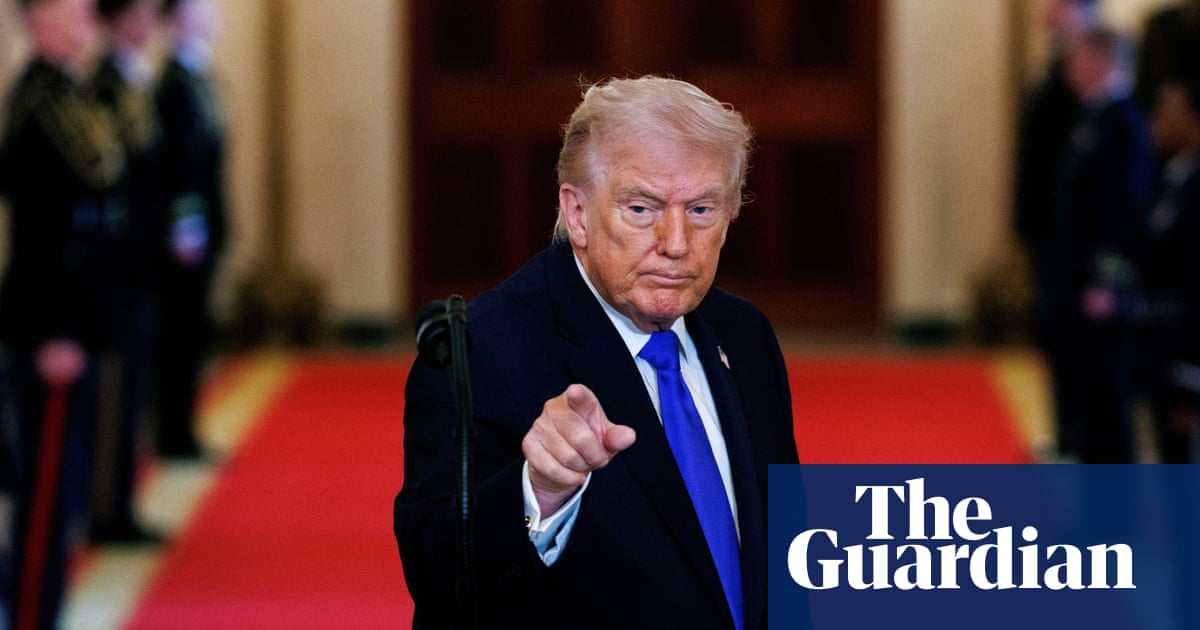
Then Donald Trump called to invite the US men to be his guests at Tuesday’s State of the Union address – already putting the players in the uncomfortable position of deciding whether to aggravate Maga diehards by saying no, or to aggravate the rest of the country by accepting the invitation. Trump made it worse by joking that he’d also have to invite the women’s team or risk impeachment. And just a short time after Hughes had given a shoutout to Keller, many players on the US men’s team laughed at Trump’s quip. (Quite a few also shouted out their approval of recognizing the women’s team.)
The women’s team politely but pointedly declined the invitation due to “timing and previously scheduled academic and professional commitments”. After all, the Professional Women’s Hockey League season resumes on Thursday. The men, of course, have no such commitments unless you count the fact that the NHL season resumes on Wednesday, less than 24 hours after the State of the Union address.
To be sure, invitations to visit the White House have grown increasingly fraught through the 20th century. Boston Bruins goalie Tim Thomas declined an invitation from Barack Obama because of his now-ironic concern over the sprawling size and authority of the federal government. Several teams declined – in some cases, pre-emptively – invitations to visit the White House during Trump’s first term, most notably the US women’s soccer team (Megan Rapinoe’s response was succinct and profane) and the Golden State Warriors. When many of the Washington Capitals went to the White House to celebrate their 2018 Stanley Cup victory, several players declined to make the trip. Devante Smith-Pelly, who scored a spectacular goal in the Capitals’ decisive Game 5 win and was one of a small number of Black players in the NHL at the time, called Trump’s rhetoric “straight-up racist and sexist.” Goalie Braden Holtby’s refusal stemmed from the same values that led to his prominent participation in DC-area Pride events, saying, “I want to stick by what I believe in and push towards a world where people are treated equal.”
Such tie-ins between sports and politics will be increasingly difficult to avoid this summer as the US serves as one of the hosts of the men’s soccer World Cup. Avoiding political stances may be seen as a strategy to avoid any further polarization, but when the country is already as polarized as it is, silence may easily be seen as complicity.
As of now, it’s difficult to tell how many players will actually attend the State of the Union address. The backlash, along with the realization that many of them have important NHL games the next day, may keep some players away.
Some players will face pressure to be “team players” and go along with the propaganda-driven Capitol Hill invitation. But perhaps some will recognize that they are being asked to give tacit approval to an administration that is denying many US residents and citizens a chance to be a part of Team USA writ large.







Comments