
 German (DE)
  English (US)
  Spanish (ES)
  French (FR)
  Hindi (IN)
  Italian (IT)
  Russian (RU)
  16 hours ago
The airport in Las Vegas last Friday afternoon was what you might expect for a WrestleMania weekend. Packed terminal. Delays stacking up. Nobody going anywhere. Then we heard why.
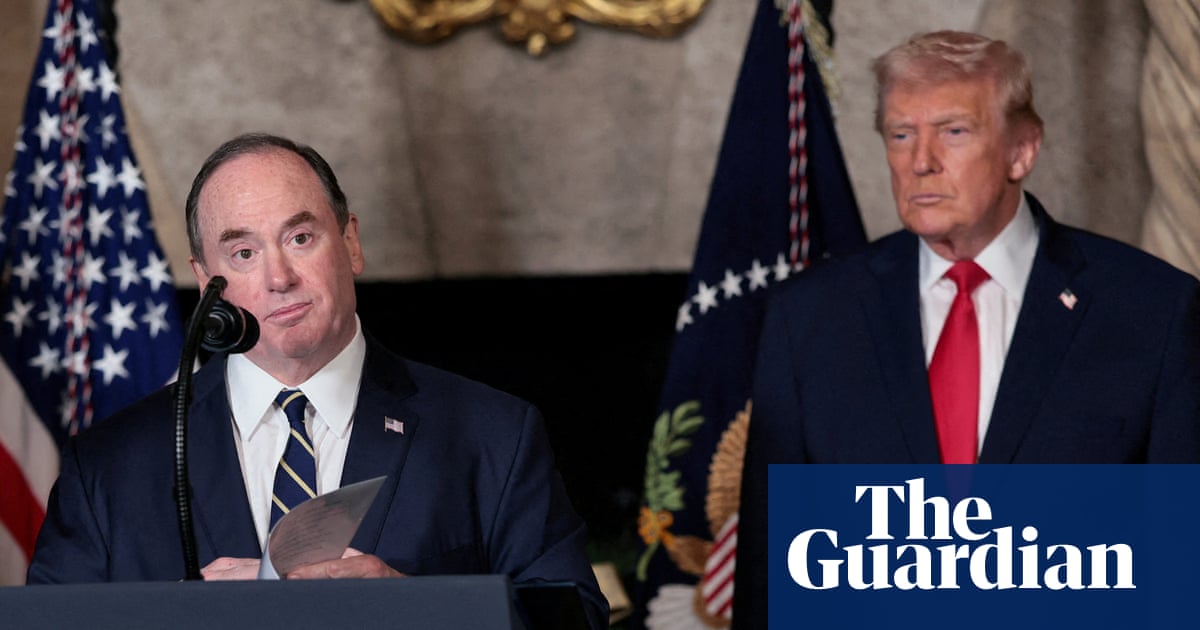
Air Force One was on the ground. Everything stopped. No one was taking off until the president finished doing his business.
I was in no rush, but I can’t even thank him for the break. I ended up waiting 20 minutes for a bar seat at a restaurant named after a sports league, all to order a meal that ended up upsetting my stomach. It was a quintessentially American moment.
People were doing what people do. Checking their phones. Standing up like something might have changed. Sitting back down when it hadn’t.
When Air Force One finally started moving, a few people across Terminal B jumped to their feet. Plenty of us, myself included, didn’t. I sat staring the opposite way, where I could clearly read the president’s name atop his Vegas hotel.
Power moves. The rest of us wait.
I kept watching Interstellar on my phone. It’s a sin to see Christopher Nolan’s films on something so small, but I’d been going back through it to rewatch a particular scene, when one character explains something that sounds cold but rings true: human empathy has a hard limit. It rarely extends beyond what we can actually see. At the most fundamental level, we are built to care for what is proximate.
Sitting in that terminal, it didn’t feel like a theory. Trump and the movement around him understand this very human limitation well enough to exploit it.
For more than a decade now, they have run a politics of deliberate narrowing. They tell us to distrust the press that extends our vision, distrust the institutions that ask us to consider strangers, and distrust empathy itself as weakness. The same people who wrap themselves in scripture and spectacle tell us it is naïve to care about those you will never meet.
Now Trump needs that same public to hold a war in its moral imagination.
Traveling home to Cleveland for my uncle’s funeral, I had been thinking about a quick Sunday drive to Pittsburgh to visit family and my mother’s grave. I decided against it. Didn’t even rent the car. Gas prices were a main reason why.
That isn’t a rhetorical device. That’s just what’s true.
Gas is averaging a little more than $4 per gallon nationally, more than a dollar higher than before the war began. In the Bay Area, I’m paying nearly $7 per gallon. This time last year, the national average was a little more than $3, and we thought that was high.
Trump’s reckless war shows up for most Americans as a number at a gas pump, not as images or moral reckoning. The war arrives in our wallets. As a calculation about whether a trip is worth making, or whether a car is worth using at all. As pressure, immediate and cumulative, it worms its way into the margins of a life.
That ledger extends well beyond our shores. The same oil shock Americans feel at the pump is devastating economies that have far less cushion to absorb it.
The bombing of a girls’ school in Iran, believed to be caused by the US, was a war crime. As we see from our own school shootings, though, kids dying doesn’t hold the attention of the American news consumer quite like gas prices. That is an indictment of us all, but our line of sight is partly to blame. Even worse, the aperture did not narrow on its own.
Americans don’t need a moral case against this war. They have a gas receipt.
Trump is being undone by the instrument he built. The movement that spent years training people not to extend their concern beyond the visible is now being judged exactly the way it taught people to judge everything else – by what it costs me, now, this week, at this pump.
The numbers reflect that. Foreign policy barely registers as the public’s top concern. Gas prices do. So do grocery bills, housing costs and healthcare.
The White House understands this, which is why it no longer explains the war in terms of what it destroys. It explains the war in terms of when gas prices come down. The administration has not even been able to keep its own story straight about when that pain ends. The treasury secretary, Scott Bessent, predicted $3 gas by summer. On Sunday, energy secretary Chris Wright said we might not hit that rate until 2027. Trump then said that was “totally wrong”, but who is to say?
The moral ledger barely registers. The pump does. Unless they have loved ones in harm’s way, Trump’s threats, the strait blockade, the negotiations under duress – all of it fades next to the cost Americans can actually feel.
So let me say this plainly: if gas prices come down and Trump’s ratings rebound, that will not mean this was worth it. It will mean the trick worked.
Trump breaks something that was functioning, extracts an enormous cost in money and blood and moral credibility, halfway fixes it through belated and chaotic diplomacy, and claims victory. The country, exhausted and relieved, exhales. Moves on. I imagine that is what the administration is counting on.
Back in Las Vegas, Air Force One eventually lifted off. The runway cleared. Flights resumed.
Within the hour, most of that terminal had boarded, found their seats, and was somewhere over the desert, drinks in hand, the delay mostly forgotten. That’s the mechanism. The pain recedes, and we let it take the memory with it.
Power moved. The rest of us waited, paid, adjusted, and got on with it.
Don’t. Not this time.
Remember the math you did at the pump, or the trip you reconsidered. This didn’t have to happen. None of us ever had to pay this cost at all, even though the people responsible are already telling us that it was worth it.
The price of gas may yet come down. That isn’t accountability, though. It isn’t a reckoning. We may have the privilege of worrying about such things, but we don’t have the luxury of forgetting.
-
Jamil Smith is a Guardian US columnist






Comments