
 German (DE)
  English (US)
  Spanish (ES)
  French (FR)
  Hindi (IN)
  Italian (IT)
  Russian (RU)
  2 hours ago
Before US troops invaded Iraq, George W Bush asked Congress to pass a resolution authorizing military force against Washington’s longtime nemesis, a request that lawmakers obliged.
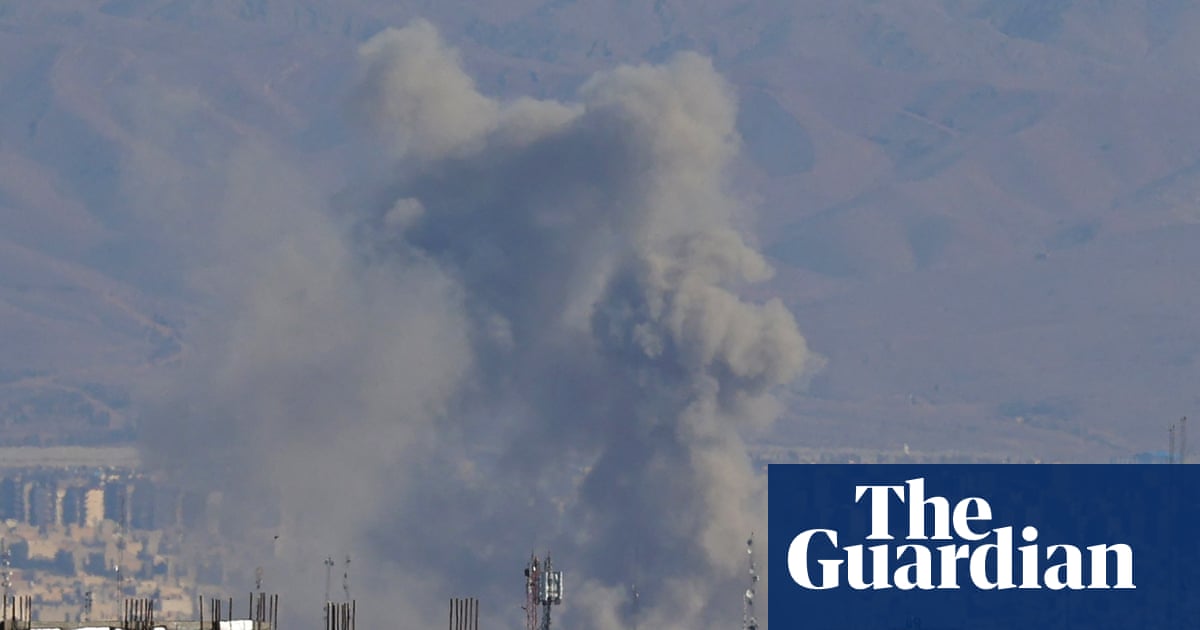
Twenty four years later, the United States is at war with a different Middle Eastern rival – Iran – under a different Republican president – Donald Trump. But this time, the president did not bother to seek permission from the Senate and House of Representatives before joining Israel in launching the air and naval campaign. And far from objecting, Congress’s Republican majorities have simply stepped aside.
“My understanding of the law has always been – and this is the tradition and the way the law has been used and observed over many decades – the president was acting well within his authority,” Mike Johnson, the Republican House speaker said Monday after receiving a classified briefing on the conflict.
When a reporter asked John Thune, the Republican Senate majority leader, if Congress would need to approve continued US participation in the campaign after two or three months, he replied: “No.”
“I think the president has the authority that he needs to conduct the activities, the operations, that are currently under way there,” Thune said.
On Wednesday, Senate Republicans blocked a Democratic-backed war powers resolution that would have forced the US military to end hostilities against Iran unless Congress gives its permission, and House Republicans voted down a similar measure the day after.
The stage is now set for Trump to continue his military campaign against Iran free from Congress’s interference, despite shifting explanations by the president and his administration of its objectives, and concerns from lawyers that the war is illegal and costing unnecessary money and lives.
The conflict has killed six US service members and at least 1,230 people in Iran, according to officials from those countries. An analysis released Thursday by the Center for Strategic and International Studies (CSIS), a Washington-based thinktank, puts the cost of the war’s first 100 hours at $3.7bn, or $891.4m per-day.
Republicans have downplayed the severity of the conflict – “we’re not at war right now,” Johnson said at a recent press conference – or argued that it is a necessary resolution to nearly a half century of enmity between the two countries.
“Since 1979, they have been killing Americans. They have been killing their own people. They have been slaughtering people in the name of religion. It is time for that to end,” Republican senator Lindsey Graham said of Iran.
Democrats appear to be positioning themselves squarely against the most significant foreign war to involve the United States in years, after struggling to navigate the backlash to Joe Biden’s support of Israel’s war in Gaza and, decades earlier, their own culpability in the Iraq war.
In 2002, 81 House Democrats and more than half of Senate Democrats backed Bush’s resolution to initiate a war that would go on to be regarded as an unpopular, unjustified boondoggle. Then senator Hillary Clinton’s vote in support of the Authorization for Use of Military Force Against Iraq Resolution would turn into a liability when she ran for the Democratic presidential nomination six years later, and she ended up losing to Barack Obama.
The war against Iran is, comparably, a partisan affair. Only one Senate Democrat – Pennsylvania’s John Fetterman – opposed the war powers resolution in that chamber, while Kentucky Republican Rand Paul supported it. In the House, four Democrats broke with the rest of their party to vote against the resolution, while both the Republican votes in support came from lawmakers who worried that Trump was overreaching.
One of them, Warren Davidson, is a former army ranger and rightwing Republican who rarely finds common cause with Democrats.
“For some, this debate will be about whether we should even be fighting in Iran,” he said. “For me, the debate is more fundamental: is the president of the United States, regardless of the person holding the office, empowered to do whatever he wants? That’s not what our constitution says.”
The partisan divide in Congress may mean that Republicans wind up bearing the political burden of a war that polls show majorities of the US public oppose, a potential boon for Democrats ahead of midterm elections in which conditions appear favorable for retaking the House, if perhaps not the Senate.
“I feel like Iran is a distraction from our internal problems,” said Democrat Yamilka Almeyda as she voted in Greenville, North Carolina, one of three states that held the first primaries of the year on Tuesday. “I think this war is unnecessary.”
Already, top Democrats have incorporated the war into the affordability message that forms the backbone of their pitch to voters. “We have no concrete justification for why we are putting American troops in harm’s way and spending billions of dollars on a foreign war while the affordability crisis rages here at home – a crisis Donald Trump said he would fix on day one, but instead, Republican policies have made worse,” said House minority leader Hakeem Jeffries.
But the war powers votes alone won’t be enough to satisfy the desires of voters who want Democrats to be the anti-war party, said Usamah Andrabi, a spokesperson for Justice Democrats, a progressive group backing candidates in the just-started primary season. In Congress, there’s already talk of passing legislation to cover the costs of the conflict, and Andrabi said it’s essential for Democrats to oppose that.
“Any single person who votes to fund this war or votes against a war powers resolution deserves a primary, because voters deserve an anti-war choice in their districts,” Andrabi said.
Jimmy Ryals in Greenville, North Carolina, contributed reporting















Comments