
 German (DE)
  English (US)
  Spanish (ES)
  French (FR)
  Hindi (IN)
  Italian (IT)
  Russian (RU)
  4 hours ago
After a year in which US journalists faced a dramatic increase in violence from law enforcement, news organizations and advocacy groups have recently tried to better protect reporters through outreach to the Department of Homeland Security.
Over the last four months, the Reporters Committee for Freedom of the Press and a collection of New York news outlets have sent letters to the Department of Homeland Security attempting to open dialogue to reduce confrontations between law enforcement officers and journalists at protests, especially over efforts to deport alleged undocumented immigrants.
Meanwhile, the Trump administration recently announced that it hired thousands of new Immigration and Customs Enforcement (ICE) officers and will escalate operations this year as part of its deportation efforts that DHS is coordinating.
That push – accentuated by the outrage over a Minnesota woman being killed by an ICE officer this week – will probably mean more protests and potentially more violence against journalists. It’s unclear if the messages to the DHS will help keep journalists safe.
“We don’t know if ICE is going to step up its immigration efforts in New York – that depends on a lot of political factors – but we certainly have seen it happen [elsewhere], and the way ICE has conducted itself in those cities gives some cause for concern that not having those channels of communication is bad for everybody,” said Carroll Bogert, CEO of the City, a New York news outlet, who wrote a letter in December to DHS officials.
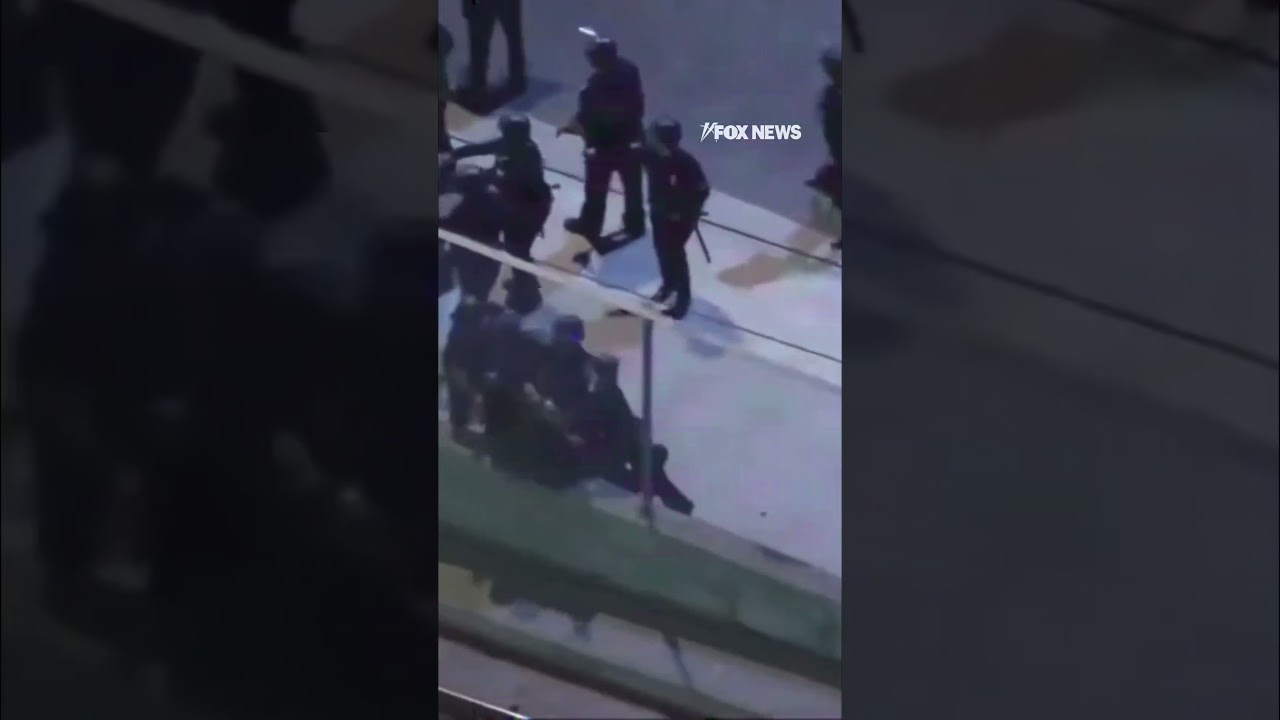
The Freedom of the Press Foundation tracks arrests and assaults against journalists and found that last year there were 172 alleged assaults against journalists, most from law enforcement at protests concerning the administration’s immigration policies. From 2022 to 2024, there were 175 alleged assaults.
The foundation states that it only reports “incidents that can be verified by first-person accounts or cross-referenced by multiple news sources”.
Part of that increase is, of course, because there have simply been more protests.
Gabe Rottman, vice-president of policy for the Reporters Committee, said the confrontations also occur because DHS officers do not receive enough training on how to interact with journalists.
That includes instructions on enforcing a dispersal order, Rottman said.
“It’s crucial that officers be trained to permit journalists to remain on the scene even when they are issuing a dispersal order,” Rottman said. “The law enforcement response needs to be tailored to the unlawful activity that’s occurring, and if journalists are on the side not obstructing police operations, then as a first amendment matter, they may have a right to remain.”
Also, whereas the Department of Justice has news media guidelines, the DHS does not, Rottman said.
In 2024 the justice department worked with the Reporters Committee to establish recommendations on police and media interactions at mass demonstrations. These include directives that journalists wear credentials and that law enforcement allow the media to “position themselves in a safe location” and only clear the area when necessary for public safety.
“Even if there is cause for the detention, when the journalist says, ‘I’m press, I’m press,’ the officer [should be] trained to give the journalist a chance to establish that they are, in fact, journalists and then let them go,” Rottman said.
Ryanne Mena, a Southern California News Group reporter, was struck with a pepper-ball bullet allegedly fired by a DHS agent while covering a protest in Los Angeles. A day later at a protest, another DHS officer allegedly fired a rubber bullet that struck her in the head and caused a concussion.
Both times, Mena wore press credentials.
She and others filed a lawsuit against DHS to prevent officers from “using unnecessary and excessive violence to prevent them from exercising their first amendment rights”.
A federal judge issued a temporary injunction in September, ruling that DHS officers cannot legally disperse anyone “they know or reasonably should know is a journalist” without probable cause to believe that the person committed a crime “unrelated to failing to obey a dispersal order”.
“Under the guise of protecting the public, federal agents have endangered large numbers of peaceful protesters, legal observers and journalists,” the judge stated.
The DHS appealed, claiming that the measure to protect journalists from dispersals could “expose officers to someone who wishes to harm them or damage federal property just by wearing fraudulent press credentials”.
In October, the Reporters Committee sent the letter to the DHS secretary, Kristi Noem, seeking a meeting and asking the agency to adopt an “arrest avoidance” policy like the justice department.
“By making supervisory officials in the field immediately available to review the detention of individuals who present evidence of their identity as a journalist, law enforcement agencies avoid unnecessary conflict,” the letter states.
Last month, the City and seven other news organizations also sent a letter to the DHS. Questions included: “What are the agencies’ current training protocols regarding interactions with the press when enforcement activity is ongoing?”
The DHS did not respond to either letter, according to the senders.
When the Guardian asked the DHS about the letters, assistant secretary Tricia McLaughlin, in an email, focused on dangers ICE officers face and claimed that there had been a 1,150% increase in assaults against them. The Los Angeles Times and National Public Radio both found that the increase was actually about 25%.
“We remind members of the media to exercise caution as they cover these violent riots and remind journalists that covering unlawful activities in the field does come with risks – though our officers take every reasonable precaution to mitigate those dangers to those exercising protected first amendment rights,” McLaughlin stated.
Immigration reporters will probably be busy this year.
“We’ve got 10,000 new ICE agents coming on board” and “morale is high”, Gregory Bovino, a border patrol official, told Fox News. “2026 is going to be huge.”
As such, will the outreach make any difference?
“I don’t want to sound naive, but I think it’s important to have made the effort,” Bogert, of the City, said. “Should disputes arise over ICE treatment of journalists … it will behoove us to have tried.”




Comments