
 German (DE)
  English (US)
  Spanish (ES)
  French (FR)
  Hindi (IN)
  Italian (IT)
  Russian (RU)
  2 hours ago
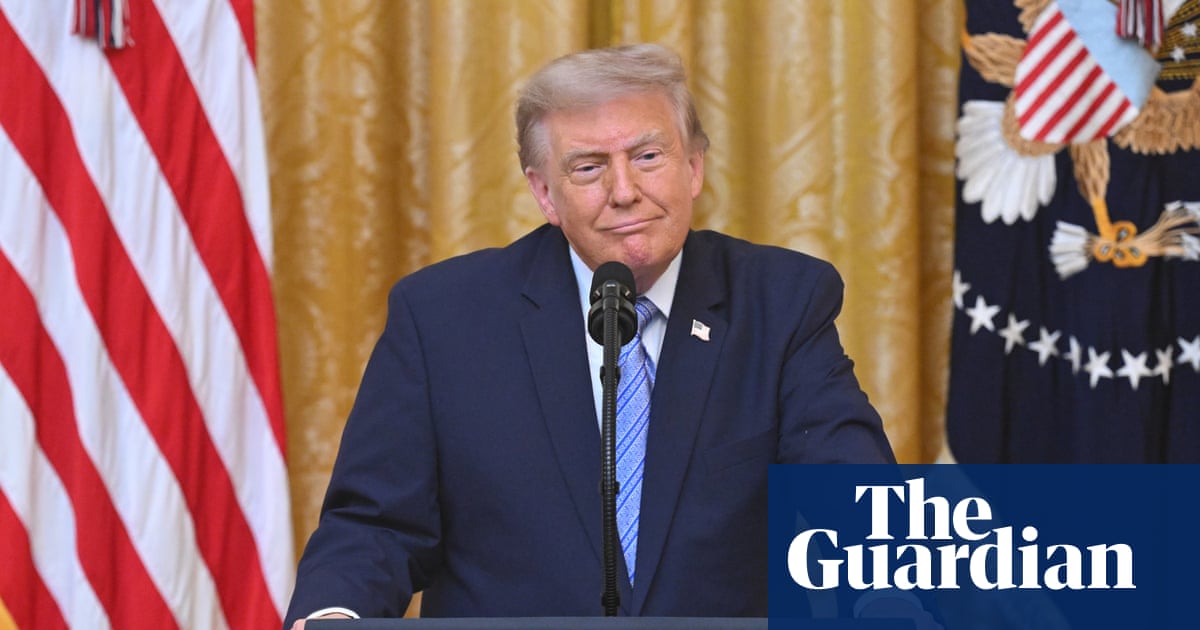
On Thursday night, Donald Trump did it again, trashing another American tradition with his primetime address from the White House’s East Room about election integrity. Other presidents have used such speeches in times of national emergency, to announce major new policies designed to improve Americans’ lives or to honor American traditions.
Not Trump.
His speech broke the mold. It was a declaration of war on US elections, delivered in Orwellian fashion in the name of protecting them. It offered his audience a chance to witness his obsession with the 2020 presidential election on full display, this time seemingly blessed by the trappings of America’s highest office. Trump’s White House address was also a reminder of just how much time and energy he and his administration have devoted to explaining away or denying his 2020 electoral defeat.
Amid foreboding allusions to the “deep state”, Trump put on what the New York Times’s Peter Baker called “an astonishing spectacle featuring a president intent on persuading the country that its elections cannot be trusted, at least not the ones where he or his allies fall short … [and] sensational claims about vulnerabilities of the election system”.
Trump did not just rehash history. He tried to prepare this country for what might unfold in the run-up to, and after, the 2026 midterms.
The president claimed that the “election system is so broken and so vulnerable that no one can possibly defend it”, and he outlined a series of steps the federal government will take to protect elections from threats that are, in fact, nonexistent. As the New York Times notes: “No evidence has ever emerged showing that vote counts have been manipulated or corrupted … Among Mr. Trump’s false claims about the 2020 election, none have been more persistent – or more specious – than those concerning the purported vulnerabilities of voting machine technology.”
Ironically, it is Trump himself who has posed and continues to pose the gravest threat to the integrity of American elections. His White House speech was like a fox announcing it would guard the henhouse. We have been warned.
Now it is up to us to mobilize to resist and foil his plan.
The tradition of televised addresses from the White House began on 5 October 1947, when then president Harry Truman took to the airwaves to deliver a speech about a matter of life and death: the post-second world war famine unfolding in Europe. He asked the American people to conserve food so that the United States could send food to Europe.
Truman set the tone of gravity and seriousness of purpose that Americans have come to expect when the president asks for airtime to speak from the White House. Three years later, Truman used the setting of the Oval Office to declare a national emergency in the wake of China’s entry into the Korean war.
He tried to rally the nation. “By this act,” he observed, “they have shown that they are now willing to push the world to the brink of a general war to get what they want … That is why we are in such grave danger. The future of civilization depends on what we do – on what we do now, and in the months ahead.”
Since then, presidents of both parties have displayed that seriousness of purpose in the Oval Office and White House addresses. And in 1957, President Dwight Eisenhower explained the significance of any address from the White House when he delivered remarks about his decision to use the military to enforce the court-ordered desegregation in Little Rock, Arkansas.
As he put it: “Speaking from the House of Lincoln, of Jackson and of Wilson, my words would better convey both the sadness I feel in the action I was compelled today to take and the firmness with which I intend to pursue this course until the orders of the federal court at Little Rock can be executed without unlawful interference.”
The fact that Trump would use a televised address from the White House, at a time when war rages and the economy teeters, to discuss the results of a time-consuming scavenger hunt for clues about what happened in an election six years ago is shocking, though it should not have been surprising.
The president’s inability to refrain from making baseless allegations about rigged contests and elections goes back a long way. As ABC News explains, his “history of crying foul in contests he doesn’t win” includes calling the Emmys “all politics” after The Apprentice failed to win.
He continued to make such allegations after becoming a presidential candidate. After the first 2016 contest, the Iowa caucuses, which he lost to the Texas senator Ted Cruz, Trump tweeted: “Based on the fraud committed by Senator Ted Cruz during the Iowa Caucus, either a new election should take place or Cruz results nullified.”
Cruz, who has now become a fervent convert to Trump’s election denialism, got it right when he responded to Trump: “Donald, it ain’t stealing when the voters vote against you – it is the voters reclaiming this country and reclaiming sanity.”
When the results showed that Trump had lost the popular vote in the November 2016 general election, he again cried foul: “I won the popular vote if you deduct the millions of people who voted illegally.”
Fast forward to 2020, and we know what happened. The president made countless claims about fraudulent voting, rigged voting machines, and a dishonest result, claims he amplified during his Oval Office address.
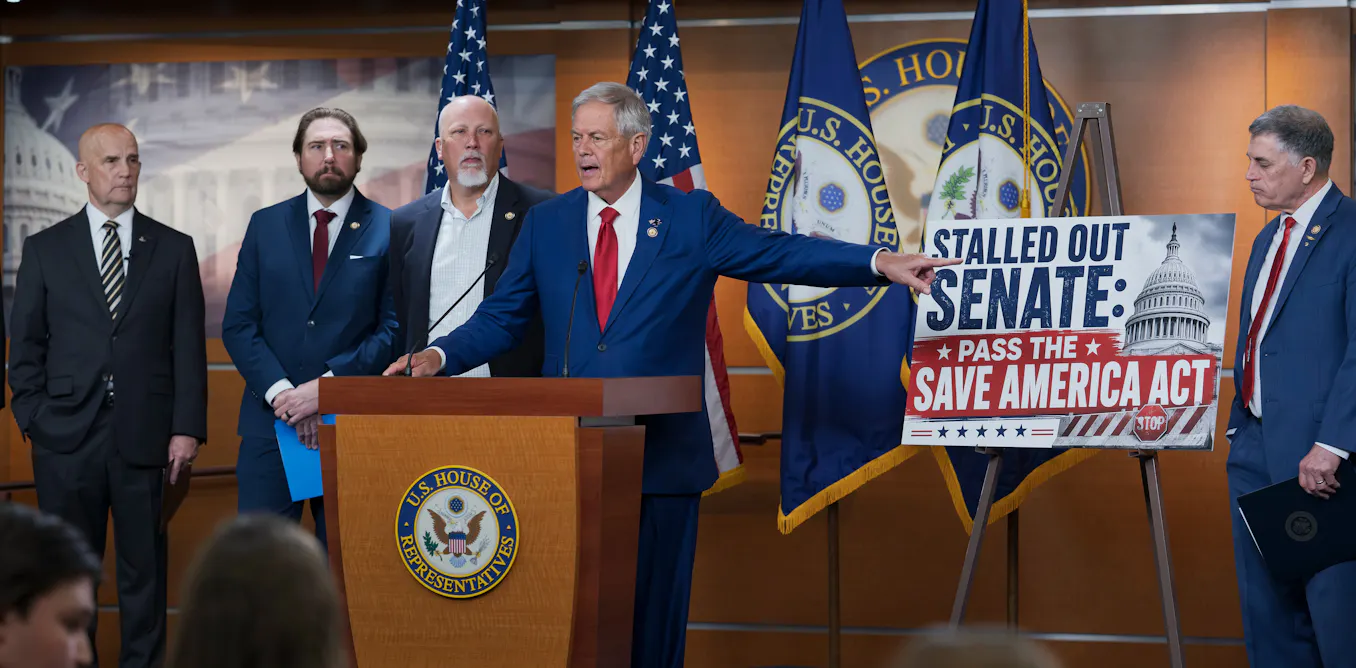
And on Monday, even as he talked about Senator Lindsay Graham’s death on Fox and Friends, he went off-script to complain about California’s supposedly rigged voting systems, denounce mail-in ballots and promote the so-called Save America Act that would make it harder for people to vote.
On Thursday, he was back at it.
While we don’t know now what impact his remarks will have, we do know that the president’s longstanding and relentless campaign to undermine confidence in elections has already borne fruit. A recently conducted PBS/NPR/Marist poll found: “Americans’ confidence that their elections will be run fairly has dropped to its lowest point in years.”
It is a shame that the president trashed the dignified aura of an address from the White House to peddle conspiracy theories and to sow more doubts about American election integrity. But as we have known for a long time, and Thursday’s speech again demonstrated, he is shameless.
-
Austin Sarat, associate dean of the faculty and William Nelson Cromwell professor of jurisprudence and political science at Amherst College, is the author of Gruesome Spectacles: Botched Executions and America’s Death Penalty









Comments