
 German (DE)
  English (US)
  Spanish (ES)
  French (FR)
  Hindi (IN)
  Italian (IT)
  Russian (RU)
  2 hours ago
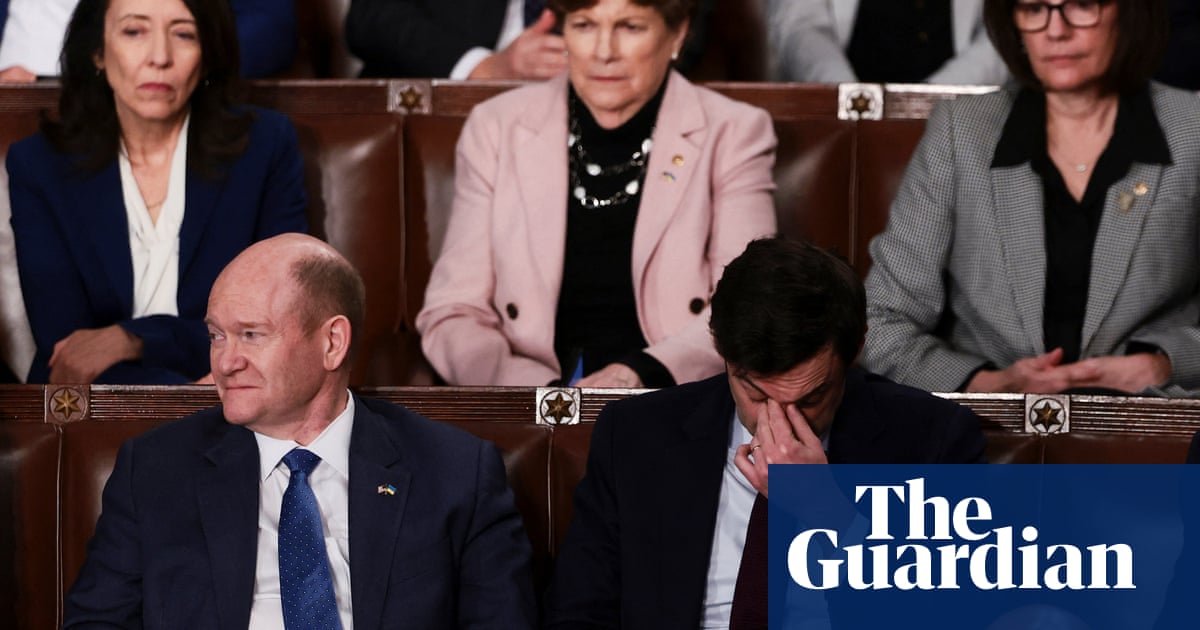
In fulfillment of clause 1 of section 3 in article II of the US constitution, Donald Trump duly gave Congress “Information of the State of the Union” last night.
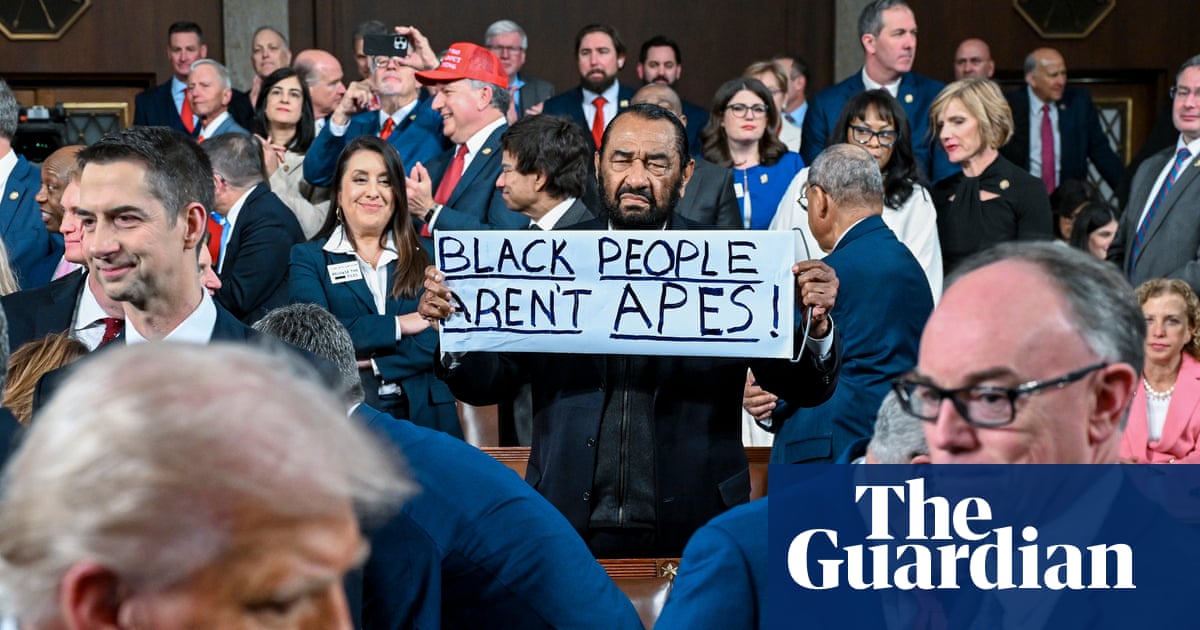
Information … and more information. At an hour and 47 minutes, this was the longest State of the Union address in history. As he has so often done in the past, Trump bobbed and weaved impressively (“the weave” is his own term for his meandering speaking style). He zigged and zagged, taunting Democrats for much of the speech (he called Zohran Mamdani a “communist” and took pot shots at Democrats throughout the night), while claiming to be a unifier when the mood struck.
He was alert at times, working the room like a borscht belt comic, calling out friends, delivering jabs to enemies – the menacing Jerry Lewis of The King of Comedy. But for long stretches, he read robotically from the teleprompter, as if tired by the ordeal of going up to Capitol Hill.
To be sure, he had his work cut out. This was a major opportunity for a reset, a little more than half a year before the midterms. He needed one. Trump’s approval ratings have cratered in recent weeks, due to outrage over killings of American citizens by federal immigration agents, and an incoherent foreign policy that has confused his Maga base and alienated most of our traditional allies.
A president who once swore to avoid forever wars is now deeply enmeshed in Iran, where a US flotilla is prepared to launch airstrikes, and in the Caribbean. His “Board of Peace” has failed to win over America’s closest allies, and threatens to degrade the United Nations and an international Pax Americana once created by Americans.
His tariff policy is deeply unpopular, among Republicans as well as Democrats, and there are signs of a “Trump slump” coming in, dragging down the economy. A recent report stated that the US has lost 108,000 manufacturing jobs in the last year, despite Trump’s promises that his tariffs would bring factories “roaring back”.
In short, reality bites. Trump continues to lash out at enemies, and the previous administration, but it has been a year of Republican control and the American people can see clearly that he is not delivering. More than two-thirds of Americans – 68% – say that he hasn’t paid attention to important problems, and he is hemorrhaging independent voters. More than half of voters – 57 % – disapprove of his handling of the economy. He tried to claim that he inherited a bad economy, but that is easily disproven (the Economist called the US economy “the envy of the world” in October 2024).
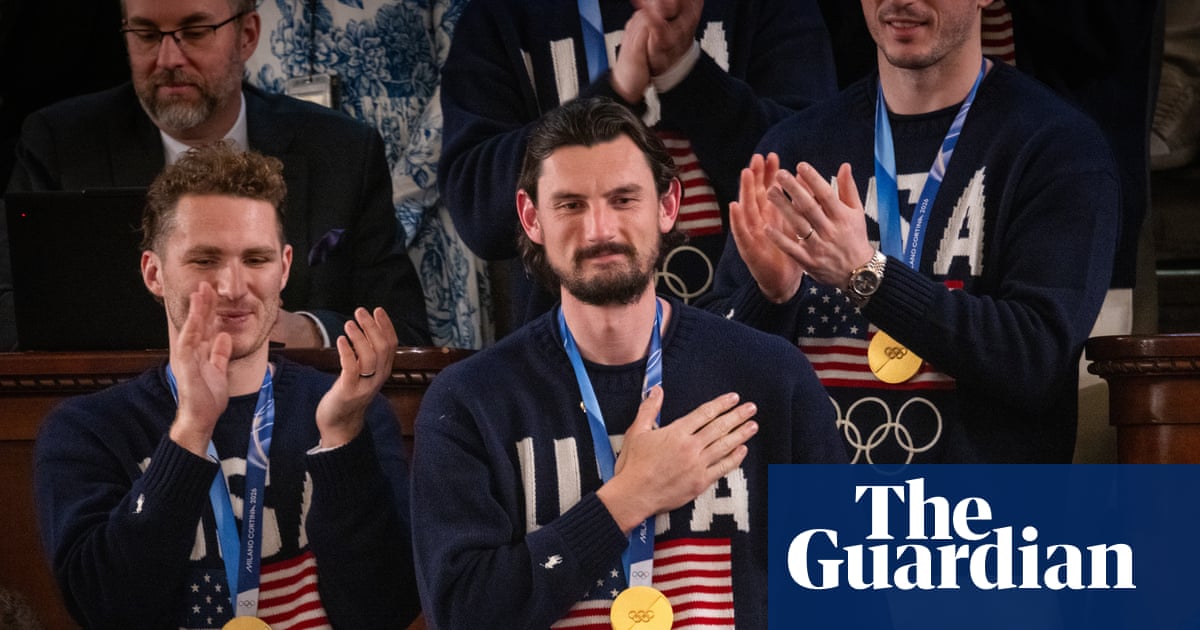
Trump came into the Capitol hoping to distract from these problems, and to an extent, he did. There were the usual cultural attacks, and more than a few “Lenny Skutniks”, the name given to an outside hero figure (after a precedent created by Ronald Reagan in 1982, honoring a civilian who jumped into a frozen Potomac to rescue a plane crash survivor). In this case, the members of the US men’s hockey team, who were cheered lustily, were the marquee attraction. Trump also talked about American history, including the 250th anniversary celebration beginning this year, and the second world war (several veterans were in the chamber).
But the result was a Bataan death march at times, and a long speech in search of a point. The State of the Union address has been in decline for decades, as a TV spectacle, and Trump likely hastened that trend.
Can anyone remember a single one of his addresses from his first term? Tonight will be no different. He ignored topics of great relevance in the days ahead (Are we going to war in Iran? Can we say something to meaningful to Ukraine on the fourth anniversary of Putin’s invasion?), while meandering about private obsessions of dubious relevance.
He claimed that the US was the “hottest” country while ignoring steep declines in favorability ratings. He denounced immigrants while failing to speak about a topic very much on the minds of Americans, the killing of Renee Good and Alex Pretti by federal immigration agents in Minneapolis. That omission feels all the more striking at a time when so many Americans are wondering about a justice system that seems rigged to reward the wealthy, and to forget everyone else, as in the Jeffrey Epstein case.
In other ways, too, “the weave” seemed to be running out of steam. At times, Trump seemed to think Nancy Pelosi was still speaker of the House. Far from “defeating” affordability, as he claimed, Trump seems overmatched by it. The price of hamburger is up 17.2% from a year ago. Coffee has increased by 18.3%. Nearly two-thirds of Americans – 65% – are unable to afford a median-priced home. The Trump-led expiration of healthcare subsidies will make healthcare unaffordable to millions. At the same time, the One Big Beautiful Bill Act delivered a trillion dollars in tax cuts to the top 1%.
Trump spoke often of 1776, and the beginning of the anniversary year. He is far from the first president to do so. But 1776 is also the year that Edward Gibbon wrote his classic History of the Decline and Fall of the Roman Empire. In that work, Gibbon wondered why a great people had allowed their civic institutions to wither. He then answered his own question.
They blamed anyone but themselves for their problems, usually fixating on foreigners. They abandoned their libraries and cultural institutions, and were drawn to “circuses and theatres” for sensational entertainments. They also tore down a lot of their better civic buildings. As Gibbon put it:
The monuments of consular, or Imperial, greatness were no longer revered, as the immortal glory of the capital: they were only esteemed as an inexhaustible mine of materials, cheaper, and more convenient than the distant quarry. Specious petitions were continually addressed to the easy magistrates of Rome, which stated the want of stones or bricks, for some necessary service: the fairest forms of architecture were rudely defaced, for the sake of some paltry, or pretended, repairs; and the degenerate Romans, who converted the spoil to their own emolument, demolished, with sacrilegious hands, the labors of their ancestors.
Sound familiar?
-
Ted Widmer is a historian and a former White House speechwriter (in the Clinton administration). He is the author of a forthcoming study of the Declaration of Independence, The Living Declaration: A Biography of America’s Founding Text, with the Library of America









Comments