
 German (DE)
  English (US)
  Spanish (ES)
  French (FR)
  Hindi (IN)
  Italian (IT)
  Russian (RU)
 Capitalism is getting a rebrand on the right.
Josh Hawley calls it "covenant economics." Marco Rubio termed it "common good capitalism." And JD Vance talks about dignity, not gross domestic product, as the measure of economic progress.
The language they use is different, but the heart of their argument is the same: The free-market-rules orthodoxy that dominated the Republican Party for decades has failed. Fixing it requires getting a lot more comfortable with federal intervention, like tariffs to protect domestic industry, seed accounts for newborns and government stakes in corporations.
The new vocabulary attempts to clothe those kinds of policies — which would have been anathema to Republicans only a decade ago — in the familiar conservative language of faith, family and fairness. It's an increasingly existential bet that touting the party's new economic vision is how Republicans hold on to the coalition President Donald Trump built for 2028 and beyond, even without the president on the ballot.
"The answer as to why the party is beginning to finally shift directions is: voters. That's the one word answer," Hawley, who has been championing these economic policies for more than a decade, said in an interview.
An older generation of Republicans spent the past decade hoping Trump's penchant for economic interventionism would prove an aberration from the party's tradition, after which the GOP would course correct. But the small field of potential successors to the president increasingly suggests otherwise.
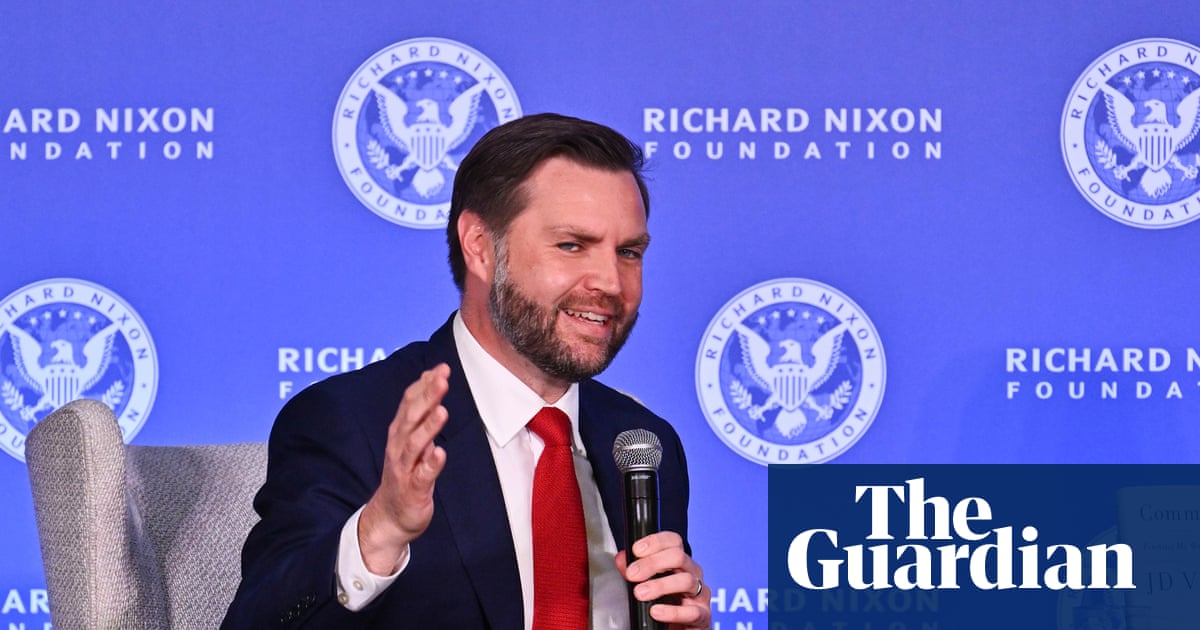
Vance, Trump's heir apparent, as senator pushed for tighter regulations on everything from big banks to railroads and proposed raising taxes on university endowments, policies that under Ronald Reagan or George W. Bush might have gotten him drummed out of the party.
"Looking at all the rising stars in the Republican Party, whether it's the vice president or Secretary Rubio, we have people like [Sens.] Jim Banks, Bernie Moreno, a lot of people who are coming in to fill the Senate who really fundamentally understand the issues that Americans are facing, the importance of workers, that kind of thing," U.S. Trade Representative Jamieson Greer, who has shepherded the president's tariff agenda for the last year and a half, told POLITICO.
Or, as a senior White House official, granted anonymity to speak candidly, put it: "The train is coming down on the tracks, and if you're standing in the way, you get run over."
Spokespeople for Vance and Rubio did not respond to requests for comment, while White House spokesperson Kush Desai framed the administration's economic posture as "implementing traditional free market policies that do work — like deregulation and tax cuts — while rectifying longtime America-Last policies that have left Americans behind."
For now, the champions of the old guard — who hew to free market philosophers such as Adam Smith, Milton Friedman and Ayn Rand — concede they have no one to counter what they see as the creeping socialism infiltrating mainstream Republican discourse.
"If the bright-line definition of socialism is owning the means of production, then yeah, [the president is] there," said Douglas Holtz-Eakin, a former chief economist on George W. Bush's Council of Economic Advisers who now leads the conservative American Action Forum. "The old conservatives — the people like me, literally — Bush was the end of that. It's been gone for a long time."
As the president's economic populism increasingly hardens into the GOP's post-Trump governing philosophy, a vocal, well-monied cadre of old right Republicans is making a last-ditch effort to claw the party back toward its free market roots, a spat that burst into public view last week.
A tiff over whether young Americans should stop complaining about $20 burritos — which Vance weighed in on — quickly morphed into a broader argument over whether conservatives were taking voters' economic anxieties seriously enough. And influential MAGA podcaster Jack Posobiec sparked backlash from old guard Republicans after declaring himself "not a capitalist" in critiquing Kevin O'Leary, the Canadian businessman who is an archetypal punching bag for the New Right.
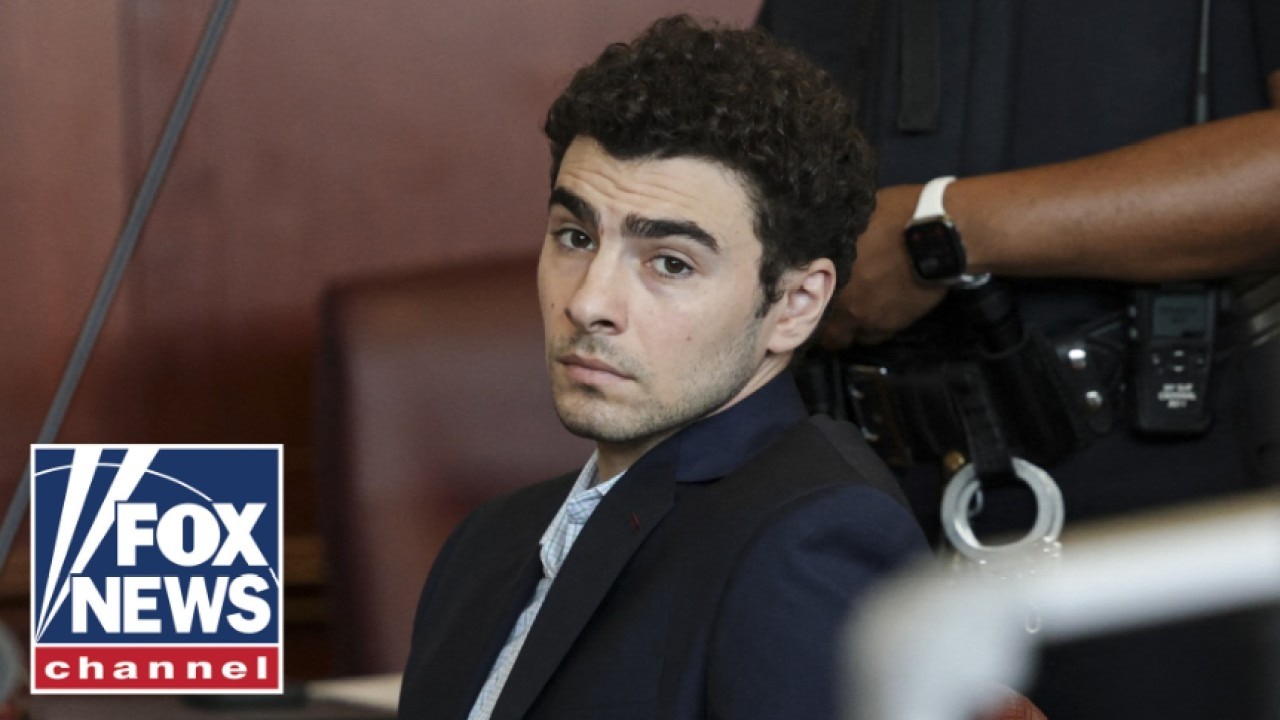
"They see the Kevin O'Learys with the $2 million watches, and we wonder why they're cheering Mangione," Posobiec said, referring to Luigi Mangione, the man accused of killing UnitedHealthcare CEO Brian Thompson, allegedly driven by his frustrations with corporate greed. "If we don't adopt some of these [populist] policies, we are going to straight up get a socialist revolution."
The GOP's economic shift comes amid the rapid ascent of progressives and democratic socialists like New York City Mayor Zohran Mamdani and Michigan Senate candidate Abdul El-Sayed. Their brand of left-wing populism appeals to many of the voters that Trump won over and who the next GOP nominee for president will need.
"There's not a lot of daylight between — and there hasn't been for a decade — [Sen.] Bernie [Sanders] supporters and MAGA supporters. Bernie and the president just have a little bit different ideas on how to deliver those results, but there's a lot of overlap," said Alex Bruesewitz, an outside adviser to Trump. "When the Republican message for a decade or longer has been, 'Work harder, I pulled myself up by the bootstraps,' that's not a particularly effective message to these people. They don't want to hear it."
As blue collar voters migrated toward the GOP over the last decade, they brought with them economic priorities that often sat uneasily alongside the party's traditional free-market agenda: protecting domestic jobs, raising wages and making it possible for a family to afford a home and children on a working-class income. And their economic anxieties are increasingly shared by white collar voters, too, who are grappling with stagnating wages and fears about jobs being gobbled up by artificial intelligence.
Conservative populists believe they must now figure out how to cement the gains Trump has made with his new base, while expanding it to reach others who also feel adrift in today's economy. Doing so, they believe, is the only way their party will win in 2028 and beyond.
"The Republicans pick up five working-class voters for every one country-club tax cutter they lose," said Oren Cass, founder and chief economist of the conservative populist think tank American Compass. As that happens, Republicans acquire "more constituents in the Republican Party pushing Republicans to go further toward positions that are going to attract even more of those people," while Democrats lose "exactly the people who used to keep it grounded and become an ever more progressive bubbled enclave."
There is some precedent for Republicans trying to pair free market economics with an affirmative role for government. Bush's "compassionate conservatism" embraced federal intervention to pursue a host of social goals, including Medicare prescription drug coverage, "No Child Left Behind" and channeling public money through faith-based and other community organizations to fight poverty, drug addiction and homelessness. It even floated a path to "earned citizenship" for undocumented immigrants.
But Bush-era Republicans still generally accepted the idea of free market dominance, while the populists of today are more willing to intervene in the market to produce the outcomes they believe will benefit families, workers and communities.
"Compassionate conservatives were not as infatuated with elite bureaucracies that could implement the common good through the executive" as today's crop of populists, said Tim Chapman, president of former Vice President Mike Pence's Advancing American Freedom public policy advocacy organization.
The two sides also disagree over who defines the common good in the first place. Traditional conservatives argue that empowering Washington to decide which economic outcomes best serve families and communities risks bigfooting the judgment of individuals and local communities.
That conservative old guard has trained much of their ire on Vance, even as Rubio has spent recent years making similar arguments, including in his 2019 "common good capitalism" speech at Catholic University, a disparity that reflects both Vance's pole position as well as the factional fault lines within the GOP.
"If [the debate] was actually about JD Vance's economic positioning, we'd be talking also about Marco Rubio, we'd be talking about Josh Hawley," said one Vance ally, granted anonymity to discuss the focus on the vice president's economic vision. "So it's like, why all of a sudden is this a problem?"
There's also far less agreement within the New Right over how far that "common good" principle should extend. Many conservatives who have embraced some of the Trump administration's government interventions — such as Trump accounts, which provide tax-advantaged investments for children with a $1,000 seed deposit — are uncomfortable with others, like the government's 9.9 percent stake in the chip maker Intel.
The New Right has a governing principle for intervention — what is in the "common good" or, as Greer prefers, the "national interest" — but they have yet to define any crisp limiting principle on that intervention.
"We want the market to do as much of this as possible," Greer said. "We want capitalism to do as much as possible, but where capitalism or the market have a failure in this, then we want to make sure that around the edges you're doing the necessary."
The challenge for these economic populists looking to preserve and expand the Trump coalition is how to persuade a generation of Republicans raised to believe that government intervention is inherently suspect that their policies are consistent with conservative principles.
Often, that has meant using faith-based language familiar to religious voters. Greer, a member of the Church of Jesus Christ of Latter-day Saints, cites Brigham Young in saying that the church should "buy of nobody else but their own faithful brethren." Hawley, an evangelical Christian, uses the word "covenant" to reference the Puritans' belief in a moral "justice price" for goods and fair wages for labor.
"If you put it in terms of, 'Well, we need more government regulation,' [evangelicals are] going to say, 'Well, I don't know about that.' But if you say, 'Well, this is actually about what is right and wrong. It's about being pro-family,' then they say, 'Well, that's for sure true. I totally agree with that,'" Hawley said. "Some of this is evangelicals rediscovering our own long history, frankly, of economic engagement."
It's all part of an effort to show that this new economic stance is inherently moral and, in many ways, derived from faith-based teachings.
"Is the economy made for man, or is man made for the economy?," said Andrew Walker, dean of the school of theology at the Southern Baptist Theological Seminary. "You have the Hawleys and the Rubios who are saying, what's the worth of a GDP if we have men who are addicted to pornography and strung out on drugs and they're not marrying, but oh, great, we've brought in all the H1Bs to stimulate economic growth?"
And there is evidence that voters respond better or worse depending on the way they're presented rhetorically. A recent Gallup poll found that while 81 percent of Americans view "free enterprise" positively, only 54 percent feel the same way about "capitalism," down from 61 percent in 2010. (An even narrower 39 percent feel positively about "socialism.")
For all the disagreement over what to call the new economic vision — and how far its logic should extend — there is considerably more agreement over its basic direction.
Beyond the politicians likely to carry the party's mantle in 2028, a younger generation of conservative staffers, operatives and policy thinkers is also coming up in a Republican Party where skepticism of the old free market consensus is increasingly the starting point, and no longer an insurgent position.
That generational shift suggests that the president's departure from traditional GOP economics could prove more durable than Trump himself. Heading toward 2028, the question is increasingly not whether Trump disrupted the party's old economic consensus, but whether there is anyone left with the political appetite — or cache — to put it back together.
"I don't see anyone who is saying I want to go back and run on the platform of traditional conservatism, or even a Bush version of it," Holtz-Eakin said. "I personally believe that 'this too shall pass' — though it's going to take a long time for it to happen."









Comments