
 German (DE)
  English (US)
  Spanish (ES)
  French (FR)
  Hindi (IN)
  Italian (IT)
  Russian (RU)
 President Donald Trump abruptly canceled an event to sign a bipartisan affordable-housing bill Wednesday, announcing the ceremony was off as he fumed about the Senate not passing his bill to impose new rules on elections.
An hour and a half before he was due to sign the bill at the Capitol at noon, the president caught lawmakers and some staff by surprise, declaring on social media that a news conference and signing ceremony was "hereby cancelled until such a time as we pass the desperately needed SAVE AMERICA ACT, which I consider to be a National Emergency."
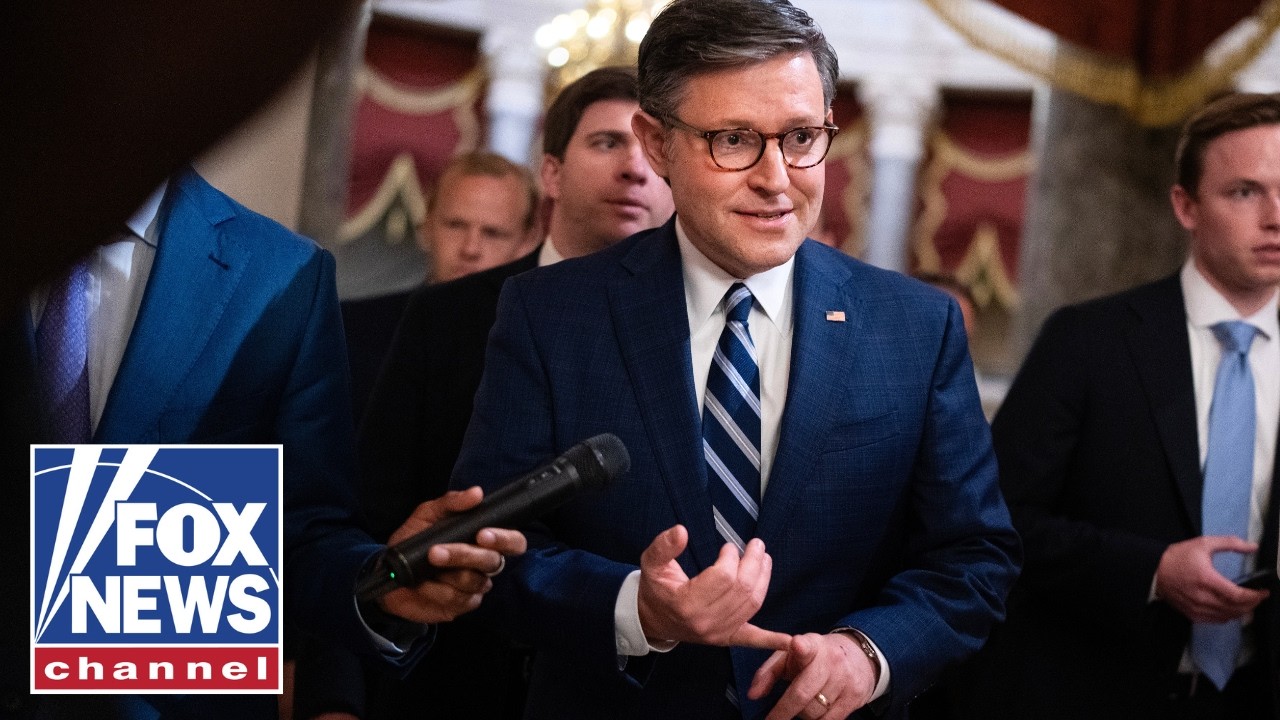
The announcement came as House Speaker Mike Johnson (R-Louisiana) and other House GOP leaders were touting the housing bill at a news conference, the stage set for the president in the National Statuary Hall - including a table and chair to sign the legislation.
The housing bill was set to be a rare bipartisan policy accomplishment for the president touching on an issue that has dogged him in polling ahead of the midterms: addressing Americans' affordability concerns.
A senior White House official, speaking on the condition of anonymity to discuss the president's deliberations, said Trump realized Wednesday morning he could use the housing bill as leverage and "apply additional pressure to move the Save America Act along."
Senate Republican leaders have repeatedly told Trump that the votes are not there to pass his election bill, which would require proof of citizenship to vote in federal elections, restrict mail voting and impose new restrictions on transgender Americans, among other provisions. The House passed a version of the bill earlier this year that did not include all the provisions Trump has demanded.
As Trump made his way into a previously scheduled luncheon with Senate Republicans at the Capitol - after skipping out on the earlier bill-signing appearance - he was asked by reporters whether his election bill was more important to him than addressing the housing crisis.
"They want a lot of communists to come in," Trump said, without specifying whom he was talking about. "This country is not going to have communists." He did not mention housing affordability.
Multiple Senate Republicans said they had no idea Trump was going to hold back on signing the bill, and they were not clear of his plans moving forward.
"The president doesn't want it," Sen. Thom Tillis (R-North Carolina) said of the housing legislation. "If it's not on his agenda, then give us something else to address the affordability issue that we all agree is always an issue in elections," Tillis said, arguing that Republicans can't "turn a blind eye" to rising costs.
In response to questions about whether Trump would sign the housing bill privately, the White House responded with Trump's Truth Social post. Trump could allow the bill to become law without his signature.
The senior White House official said Trump hasn't "closed the door" on signing the bill in the next 10 days.
Shortly before pulling out of the signing event, Trump posted online that the bill "is of minor importance," calling it "The Elizabeth 'Pocahontas' Warren centric housing bill." Warren, a Democratic senator from Massachusetts, was one of the main authors of the bill in the Senate.
Trump's sudden announcement came as a surprise to his closest advisers, who had spent the morning touting the housing legislation as a fulfillment of Trump's promises to bring down prices for average Americans.
On Wednesday morning, White House press secretary Karoline Leavitt called it "one of the most significant pieces of housing affordability legislation in American history," and James Blair, the recently departed White House deputy chief of staff now running Trump's midterm operation, dubbed it "a signature commitment that President Trump laid out in the State of the Union."
Senate Majority Leader John Thune (R-South Dakota), who is typically talkative, initially declined to comment on Trump's decision after it was made public.
"I guess I would say at this point I don't have any observations about it," Thune told reporters. Later, Thune said of Trump that it was "his call to make" but noted the legislation has "been worked on for a long time."
Senate Minority Leader Chuck Schumer (D-New York) urged Trump to sign the bill "and stop making such a fool of himself."
"It's utterly amazing," Schumer said on the Senate floor. "Trump is running away from one of the very few accomplishments that could actually help the American people."
Johnson tried to shrug away the last-minute change, telling reporters that he spoke to Trump for 20 minutes earlier in the day and that the two agreed Congress has to pass the Save America Act.
He said he knew Trump would cancel the signing but waited for the president to announce it.
"We're delaying this," Johnson said. "He has a window of time before he has to sign a bill."
Johnson said Republicans would use that time to work on advancing the voting bill. He then went on to praise the housing bill as he stood next to Rep. French Hill (R-Arkansas), chairman of the House Financial Services Committee, who shepherded the housing bill through the chamber. Hill said he was "disappointed" Trump canceled Wednesday's signing event but said he believed the president would still sign the legislation.
"I just want it to become law," Sen. Mike Rounds (R-South Dakota) told reporters Wednesday, adding that he still was unsure whether Trump would let it become law without signing it.
Rounds said that while he supports the Save America Act, "we just don't have the votes in the United States Senate, and we did have the votes for some really good housing policy."
Elsewhere in the Capitol, Warren suggested that Trump's cancellation "shouldn't surprise us," citing his past comments about affordability concerns being a "hoax" created by Democrats.
"The House and the Senate have worked together to develop a bill on a bipartisan basis that would help bring down housing costs, and Donald Trump has turned his back," she said.
Warren and Sen. Tim Scott (R-South Carolina) were lead Senate negotiators for the bill, dubbed the 21st Road to Housing Act, which includes more than 40 provisions aimed at increasing housing supply and lowering costs.
The bill would ban institutional investors from owning more than 350 single-family homes, in an effort to stop them from competing with Americans that are already grappling with higher prices. It also would eliminate an outdated rule that requires contractors to build mobile homes on a steel frame with wheels and an axle, and expand federal grant programs to provide money to cities for building new homes.
Related Content














Comments