
 German (DE)
 English (US)
 Spanish (ES)
 French (FR)
 Hindi (IN)
 Italian (IT)
 Russian (RU)
 6 hours ago
On a rainy September morning, the Pamela Ann, a rusty, 86ft (26-metre) scallop boat, docked in New Bedford, Massachusetts. Its crew had spent the past 12 days at sea, recording mammal sightings, monitoring vessels to ensure they didn’t enter construction zones, and keeping watch over workers at Revolution Wind, a 65-turbine offshore wind project just south of Rhode Island.
“God forbid, if anybody was to fall, we could be there to help them out,” said Capt Kevin Souza, who has a bulldog tattoo on his shin to mark his time in the navy.
Souza and his three-man crew were fishers by trade, but this trip was different. Instead of fishing, they were working for Sea Services North America, a co-op funded through contracts with offshore wind developers.
It was welcome work for these fishers who weather a legally restricted scalloping season. Sea Services retrained the fishers to work in offshore wind and gave them a second stream of income. But this work put them at odds with other fishers who viewed offshore wind as an existential threat to their industry.
Commercial fishers have sued wind companies, arguing that the projects could displace them from their traditional fishing zones and wreak havoc on marine ecosystems (US fishers are allowed to fish in wind-lease zones, except for 500-metre exclusion zones around construction sites, and construction can have positive and negative effects on marine life).
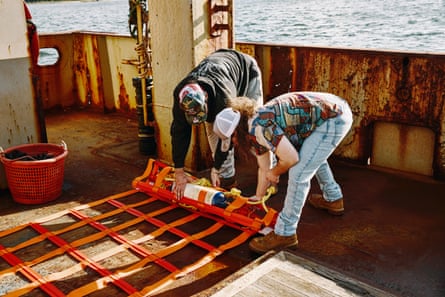
Yet, now, in New England, a cooperative of about 200 fishers is challenging the idea that offshore wind and the fishing industry are natural opponents. Sea Services North America trains and equips fishers to support offshore wind construction, an opportunity that provides them with a second stream of income.
Sea Services pays each fishing boat $4,500 per day plus fuel. Souza, who was initially skeptical of offshore wind, says the opportunity has been a “godsend”.
That godsend, however, may soon come to an end. Since returning to office last year, Donald Trump has systematically attacked offshore wind projects, saying his goal is to not allow any “windmills” to be built. In January 2025, the president issued an executive order halting construction of five offshore wind projects on the east coast.
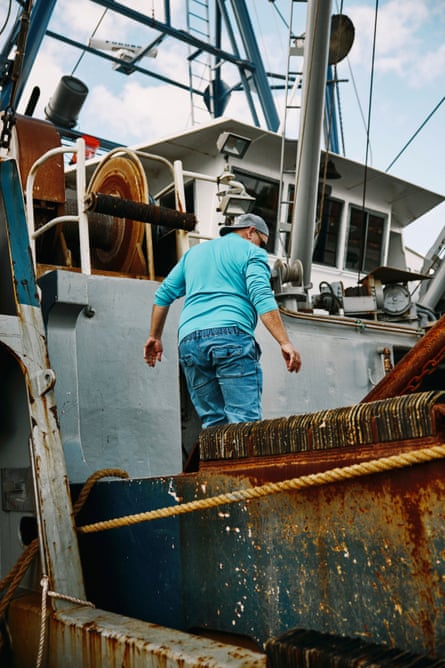
‘These industries can coexist’
Sea Services North America was founded in 2020 by another once skeptical fisher. Gary Yerman, 76, had been fishing for more than four decades when he began hearing about proposed commercial-scale offshore wind projects. He and other fishers feared the windfarms could harm their industry. He didn’t want windfarms in his fishing zone, but he believed they were too big to fail. “They’re gonna win,” he thought, deciding to cast his lot with the projects.
In 2019 he and Gordon Videll, a friend and local lawyer, visited Northern Ireland, where they met with fishers who were working with developers building offshore windfarms and other structures. “We saw how it was benefiting the fishermen there,” Yerman said.
Videll noticed that the local fishers drove nice cars. “This provided a real annual income, which, if you’re raising a family, it means everything,” he said.
They returned to the US eager to find a way to bring similar benefits to their fellow fishers – which meant earning the trust of a skeptical industry.
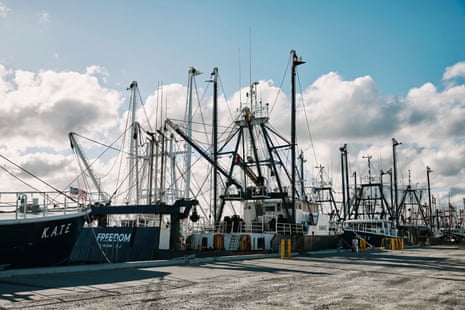
“There was a lot of fellas that were very angry because we joined in on building these windfarms,” said Videll, Sea Services’ CEO. “Nobody trusted it.”
They convinced just one fisher to give it a shot, and over time, more joined.
The pandemic, which struck just as Sea Services was getting off the ground, may have helped Yerman and Videll’s recruitment efforts. As restaurants closed, demand for seafood fell, meaning fishers in New Bedford and nearby fishing towns were looking for extra work. “People had to make decisions they might not have made otherwise,” Videll said.
They found a relatively eager labor pool in local scallopers, who work on boats that are legally restricted from fishing more than 36 days per year to prevent overfishing, leaving the owners of these highly specialized boats looking for extra sources of income during the off-season, said Capt Jack Morris, who owns a fleet of scallop boats including the Pamela Ann, and joined Sea Services in 2021.
“It’s a huge benefit Sea Services has brought,” Morris said. “With the [scallop] fishing season being so short, they are able to continue buying groceries, paying insurance, taking care of the house.”
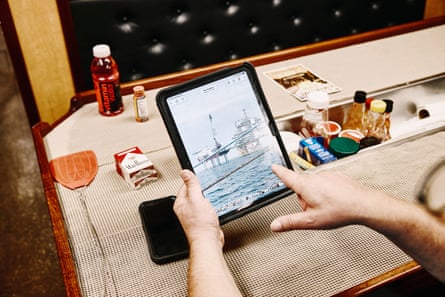
Stacy Alexander-Nevells, another fisher who works with Sea Services, runs a 19-boat commercial fishing operation with her father. Their boats mostly harvested scallops, but revenues were inconsistent and federal restrictions were always changing. “Working with Sea Services was another income stream,” she said. “We had to diversify. Now the boats aren’t just sitting at the dock, and the guys aren’t unemployed.”
At first, Souza was on the fence about working in offshore wind because most fishers perceived it as working for the enemy, but two decades of scalloping had taken a toll on him. Shucking scallops at a commercial pace eventually causes arthritis, carpal tunnel and rotator cuff tears. Souza lost the tip of a finger, and said he probably has arthritis. “I saw the writing on the wall that scalloping is more of a young man’s game than us older guys,” Souza said.
To date, Sea Services says it has paid vessel owners and fishers a total of $34m for their work at several commercial-scale windfarms. And those benefits have extended to the broader community, Morris said.
“These boats just tie up after their 36 days, but with the windfarm work, they keep going,” Morris said. That means more work for onshore businesses like mechanics, welders, carpenters, electricians and painters, he said.
But these gains may be short-lived. After courts rejected Trump’s order and allowed construction to resume, the administration turned to a new strategy of spending nearly $4bn to buy back offshore wind leases from companies. The resulting economic risk has made developers hesitate to propose new offshore wind projects.
Now, Videll said, work is drying up for Sea Services. “If you’re going to screw an industry, that’s how you do it – you put the chilling effect on the money,” Videll said. He added: “The reality is, once these projects are done, even if administrations change, it’ll take years for construction to be back online.
Souza said he’s feeling the downturn. In the past couple of years, he said he worked 12 days on, three days off for Sea Services. Now, it’s 10 days between shifts. “The work seems like it’s gonna get slower now because of Trump,” he said. Souza, who didn’t vote in the last election but preferred Trump to Harris, said he’s since soured on the president. “He uses executive orders to do whatever he wants,” Souza said.
Souza said he fears the economic impact of Trump’s war on offshore wind will be felt across New Bedford. “The bars and restaurants are going to lose,” he said. “The housing, everything else, it all funnels down.” And New Bedford has both little and a lot to lose; once the global capital of whaling and still a hub for seafood processing, the city remains the US’s leading commercial port, generating $300m in revenue. But its fortunes have ebbed and flowed with the ocean, overfishing and industry changes. Today, the city operates with a sizable deficit and higher unemployment than nearby cities.
Souza recently sold his home in New Bedford and bought a house in Florida. “I’m gonna send out my resume, and I’ll probably be looking actually to work off the Gulf Coast in the oil industry,” Souza said. Revolution Wind, the project that Souza and his crew were working on, installed its final turbine in September.
Videll pondered how the Sea Services model could be adopted in places where new wind is being proposed, such as Nova Scotia or Brazil. And the co-op can help with projects that don’t involve wind; Sea Services recently assisted with installation of an underwater cable that is bringing Canadian hydropower to New York City. But there’s no denying that with offshore wind in decline, hundreds of Sea Services fishers will soon lose an important income stream.
“It’s sad because we really did build something that was great,” Videll said. “What’s ironic is, while Trump and all of his people talk about how wind is destroying fishing, I have 200 fishermen who have made money and shown that these industries can coexist.”















Comments