
 German (DE)
 English (US)
 Spanish (ES)
 French (FR)
 Hindi (IN)
 Italian (IT)
 Russian (RU)
 2 hours ago
Since he was sworn in last year, Bill Essayli, the top US prosecutor in southern California, has devoted his office to Donald Trump’s agenda – bringing splashy cases against sanctuary policies, protesters and the rights of young trans athletes.
But Essayli’s latest crusade has significantly raised the stakes of his partisan remaking of one of the country’s largest US attorney’s offices: he is fighting to block thousands of votes from being counted in the upcoming midterms.
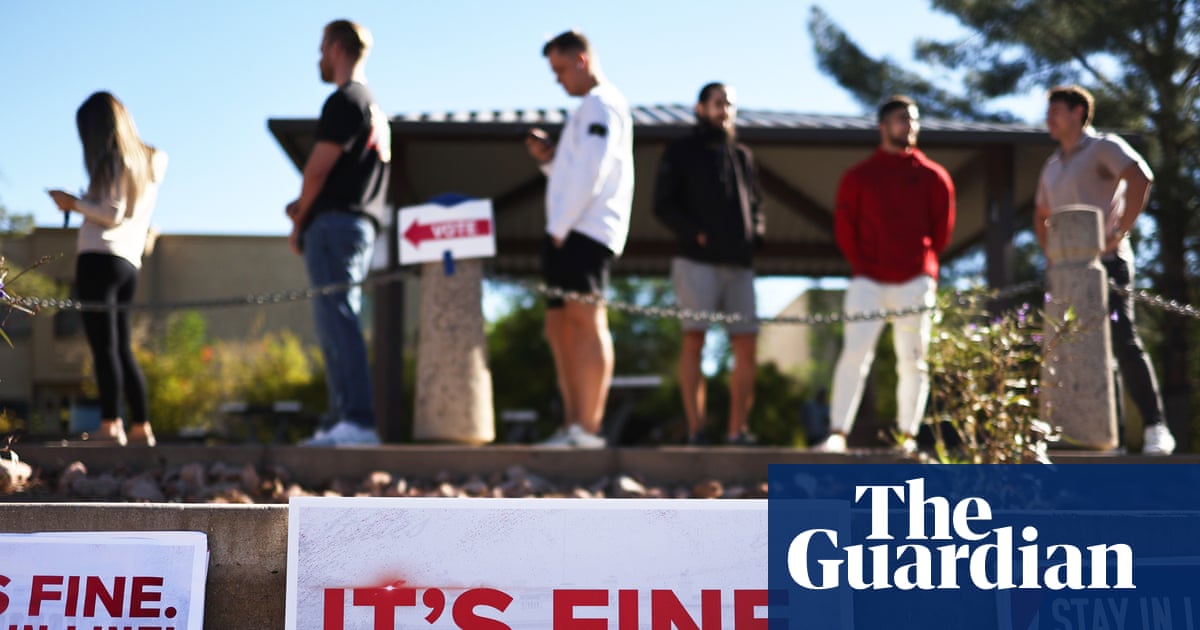
In the weeks leading up to the high-stakes election, Essayli has sued California to try to force the state to set aside ballots from 20,000 voters whom the Department of Justice (DoJ) contends “are likely noncitizens”, demanding the state verify their eligibility before counting their votes. State election officials say the DoJ’s data is unreliable and its demands logistically impossible. They also argue that the federal government is risking disenfranchising US citizens and undermining the integrity of the results.
Essayli, 40, hasn’t stopped there. Last week, his office charged 13 green card holders accused of unlawfully registering to vote – one 72-year-old defendant was dramatically arrested in front of news cameras and paraded in a DoJ promotional video. Essayli has also threatened to prosecute election officials, saying anyone who “knowingly processes” a ballot by a noncitizen would be “opening themselves to legal jeopardy”. An appeals court on Monday issued an initial ruling against the DoJ’s bid to set aside votes.
The moves have stunned democracy and constitutional law experts, who say that voting by noncitizens is extremely rare and that it was extraordinary for the DoJ to pursue these types of cases so aggressively.
“This is all in service of an intentional effort to chill the vote in California,” said Sergio Perez, a former DoJ lawyer and civil rights advocate. “It’s improper politicization of the office. And it’s unheard of for a US attorney to engage in this kind of activity on the eve of an election.”
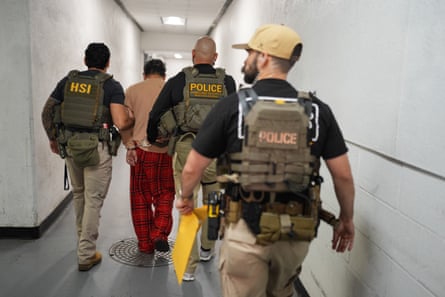
Defense lawyers and former prosecutors say the efforts are less surprising when seen as part of a pattern: Essayli is relentlessly pursuing Maga-aligned cases. The strategy has drawn the ire of another pillar of the justice system: judges have excoriated his office for acting in “bad faith”, violating civilians’ rights and relying on vindictive tactics.
Several high-profile prosecutions have fallen apart amid legal scrutiny. Still, the impact on southern California residents has been profound: the Guardian found defendants who were jailed for months before cases collapsed and one wrongfully arrested due to apparent mistaken identity.
“He’s targeting people who want to exercise free speech, he’s targeting the most vulnerable, he’s targeting the least dangerous individuals,” said Ian Wallach, a Los Angeles-based defense lawyer. “These are politically motivated cases where they’re charging people and building their cases later. It’s shameful and shocking.”
Experts agree Essayli has shattered the norms of his office. And in one pivotal case this week, a federal judge ruled Essayli was acting “unlawfully”, with a decision that calls into question his future at the justice department.
A longtime Trump fan
Essayli started his career at the DoJ as an assistant prosecutor in the US attorney’s office for the central district of California, which includes LA, serving from 2014 to 2018. He developed a reputation as a “hard-charging” prosecutor with a strong pro-law enforcement, “back the blue” mentality, according to a former DoJ attorney, who requested anonymity to speak candidly about a former colleague. Essayli was known in the office for having political stances that diverged from the rest of the office, his former colleague said, including proudly backing Trump during the 2016 Republican primaries when Trump’s candidacy was still considered fringe.
In 2022, Essayli was elected to the state assembly as a Republican in a district east of LA. During his time in the assembly, he made headlines railing against “woke” California policies and sparring with Democratic colleagues – once banging his desk on the assembly floor and shouting: “You’re a fucking liar!” when his mic was cut. He fought to ban trans girls from girls’ sports teams, in one 2024 school board meeting singling out a specific trans youth athlete, misgendering her and calling her participation on a track team “unacceptable”.
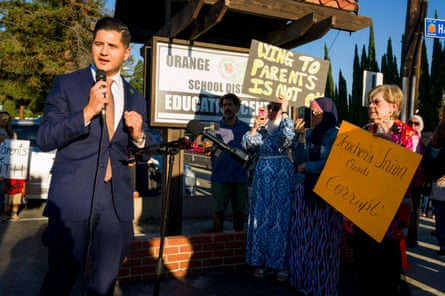
Essayli didn’t name the student, but Abigail Jones, then 16, knew he was talking about her as the only out female trans athlete in her class. Now 18, she recalled watching in anguish as he used her to advance his career: “To have powerful figures in government targeting me was just mind-blowing. He’s a state representative who is supposed to be serving thousands of people … He was inciting hatred.”
In April 2025, after Trump took office for a second term, the administration brought Essayli, with his elevated political profile, back to the DoJ, now with significantly more power. He was not formally nominated by Trump as the top prosecutor in the LA district, but appointed interim US attorney, allowing him to lead the office without Senate confirmation.
As he was sworn in on 2 April in a private ceremony, Essayli pledged to work “tirelessly” to implement the “priorities of the president”.
‘Unprecedented’ failures
As top prosecutor for a district home to 20 million people, Essayli oversees roughly 500 staffers, and he quickly began devoting resources to prosecuting Trump’s critics.
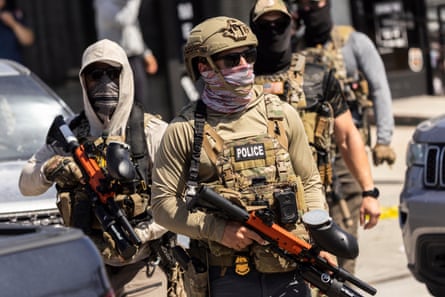
After Trump launched a fierce crackdown on immigrants in the Los Angeles region in spring 2025 and residents took to the streets en masse, Essayli aggressively targeted Angelenos accused of interfering with immigration officers. “If you impede our agents or strike them, you will end up in handcuffs,” he posted on his X account in June, accompanied by the mugshot of one person he had charged.
The cases, often stemming from minor, chaotic clashes between militarized officers and angry or frightened residents, were atypical for the DoJ, and reports in the LA Times and Bloomberg suggested Essayli in some cases overruled prosecutors who advised against charges due to insufficient evidence.
In one instance, the sources told both publications, Essayli was overheard shouting at a subordinate to ignore the DoJ “justice manual”, which says prosecutors generally should only bring charges they can win.
Since spring 2025, Essayli’s office has prosecuted 113 people for alleged crimes against immigration officers, mostly charges of impeding, conspiring against or assaulting agents, according to data the DoJ shared with the Guardian. As of mid-September, 33 of them had charges dismissed, and nine people were acquitted by juries. Only four people were found guilty at trial, only two of which were felonies. Thirteen pleaded guilty to felonies, and the remainder were resolved as misdemeanor pleas, with a handful of trials still pending.
These are “unprecedented” results for federal prosecutors, who normally have a conviction rate well above 90%, said Laurie Levenson, a Loyola law professor and former DoJ attorney.
Some protester cases quickly collapsed because prosecutors had relied on uncorroborated officer statements or because video footage contradicted the chargers. For others, the cases dragged on.
Jailed for months: ‘Trying to shut us up’
One Angeleno profoundly affected by Essayli’s mission was Jonathon Redondo-Rosales, a 37-year-old jailed for six months on charges that he assaulted a federal officer – with a cloth hat.
Video from an August 2025 anti-ICE protest at a federal building showed Redondo-Rosales dancing in front of a government vehicle that slowly made contact with him, then briefly rolling on the hood of the car, at which point an officer lunged at him. Redondo-Rosales appeared to stumble backwards and swat back at the officer with his sun hat in his hand. Multiple officers took Redondo-Rosales to the ground, pepper-sprayed him and left his face bloodied. An officer said Redondo-Rosales had hit him with a fist, according to court filings from the defense. But the DoJ’s case faltered when footage contradicted the officer’s claim that he was punched, and records revealed the officer in a separate case had failed to disclose his own criminal conviction for harassment.
Just before the start of the trial in February, prosecutors moved to dismiss the case “without prejudice”, which would have left the door open to refile charges. The federal judge overseeing the case said that move by the government was in “bad faith” and dismissed the charges “with prejudice” – case closed.
Recounting his six months in jail denied bail in a recent interview, Redondo-Rosales said: “Not knowing when you’re going to get out, that stressed me the most. People inside said: ‘Plead guilty and you’ll go home,’ but I wasn’t going to do that, because I wasn’t guilty. I didn’t assault him.” He said he was grateful the dismissal allowed him to keep protesting: “They’re just trying to shut us up … but I wanted to be able to continue documenting all of this. People need to see what’s going on.”
Essayli’s office charged Sandra Samame, 25, with “stalking” and “conspiracy” to dox an ICE agent, after she and others followed an officer driving away from the federal building in August 2025. The group thought the agent was going to a raid, she recalled in an interview, but ended up inadvertently following him to his home. Unlike Redondo-Rosales, Samame went to trial – and won. Two co-defendants were convicted, but she was found not guilty of both charges after her attorney argued she had simply exercised her free speech. She was freed after spending about three months in jail, during which time she lost her job as a vet tech and failed her classes.
“The administration is trying to make ICE agents out as heroes, so they need villains, which is why they try to villainize us activists and undocumented people,” Samame told the Guardian. Her message to Essayli, she said, is: “The truth prevails always and people are not scared to stand up for their community, no matter to what extent the government is willing to go, to put us away, to criminalize us.”
Essayli’s office declined repeated interview requests and did not respond to inquiries about the cases.
‘They had the wrong person’
Essayli has brought other splashy “tough on crime” cases that turned out to be shockingly thin – and in one case appeared to be based on false identification.
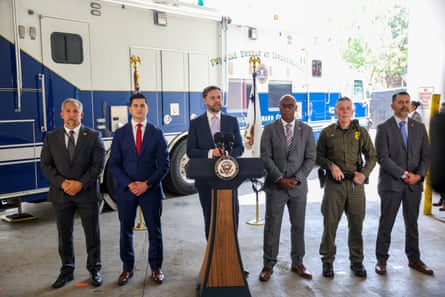
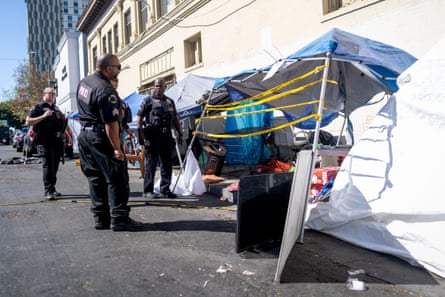
In two unconventional operations, federal officers swarmed MacArthur Park in May and Skid Row in October, for “takedowns” targeting “drug markets” and “high-crime areas of Los Angeles”. Typically, street-level drug crimes would be handled by local law enforcement, but Essayli, targeting an area known for its unhoused population, said the government was “reclaiming MacArthur Park from criminals and drug addicts”.
He charged 25 defendants with drug crimes and, in a press release, suggested the DoJ was going after big-time dealers and gang leaders. But for some defendants, their charges told a different story.
Anthony Solis, a defense lawyer, represented one man in the MacArthur Park case accused of selling 0.4 grams of meth for $20 to an informant. In his 25-year career, Solis said, he had never seen a quantity that small in federal court – even 10 times that amount would not normally warrant federal charges: “It’s not a big conspiracy. It’s not large quantities. It’s teeny-tiny amounts of drugs.” His client could face years in prison.
Wallach, the defense lawyer, represents another defendant who sold 0.15 grams of fentanyl to an informant. His client has no criminal convictions and a medical assistant degree, but had been struggling with addiction, the lawyer said in a court filing. If the defendant’s case were brought in state court, he would likely be placed in a diversion program, where he could get treatment and have the charges dismissed; now that he has a felony conviction, that will severely diminish his job prospects.
“It’s not the ‘worst of the worst’, it’s the ‘neediest of the needy’. What public benefit does this provide?” Wallach said.
In the Skid Row cases earlier this month, Essayli announced 23 arrests, saying he was working to “dismantle the networks flooding Skid Row with deadly drugs”. But when defense lawyer Robert Bernstein arrived at court to represent one of the arrested men, he noticed the DoJ’s complaint included a photo that was clearly not his client appearing before him – the man in the photo was also Black, but had different features. Bernstein said he pleaded for his client to be released, but prosecutors demanded he remain jailed.
Bernstein soon learned his client was actually at a probation office at the time prosecutors said he was on camera selling fentanyl. Prosecutors dismissed the case – after the man had spent two nights in jail.
Bernstein said it appeared the mistake originated with investigating officers, but argued the charges should never have been brought: “They are pursuing these improperly investigated cases with no review by the federal prosecutors – in this case, seeking a criminal complaint and arrest warrant for the wrong person, then arguing he be detained without bail. It’s ridiculous.”
A DoJ spokesperson did not respond to inquiries about these cases.
Essayli’s uncertain future
Some of Essayli’s failed prosecutions have flown under the radar, but others have been high profile. In June, Essayli’s office suffered a bruising mistrial in an arson case against a man accused of igniting the 2025 Palisades fire after defense attorneys poked holes in prosecutors’ theories. In September, his prosecutors were dealt a not guilty verdict in a murder-for-hire trial against Lil Durk, after the Chicago rapper’s lawyers attacked the credibility of witnesses.
And last month, a judge dismissed Essayli’s lawsuit seeking to force California to ban trans girls from women’s sports. That case targeted Abigail Jones, whom Essayli had attacked at the school board years prior. Jones, identified as “Student 2” and “male” in Essayli’s complaint, said she felt some relief at the dismissal: “This was not a case the DoJ could win.” But she still worries Essayli will find other ways to target her and other trans girls.
Meanwhile, Essayli’s office has undergone dramatic change. Already by July 2025, reports indicated the office had lost roughly one-third of his legal staff, some senior prosecutors resigning after Essayli reportedly intervened to negotiate a cushier deal for a former sheriff who had already been convicted of excessive force. Essayli also faced heat for dismissing corporate fraud charges against a restaurateur who was a Trump donor.
“Many people left because they felt the Department of Justice had really lost the mission of justice,” said Julius Nam, a former California central district prosecutor, who was working in a different DoJ division when Essayli started. “The internal policies were not being followed – they were being bent to serve the political statements that the higher-ups were trying to make.”
Essayli’s campaign against “voter fraud” is his latest departure from DoJ traditions. But his ability to continue leading the charge is now being called into question.
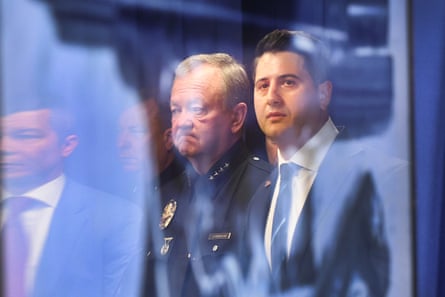
For months, defense attorneys have sought to have Essayli disqualified from his position because of his lack of Senate confirmation, as required by law for US attorneys.
Since Essayli’s “interim” appointment officially ended last July, the Trump administration has maneuvered to keep him in charge, giving him an “acting” title and keeping him on as “first assistant” after a judge ruled he was unlawfully serving as “US attorney”. But Essayli’s position keeps facing challenges in court and similar schemes by Trump’s DoJ have failed. Alina Habba, Trump’s former personal lawyer, was disqualified from the top prosecutor job in New Jersey in December. A federal appellate court ruled against a Nevada DoJ leader in a similar case in August.
On Tuesday, the same judge who ruled against Essayli last year again decided he was “unlawfully serving as a ‘de facto’ United States attorney”. The judge disqualified Essayli from overseeing two cases where lawyers had challenged his position. The order does not go into immediate effect, and the DoJ intends to appeal.
Essayli’s office said in a statement that the matter would ultimately be decided by the US supreme court.
When reporters followed Essayli out of a recent court hearing in the disqualification case, he smirked and delivered a statement he seemed to have rehearsed: “The president runs the executive branch, and nothing here is going to change that.”















Comments