
 German (DE)
  English (US)
  Spanish (ES)
  French (FR)
  Hindi (IN)
  Italian (IT)
  Russian (RU)
  1 hour ago
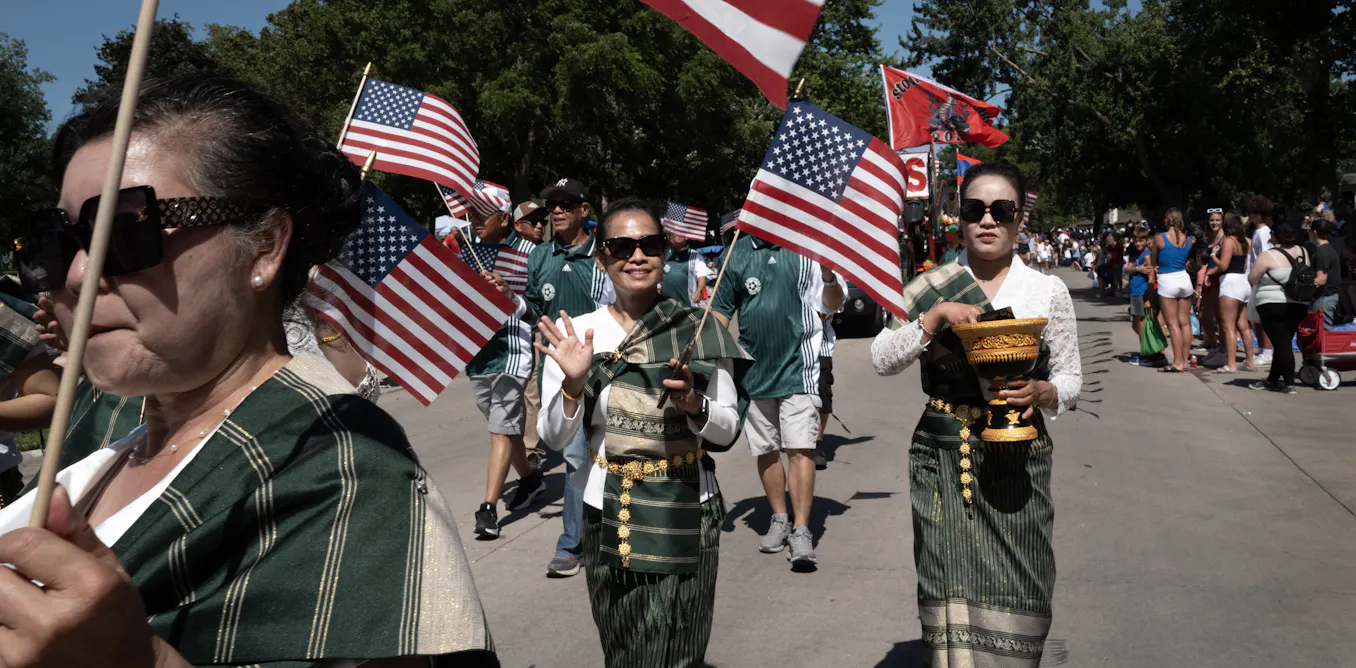
This Fourth of July marks 250 years since the Declaration of Independence promised liberty and equality for all – even as it excluded most of the people living on the land it claimed to liberate.
For many Americans, the semiquincentennial is less a celebration than a reckoning. The country arrives at this milestone amid sustained attacks on voting rights, civil rights and democratic institutions – challenges that organizers say are taking the country back generations. It’s a moment that activists and advocates describe as both a crisis and an opening to reimagine the promises of freedom and democracy.
“We can still build the democracy we all deserve – not the one we inherited, but the one we have the power to create,” said Kristen Clarke, general counsel at the National Association for the Advancement of Colored People.
Many of the voices shaping this reckoning are not in the traditional halls of power. They are on picket lines and at protests, in classrooms and courtrooms, and in philanthropic circles and grassroots organizations. They are workers who were fired for unionizing, lawyers who have fought the rollback of basic liberties and Indigenous land stewards whose communities have been fighting for recognition since long before 1776.
What unites them is a refusal to accept the country as it is and a belief that the next 250 years can look radically different from the last. Here is their assessment of where the country is now and what they say it will take to reshape it.
‘Escape the two-party plantation’
Chris Smalls
Workers’ rights activist and former president of Amazon labor union

The majority of these 250 years is not a history to celebrate. But I do believe we have an opportunity right now to rewrite that history and change our future for generations to come. That’s what keeps me going – making sure my children don’t have to grow up in the society we’re living in now, don’t have to fight as hard as I’m fighting, don’t have to sacrifice the way I’ve had to sacrifice. Whether it’s your job, your livelihood, your education, the fight for workers’ rights, for Palestinian liberation, for human dignity – it all comes with a price. I can attest to that personally, from being fired at Amazon, to being locked up, to being on a flotilla.
So what do we actually do? What are the steps? The first thing we have to do is escape the two-party plantation. The definition of insanity is doing the same thing over and over and expecting different results. We have been voting for Democrats or Republicans for decades, and it has gotten us to this point – a Trump administration and a system that is still not working for the majority of Americans. Other countries have multiparty governments. They have higher union density. They have unions that actually work in direct relationship with the working class. Here, we let politics lead our organizations, and we let politics lead our unions – and when that happens, we end up with a disconnect from the people we’re supposed to serve.
The next 250 years belong to all of us – but only if we’re willing to sacrifice for the greater good. People around the world don’t have the privilege of sitting this out. And if you’re not willing to stand up, you are just as complicit. It’s very simple: people need to choose to be on the right side of history.
‘Reform our nation’s highest court’
Kristen Clarke
NAACP general counsel
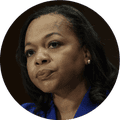
What does a new America look like? First, we need an affirmative right to vote enshrined in this country. This supreme court has moved at lightning speed – not only bringing about the death of the Voting Rights Act, but hollowing out the original meaning and purpose of the 14th and 15th amendments [which guarantee equal protection of the law, and forbid racial disenfranchisement, respectively]. We need to strengthen our constitution so that there is a true affirmative right to vote for every American, regardless of race, ethnicity or economic status. There are lessons to be drawn from other modern democracies across the globe that have higher rates of participation and more vigorous turnout. America should be looking to those examples.
Second, any serious conversation about strengthening democracy must include supreme court reform. We need to reform our nation’s highest court so that its rulings and decisions are far less predictable – and far less partisan – than they are today. Americans have lost faith and confidence in this institution. Reforms like term limits, meaningful ethics requirements and a ban on the shadow docket would be among the very first issues to take up in restoring the court’s integrity. These are not small tasks. But they are necessary ones if we are serious about building a democracy that actually works for everyone.
Despite how dark this moment feels, I do have hope. We are seeing people come out to protest the ugly racial gerrymandering efforts taking place across the south. We are seeing people turn out in droves to their state capitals to shine a light on the actions of lawmakers. We are seeing people show up at ICE detention facilities to expose the inhumane conditions inside. And people are paying attention to this midterm election cycle in ways we have not seen before. The people are still in motion. And that gives me hope that we can still build the democracy we all deserve – not the one we inherited, but the one we have the power to create.
Eliminate ‘limited gender expectations’
Eliel Cruz
Gender liberation movement co-founder

I want to see the United States finally reckon with its history, dismantle the oppressive and violent systems that have harmed generations of marginalized people and build a society rooted in justice, dignity and care, where everyone has the opportunity to live a full life with everything they need, not just those with power and privilege.
I am organizing and building toward a world where all people, especially LGBTQ+ young people, are safe from harm and have everything they need to live long, fulfilling lives. A world where the limited gender expectations that harm cis and trans people alike are done away with, and we are all able to live and determine our futures as we see fit.
‘Build a genuine culture of free expression for all’
Summer Lopez
PEN America co-chief executive officer

Freedom of speech is protected in the first amendment for a reason: it is essential to the very existence of democracy. Freedom of expression enables us to speak out against injustice, hold our governments and the powerful to account and debate and advance new ideas. It is only through robust public discourse that we can determine together what kind of society we want to live in.
Right now, free expression is under threat in ways we haven’t seen in recent memory. We are seeing unprecedented book bans in public schools, state laws restricting what can be taught in classrooms and federal attempts to ban words from government documents, threaten journalists and pressure private institutions to fall in line with the administration’s views. These are textbook authoritarian tactics, and they are working – driving institutions to voluntarily self-censor, which is very much the goal. But once again, people are fighting back.
As we mark the 250th anniversary of the Declaration of Independence, we must seize this moment to build a genuine culture of free expression for all. That requires standing up for those whose voices are most under attack, defending everyone’s right to speak even when we deeply disagree with what is being said and dismantling barriers to an equitable exercise of these rights.
Writers have a critical role to play. Literature opens minds and enables empathy; journalism documents truth and holds power to account; writers help us reckon with the moment we are living in and imagine a better future. But each of us has a role too – by using our own voices, by being willing to speak up when it is not easy and by engaging with those we disagree with rather than retreating into our own bubbles. Listening with curiosity, and remaining open to being challenged – that is what it means to live in a free society.
‘Stand up for our neighbors’
Yasmin Cader
ACLU deputy executive director for program, strategy and culture

The story of our criminal legal system is inseparable from the story of racial subordination. For much of this country’s history, that system has been used to maintain racial hierarchy – from convict leasing after emancipation to the era of mass incarceration. The protections of the constitution have not applied fairly to all. Instead, this system has too often reflected our deepest inequities rather than our highest ideals.
One of the most important shifts I have seen over the course of my career is a growing willingness to confront that history honestly. There was a time when mass incarceration was viewed by many as a goal to be achieved. Today, there is much broader recognition that it never should have been, and that it came at an enormous human, constitutional and economic cost. We have not solved the problem. But we have started asking better questions about what justice and public safety should actually look like.
Sometimes we forget that most of the great advances in American democracy did not begin inside government. They began with the people insisting that the country live up to its promises. I have always loved the fact that the constitution is small enough to fit in your pocket. To me, that is a reminder that it belongs to all of us. The movements to end slavery, for suffrage, for civil rights and voting rights, for immigration reform, against brutalized policing and mass incarceration – these movements of people from a rich array of backgrounds are responsible for whatever progress we have achieved. The people are as critical to democracy’s health as the institutions.
And those same strategies are still available to us today. We organize. We build coalitions. We stand up for our neighbors. We hold our leaders accountable. We make our voices heard.
No generation has fully lived up to America’s ideals, and I don’t think that is the right standard. The better question is whether we leave the country closer to those ideals than we found it. That is the responsibility we have inherited. And it is one worth accepting.
‘Not just preserve democracy, but evolve it’
Celina Stewart
League of Women Voters chief executive officer

Trust has been eroded. People were promised things and have since faced a reality that many did not anticipate – including a level of inhumanity toward immigrant communities that defies what was sold to them.
Our hope is not just to preserve democracy, but to evolve it – to make it more representative, more inclusive and, above all, more resilient. That requires modernizing our systems, protecting against mis- and disinformation and fostering a culture where participation is a shared responsibility. Not something other people do. Something we all do together. Democracy is not something we inherit fully formed. It is something every generation has had to build. This is our moment to build it.
‘Ensure that no one’s wellbeing is traded for another’s wealth’
Edgar Villanueva
Decolonizing Wealth Project founder

For 250 years, this nation has treated land as a resource – a commodity to extract from and exploit. The taking of land from Indigenous peoples, along with forced relocations, are deep stains in the soul of this nation. Our ancestors understood land as something to be stewarded, not owned. And the shift we are beginning to see – toward centering Indigenous leaders in efforts to care for land and water – tells me the pendulum is swinging back toward balance.
Last year, through our California Tribal Land Return Initiative and Indigenous Earth Fund, we supported the return of more than 25,000 acres (50,600 hectares) of land. The Tule River Indian Tribe celebrated its 17,023-acre return by immediately reintroducing tule elk to the land. And when the Klamath River was undammed, salmon returned within 10 days after 60 years of absence. The land remembers how to heal itself. It only needs us to stop standing in the way.
America is experiencing what I would call a spiritual famine – not a turning away from religion, but a starvation of the spirit that allows us to look at another human being and fail to see their humanity. Yet the paradox is that spirit is abundant. It is all around us, expressed through generosity, reciprocity and collective care. Our recent national research found that 82% of Americans say they care for others without expecting anything in return. The conviction is already here. What remains is putting that care to work for the collective.
The America I am building understands its interconnectedness and the power that comes with it. It is grounded in the truth that we are all related and have a responsibility to ensure that no one’s wellbeing is traded for another’s wealth.
To get there, we’re focused on shifting the way money moves in this country – away from harm and extraction, and toward what I call money as medicine, intentionally directing resources toward repairing the harms of the last 400 years and restoring balance. Repair is not charity. It is an obligation.
Additional reporting by Lex McMenamin










Comments