
 German (DE)
 English (US)
 Spanish (ES)
 French (FR)
 Hindi (IN)
 Italian (IT)
 Russian (RU)
 2 hours ago
There’s a certain freedom in low expectations. Going in to Tuesday’s midterm elections, forecasts were so grim for the Republicans that poll watchers started trading a kind of knowing joke: that the results would either mean the end of the Trump era, or the end of the polling profession.
Amid those sorts of predictions, any Republican victories would have seemed like a minor miracle. The expectation was that Democrats would have a blowout; Republicans, counting on the final tally to be a bit more mixed, would therefore almost certainly have the freedom to claim that they’d done better than anyone had thought they would.
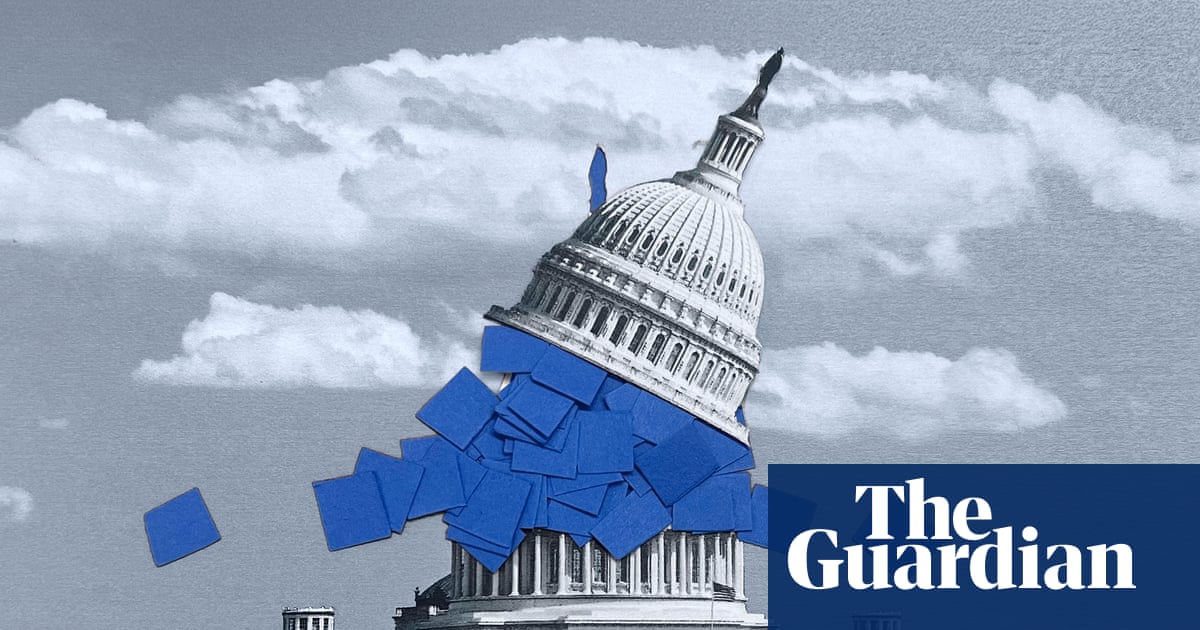
It will be difficult to credit those spins today. The electorate issued the president a message of dissatisfaction with the second Trump term, and voted decisively to curb his power.
Now, with a Senate majority, Democrats will be able to investigate the president and his cabinet members, draw public attention to their own agenda items, assert Congress’s constitutional prerogatives, and block Republican judicial appointments.
In the coming days and weeks, Trump will alternately say that the Republican losses were fake – the result of fraud by a nefarious but ill-defined conspiracy of Democrats and illegal immigrants – and that they were real, but somebody else’s fault.
His administration has signaled over the past weeks that it could make efforts to contest the certification of especially close Senate races, notably Alaska.
But the wind may have gone out of the sails of that plan for now: for what it’s worth, which isn’t much, Trump told the New York Times on Tuesday night that he would accept the results of the midterms. What’s certain is that he will rail into microphones and complain in all caps on social media. But it is not likely that any of that will go anywhere. Because Tuesday night – almost exactly 10 years after he won the presidency in an upset victory over Hillary Clinton in 2016 – the Trump era effectively came to an end.
The next two years will look nothing like the previous two. In the first several months after his return to power, when he controlled a unified government and was said to have won a restoration in 2024 on the heels of widespread cultural discontent and anti-“woke” sentiment, Donald Trump seemed momentarily as if he might succeed in his efforts to consolidate an authoritarian regime in America.
He purged the federal bureaucracy, eliminating hundreds of jobs and stuffing thousands more with his loyalists and incompetent cronies. He imposed his will and social agenda on non-governmental institutions, from large tech companies to major universities, which complied in part because they feared retaliation from a strong Trump regime if they refused.
He snatched the power of the purse away from Congress like a thief yanking a pocketbook away from an old lady, and reappropriated taxpayer money as he saw fit, disregarding the intentions of the people’s elected representatives.
And he did all this – he was able to do all this – because he seemed powerful, and his opposition seemed weak. For the first year of his second term, he bet that he could get people to obey him because he could threaten consequences for refusal, and because the Democrats could not credibly threaten consequences for complicity.
That credibility has flipped. Donald Trump’s re-election in 2024 seems, now, less like a broad cultural realignment and more like a product of material factors, namely inflation. Those same material factors have come back to bite Republicans now, as staggering gas prices, consumer disempowerment, persistent unemployment, and visible, egregious inequality outrage voters.
Donald Trump, meanwhile, seemed indifferent, if not oblivious, to these concerns – that is, when he was not actively making them worse. His reckless and needless war on Iran is broadly blamed – largely correctly – for driving up gas prices.
Meanwhile, Trump busied himself by draping large banners of his own face over federal buildings, remodeling the White House in gold, and making bizarre diatribes on rally stages about male politicians’ backsides. He seems frivolous and out of touch, like Marie Antoinette in a bad toupee.
Donald Trump will enter 2027 with a hostile Congress, noticeably diminished cognitive power and physical stamina, a cratering approval rating, and a term limit.
Moreover, he will enter the new year with a fractured coalition: his decision to pursue a war with Iran has split his inner circle and destroyed his credibility with the Republican rank-and-file for whom his “no new wars” pledge in 2016 had signaled a break with the neoconservative establishment.
Ambitious Republicans – younger Republicans – will sense blood in the water. They will begin to turn on him in an effort to shore up their own prospects; he will rage at their betrayal and rally his base against them, like some sort of stupid King Lear. But his efforts to crown kings and exact revenge may be severely diminished after tonight.
Trump’s strength was always the hold he seemed to have over the Republican base, the degree to which his charisma could compel voters to follow him anywhere. If the margins of the Democratic victories on Tuesday night are any indication, they are not following him anymore.
-
Moira Donegan is a Guardian US columnist
















Comments