
 German (DE)
 English (US)
 Spanish (ES)
 French (FR)
 Hindi (IN)
 Italian (IT)
 Russian (RU)
 47 minutes ago
The 2026 blue tsunami owes a lot to the youth vote.
According to data from Tufts University’s Center for Information & Research on Civic Learning and Engagement (Circle), which monitors youth civic engagement, early estimates show the second-highest youth turnout in a midterm election in 30 years, second only to 2018, when an estimated 31% of young voters turned out during Donald Trump’s first presidency.
While voters over 45 were roughly split between parties, voters ages 18-29 went for congressional Democrats at a 35-point edge, across race, gender, ethnicity, and education levels. Latino youth went for Trump by slim majorities in 2024; this year, they voted Democrat by margins of +10 to +15. 63% of young white men went for Trump in 2024; this cycle, 54% voted Dem. White young women also switched allegiance from 2024 by +15. Rural voters went from 50% voting for Trump in 2024 to 60% supporting Democratic candidates.
This is something of a return to form for the youth vote, which leaned Democratic by double digits in elections between 2018 and 2022. Indeed, the +35 lean for voters 18-35 parallels that in the 2018 blue wave which elected populist Democrats like Alexandria Ocasio-Cortez, said Leela Strong, the director of Circle.
“It was such a soundbite for 2024, about the shift of young white men specifically, and folks without formal college experience,” said Strong. “Now, even though we’re comparing a midterm to a presidential, we’re seeing shifts among those demographic groups switching back to Democrats, overwhelmingly so.”
According to Strong, the data even suggests that 15% of young people who voted for Trump in 2024 voted for a Democratic House candidate this cycle. The outcome has been so decisive that Republicans are openly fretting over heavily Blue youth vote turnout in states like Florida, Georgia and South Carolina.
In battleground states – Florida, Georgia, Iowa, Maine, Michigan, Minnesota, North Carolina, Nebraska, New Hampshire, Nevada, Ohio, Pennsylvania, Texas, and Wisconsin – the estimated youth turnout was, in aggregate, 30%.
“I voted because in my working-class, immigrant neighborhood, families are afraid to go outside, drive to work or pick up their kid from school,” said Motyko Morales, 26, an artist in Miami, who says her family members have experienced “real physical and psychological impact” over attacks on legal routes to citizenship and the threat of third-country deportations. She’s “cautiously optimistic” that congressional Democrats will “hold ICE accountable and reverse course on harmful legislation”.
“For the first time in my life, I got to see a candidate that looked [like] and represented the same values of the Rio Grande Valley that I have,” said Amanda Chapa, 22, a recent college graduate and community organizer from Rio Grande City, Texas, of Gina Hinojosa. The governor-elect won 77% of voters 18-29, based on exit polling analysis from NBC News. In 2024, Trump flipped Starr county on the Texas-Mexico border – where Rio Grande City is located – by over 70 points; this year, despite navigating barriers to the polls, voters flipped it back by over 70 points.
Just over half of young voters ranked the economy and jobs as their top priority, followed by healthcare, Iran, immigration, education and the climate. Chapa’s top issues were reinstating cut funding to Medicaid and fighting ICE and the “brutalization of our community members”.
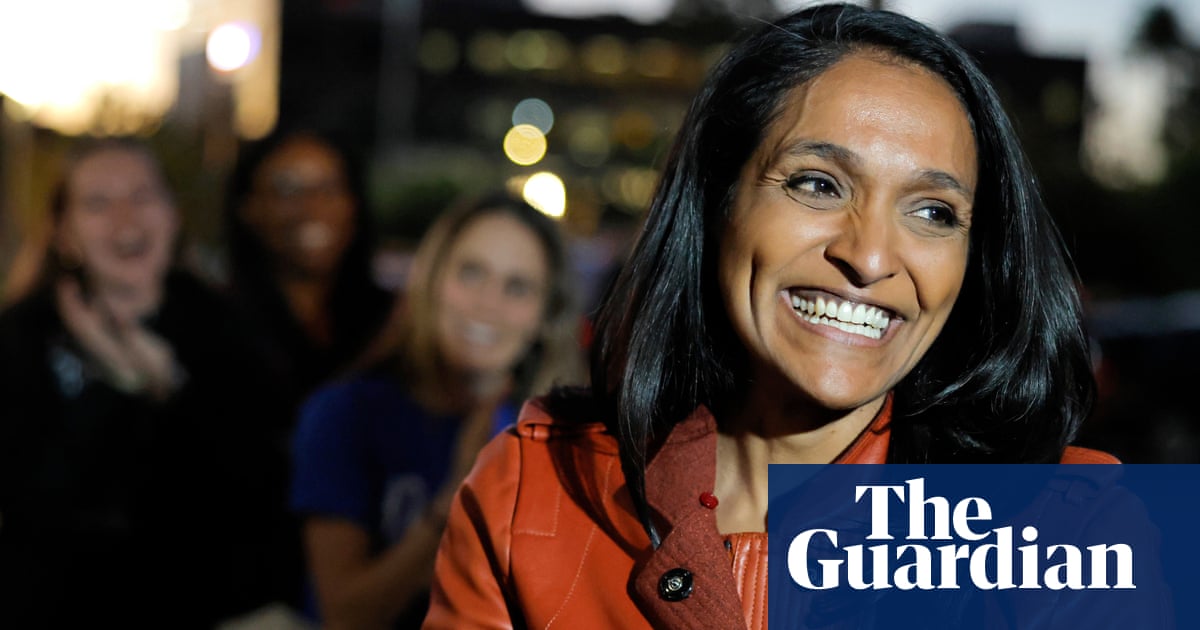
Sarah John, 26, a law student from Los Angeles, said she’s critical of Democrats, but having witnessed the impacts of Trump’s ICE raids in LA (still being felt), she strongly believed her vote against Republicans would make a difference. On Thursday, Los Angeles elected its first democratic socialist mayor, Nithya Raman – making two of the country’s three biggest cities now run by democratic socialists.
The enthusiasm even reached states without competitive federal races. Patrick Schranck, 27, who manages an independent movie theater in Portland, “identif[ies] more as an independent these days” and is active in his local Democratic Socialists of America (DSA) chapter. He spent Tuesday night at Portland DSA’s election night party celebrating the re-election of their three city councilmembers.
Schranck remains skeptical of congressional Democrats’ ability to “fix everything” with their newfound majorities, but, he said: “I’m just glad to see the Republicans lose and see more socialists and progressives get elected nationally.”
For Jordan Korgood, 24, of Boston, voting in this election was especially personal. The Massachusetts sexual health educator feels so passionately about civic engagement that she filed to run for a state board seat overseeing judicial appointments. But her 41-year incumbent opponent had Korgood tossed from the race on a technicality: Because she was homeless for a few months while in college in 2023, her opponent argued she could not meet the five-year residency requirement.
“Voting was the most immediate and direct way I could still engage with electoral politics in a meaningful way,” said Korgood, whose biggest issues were protecting the first amendment and trans rights. Regardless of who was up for re-election in Massachusetts, she said it felt necessary “at a time when fascists who seek to limit or repress my rights as a trans woman are seated in office in both red states and blue states alike”.
Young people were credited in part with powering Trump’s 2024 win, though just under half of eligible young voters turned out, not hitting the 50% turnout achieved in 2020. Plenty chose to sit out the election over US funding for Israel’s assault in Gaza, as well as the decision by both schools and elected officials to criminalize students in the thousands for protesting it. They also felt that the Democratic party had failed to offer a strong counter to what Republicans had on offer, instead tacking to the center.
In a sign of things to come, a year later, 75% of New York City voters 18-29 chose democratic socialist Zohran Mamdani as the city’s mayor, forming “his strongest supporter [bloc] out of all age groups” in the election tally, according to Circle. Political commentators and national party leaders argued a DSA campaign like his could only win in New York City.
Twenty-six-year-old Elise Joshi runs the progressive campus program More Perfect University and has spent the last several months hosting many of the progressive candidates that won big Tuesday at “Students vs. Billionaires Town Halls” on college campuses across the country. When the program launched this spring, Joshi told the New York Times that it was intended in part as a progressive counterpoint to Turning Point USA, whose existing campus presence has expanded in the year since Charlie Kirk’s killing. She argued that TPUSA “refus[es] to champion working-class issues”, and that youth voters were desperate for candidates who would.
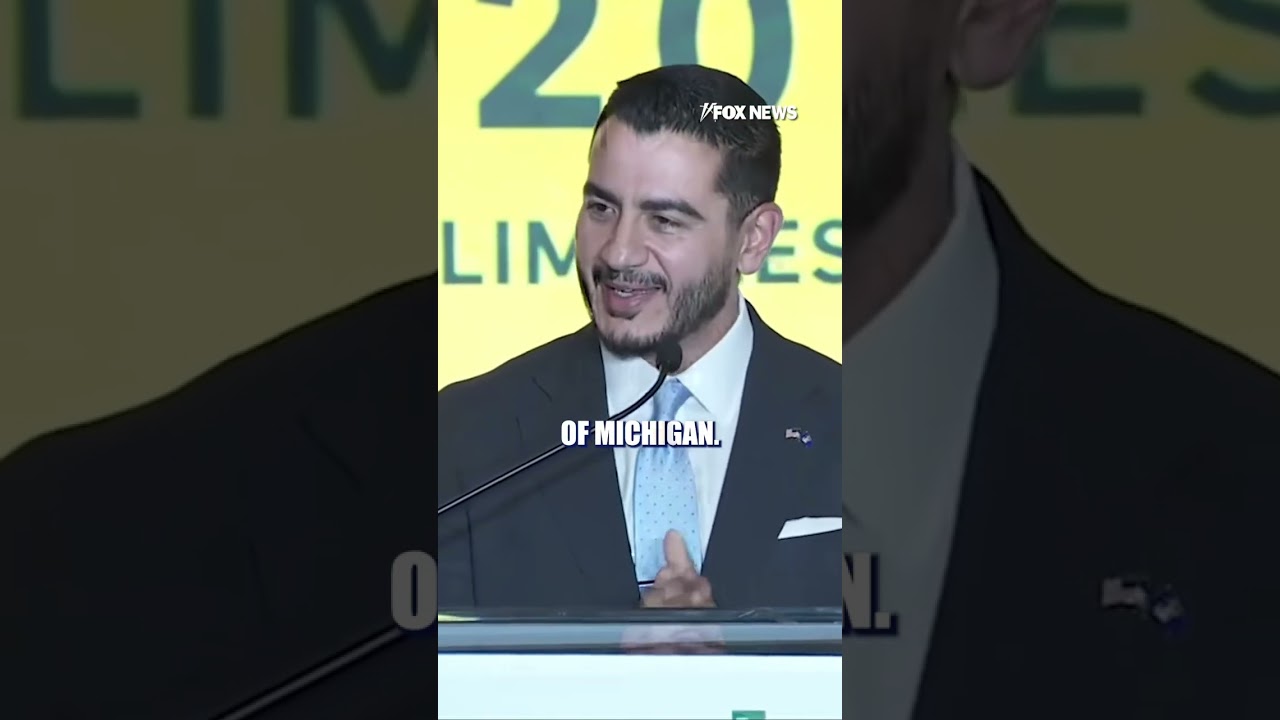
Candidates like Michigan’s Abdul El-Sayed – whose campaign slogan was “get money out of politics, put money in your pocket, and pass Medicare for All,” and who refused to compromise on trans girls in sports – are at the forefront of what Joshi and others are calling a blue tsunami.
“We’ve been in Florida, Maine, North Carolina, and I’ve seen the youth enthusiasm every single time – and not just enthusiasm for a specific candidate: Students who are very inquisitive about the issues and the solutions to those issues they’re dealing with, [from] from healthcare to economic issues to trans rights,” said Joshi. “Young people are active, they are fed up with corporate greed and corruption from Washington, and are ready to be really engaged in politics in all the ways you can be.”
More than a few of the successful candidates promising change, regardless of location, are young people themselves, like Melat Kiros, 29, the newly elected Colorado congresswoman who defeated a 15-term incumbent; many are DSA candidates. This week, Providence, Rhode Island, elected its youngest-ever mayor: 28-year-old David Morales, a democratic socialist. That same day, the city became the largest in the United States to vote in support of divesting from “companies complicit in genocide”, organized by the Providence for Palestine campaign.
In a period of global youth uprising against government corruption and seizing power in elections, it’s a partial answer to anyone questioning when America might see its youth in revolt. It’s also a rebuke to a tremendous amount of Republican campaign spending. Elon Musk alone spent nearly half a billion dollars backing Republicans and attacking candidates like Texas’s James Talarico, especially on trans issues. Talarico went on to win voters ages 18-29 by nearly 50 points.
“With the price of gas what it is alongside a hiring freeze, the only solution offered by the Republican party was to blind yourself with bigotry and pick a God and pray – except it has to be the Christian one, or else,” said model Vivian Wilson, 22, who has been financially independent from Musk, her father, since she came out as trans as a teenager. “Spending hundreds of millions of dollars on ‘trans kids boogieman’ ads makes voters feel like they’re being talked down to or ignored – which they were – rather than focusing on any actual tangible policy for change.”
She sees youth turnout for Democrats as only logical amid economic crisis, war on Iran, military support for Israel, ICE raids, and “the known sexual misconduct of Republican candidates”.
Wilson added: “There have been so many nails placed in this coffin that it’s turning into a Theseus’ ship kind of situation.”
“We feel fantastic,” said Kidus Girma, campaigns director for the Sunrise Movement, the youth climate organization that burst on to the scene in 2018 with a sit-in for the Green New Deal in then-Speaker Nancy Pelosi’s office alongside newly elected Ocasio-Cortez. This week, one of the movement’s cofounders, Will Lawrence, 36, won his race in Michigan, with Sunrise’s support.
Joshi and Girma are clear: It’s not “vote blue, no matter who.” There are plenty of power players still in the party who organizers feel didn’t listen to them outside election years, when they need them to power youth turnout.
Up next: Holding these new electeds – and the Democratic party – accountable. On Thursday, Wilson posted to her Instagram account backing a rising call from the US young left to reject Senator Chuck Schumer and congressman Hakeem Jeffries for leadership positions in the new Congress. By Saturday, a Change.org petition calling for Jeffries’ leadership ouster had attracted more than a million signatures.














Comments