
 German (DE)
  English (US)
  Spanish (ES)
  French (FR)
  Hindi (IN)
  Italian (IT)
  Russian (RU)
  1 hour ago
A peace deal between the US and Iran has been reached following nearly four months of fighting in the region, Donald Trump announced in a post to social media.
In a statement posted to Truth Social Sunday evening, the US president announced the opening of the strait of Hormuz as well as the removal of the US naval blockade. “Ships of the World, start your engines. Let the oil flow!”, said Trump in the celebratory post.
The latest deal sees both sides declaring “the immediate and permanent termination of military operations on all fronts, including in Lebanon”, according to Pakistan’s prime minister, Shehbaz Sharif, who announced the agreement on Sunday afternoon.
The agreement was struck despite an Israeli strike on Lebanon on Sunday that drew criticism from both Iran and US President Donald Trump.
The precise terms of the deal were not immediately known. Sharif said the pact called for “the immediate and permanent termination of military operations on all fronts, including in Lebanon”.
“Following intensive talks, we are pleased to announce that the Peace Deal between the United States of America and Islamic Republic of Iran has been REACHED,” Sharif said in a post on X. A signing ceremony for the peace agreement is expected to take place on 19 June in Switzerland, he added.
Trump had called for restraint on Sunday after Israel launched fresh airstrikes on Beirut, as mediators sought to reach a preliminary peace deal to definitively end the three-month war in the Middle East.
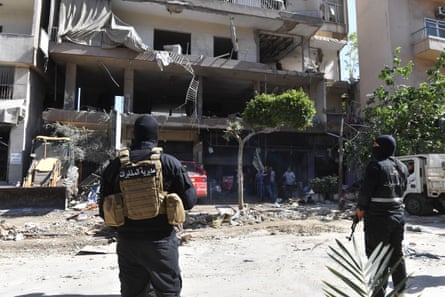
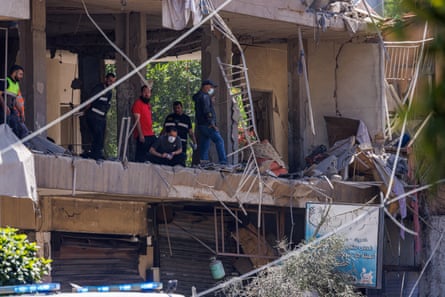
Trump had previously suggested the US could sign an agreement with Iran on Sunday, but as the evening came in the Middle East, there was no sign of a breakthrough. Instead, Iranian officials threatened a military response to the Israeli attack on Beirut, which destroyed a building in the Lebanese capital’s southern suburbs, killing three and injuring six.
Trump earlier told the Axios news site that the Israeli strike had “delayed the signing by a few hours” and said he had told the Israeli prime minister, Benjamin Netanyahu, he had “no fucking judgment”.
Israel said it had targeted senior Hezbollah commanders after the militant Islamist organisation – which has close links with Tehran – launched three projectiles into northern Israel.
A strike on Beirut by Israeli forces a week ago triggered a short but intense new round of fighting between Iran and Israel, momentarily destabilising negotiations between Tehran and Washington.
Mohammad-Bagher Ghalibaf, a lead negotiator for Tehran and Iran’s parliamentary speaker, wrote on X on Sunday that Israel’s strikes on Beirut showed “America either lacks the will to fulfil its commitments or the ability to do so”, warning that the strikes could imperil the talks.
Gen Mohammad Jafar Asadi, the deputy commander of Iran’s joint command headquarters, said: “These crimes will not go unanswered,” according to the official Mizan news agency.
Iran’s foreign ministry said it held the US responsible for Israel’s attack in Lebanon and warned of a “strong response”. Iran’s top joint military command added that the “finger [is] on the trigger” and was ready to fire at the “enemy’s heart”.
Tehran had insisted that any peace agreement must cover “all fronts” and so include the fighting in Lebanon, where Israel has launched a broad offensive and occupied a swath of the south.
Regional officials said Qatari mediators had travelled to Tehran on Sunday to finalise terms of a memorandum of understanding.
Unconfirmed earlier reports suggested the preliminary agreement would oblige Iran to reopen to all shipping the strait of Hormuz, which before the war carried about a fifth of the world’s oil and liquid gas supplies. At the same time, the US would lift its own blockade of Iran and allow Tehran to sell oil, providing some relief for Iran’s fast-deteriorating economy.
However, the memorandum did not appear to address the most contentious issues, such as Iran’s nuclear programme, which would be addressed during a 60-day period leading to a more comprehensive deal.
Observers have expressed scepticism that complex negotiations could be successfully concluded in less than two months, pointing out that the 2015 US-Iran deal that restricted Tehran’s nuclear programme in return for sanctions relief took almost 10 times longer and the negotiations were conducted by large teams of technical experts.
“I doubt we are going to see all this hammered out in 60 days,” said Alia Brahimi, of the Washington-based Atlantic Council.
Reaction in Israel to the broad outlines of the emerging deal had been sharp, with widespread concern at the absence of terms in the draft agreement that would force Iran to restrict either its ballistic missile arsenal or support for regional militant movements such as Hezbollah. Netanyahu has publicly supported Trump but faces a tough re-election battle later this year.
Hezbollah fired missiles into Israel on 2 March, two days after the US and Israel attacked Iran, killing the supreme leader, Ali Khamenei. Israeli troops have since pushed their invasion of Lebanon deeper than at any point in over a quarter-century.
“This is a colossal failure. A full-blown collapse. Iran has undisputedly emerged as the big winner,” wrote Avi Ashkenazi in the mass-market Maariv newspaper.
Jacob Nagel, a former national security adviser to Netanyahu, called the draft deal a “big mistake”.
Critics in Trump’s Republican party, which is struggling with high fuel prices and an unpopular war ahead of midterm elections, have also criticised the emerging deal.
Even if the strait of Hormuz is reopened, relief for the world economy will come slowly, analysts say. Safe passage for shipping trapped in the narrow waterway is far from assured and infrastructure damaged during the conflict will take months to fully repair.
Trump is expected to discuss de-mining the strait during the G7 summit that starts on Monday.











Comments