
 German (DE)
  English (US)
  Spanish (ES)
  French (FR)
  Hindi (IN)
  Italian (IT)
  Russian (RU)
  3 hours ago
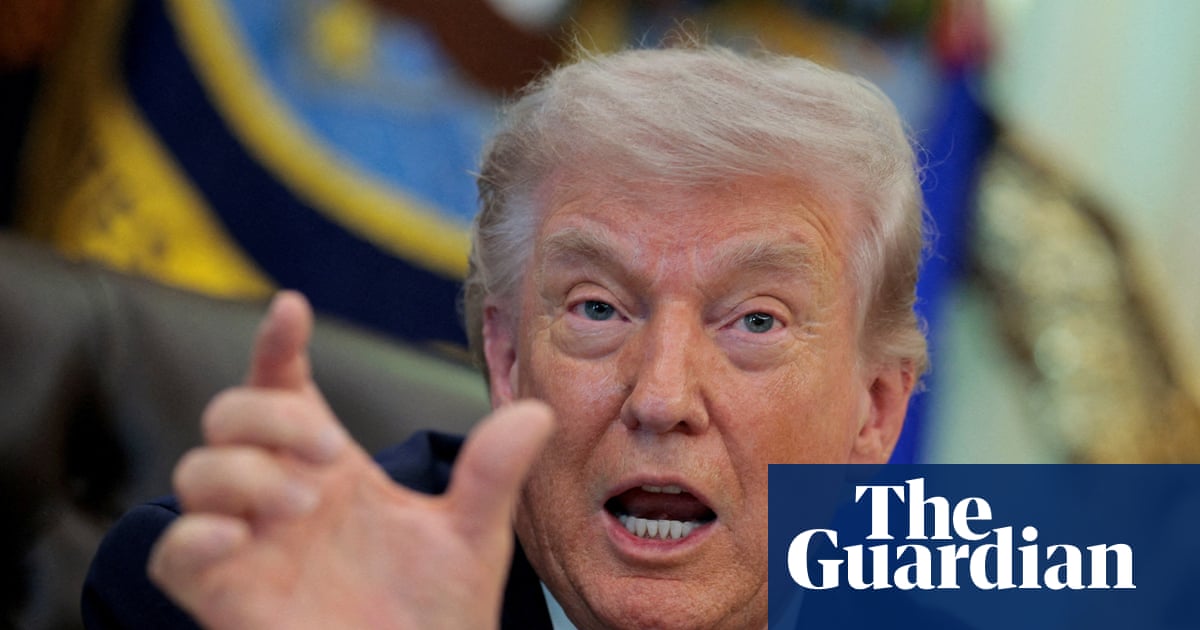
Oil prices plunged by almost 15% after Donald Trump held off on his threat to bomb Iran into the stone ages on Tuesday night, and Iran’s foreign minister said passage through the strait of Hormuz would be allowed for the next two weeks under the management of its military.
With just over an hour until his deadline was due to pass, the US president said he was holding off on threatened attacks on Iran, subject to Tehran agreeing to a two-week ceasefire and reopening of the strait of Hormuz.
Soon after, Iran’s national security council confirmed it had accepted a two-week ceasefire if attacks against Iran were halted. Tehran said peace negotiations with the US would begin in Islamabad on Friday.
Tuesday’s news was immediately embraced by markets, but the outcome of the US-Iran talks is far from certain, and how the strait will be reopened and managed beyond the two-week grace period is yet to be determined.
Brent crude oil, the international standard, dropped 14.4% to $93.48, and futures for US crude oil sank 14.7% to $96.27 a barrel. The prices remain well above where it was at the start of the war.
Japan’s benchmark Nikkei 225 gained 5% in early trading, Australia’s S+P/ASX 200 jumped 2.6% and South Korea’s Kospi soared 5.9%. Elsewhere, Hong Kong’s Hang Seng surged 2.6%, while the Shanghai Composite nudged higher by 1.7%.
In the bond market, Treasury yields eased on word of a potential ceasefire. The yield on the 10-year Treasury fell to 4.24% from 4.30% earlier Tuesday. Gold prices rose more than 2% to $4,812 per ounce.
Cryptocurrencies also rallied, with bitcoin advancing 2.9% to $71,327, and ether climbing 5.6% to $2,234.
Saul Kavonic, the head of energy research at MST Financial, said the two-week pause provided “an off-ramp for Trump’s overly bombastic ultimatum, but not yet an off-ramp for oil markets or the war”.
He told Reuters it was unlikely the shut in oil and LNG production would resume until there was more confidence in a lasting ceasefire.
Kavonic said: “A two week ceasefire would enable a release of some oil and LNG tankers from the strait of Hormuz to market, providing some market pressure relief in May. This does not result in more production, just a release of storage on water.”
Charu Chanana, the chief investment strategist at Saxo, said the pivotal test was whether negotiations kept progressing – and whether insurers and tanker operators regained enough confidence for traffic through Hormuz to run normally again.
She said: “That will determine whether this remains just a relief rally or starts to look more like a durable de-escalation.”
Prashant Newnaha, a senior strategist at the Singapore-based TD Securities, said a renewed escalation could not be ruled out, “but markets are treating this ceasefire as the real deal and all parties involved will sell the ceasefire as a major win.
“Looking further out, oil prices are not returning to pre-war levels. This will leave inflation persistence as a key theme for markets to ponder,” he said.
Earlier on Tuesday, US stocks swung sharply during regular trading.
The S+P 500 fell as much as 1.2% but stocks rallied at the end of trading after Pakistan’s prime minister urged Trump to extend his deadline for another two weeks and asked Iran to open up the strait for the same amount of time.
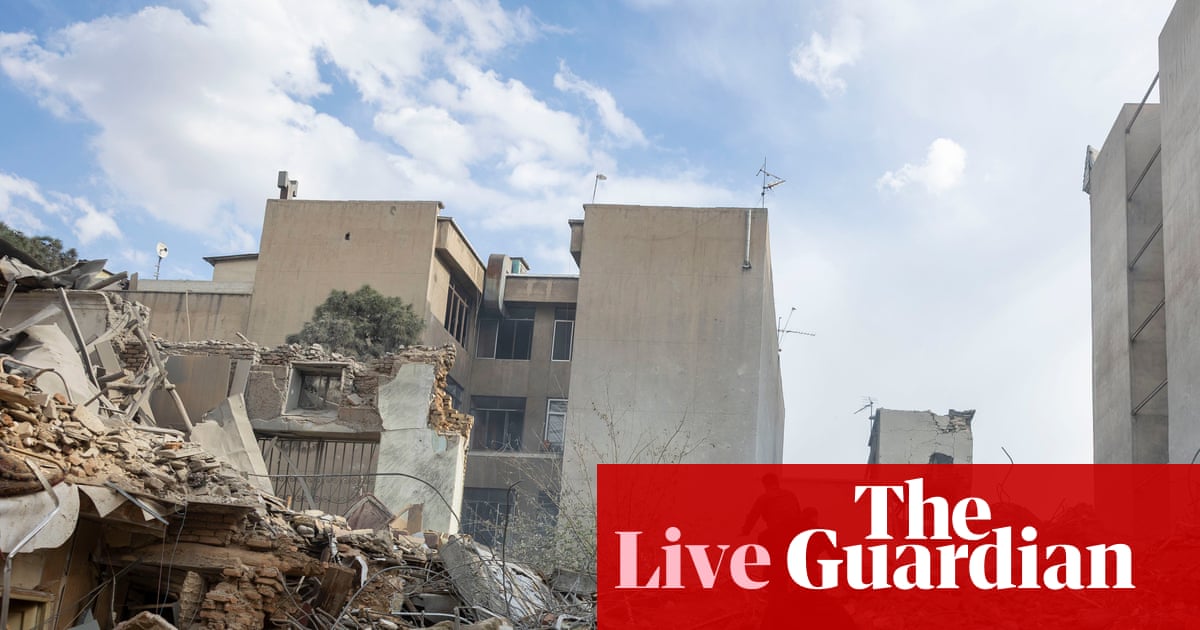
Oil prices have surged since the US and Israel struck Iran at the end of February, unleashing a conflict that has run for more than five weeks. Tehran has largely closed the strait, through which a fifth of global oil and liquefied natural gas is transported, causing a global energy crunch.
With Associated Press













Comments