
 German (DE)
  English (US)
  Spanish (ES)
  French (FR)
  Hindi (IN)
  Italian (IT)
  Russian (RU)
  3 hours ago
Joe Walsh half jumped out of his seat when discussion at the Third Way conference in Charleston turned to how Democrats sound to voters.
“Tone! My God!” the former Republican congressman shouted. “The Democrats come across as, like, professors, academics, elites. I mean, my God, rip off your freaking sport coat and talk to me! Listen to me like a regular human being.”
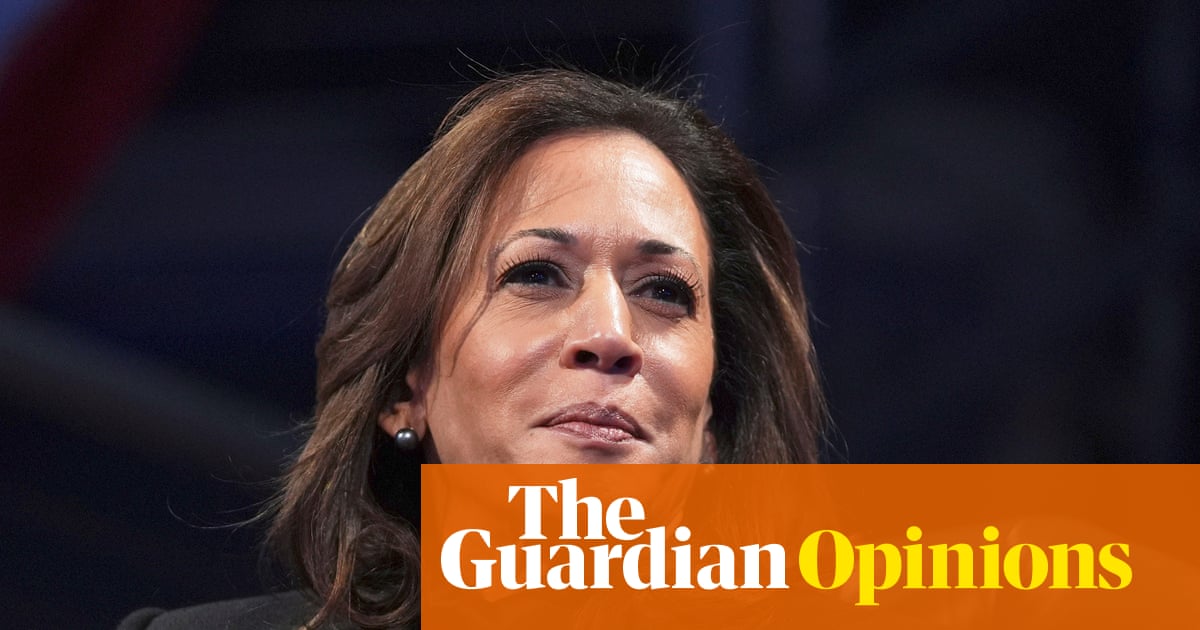
Walsh, who left the Republican party last year over Donald Trump, vibrated with the frustration of Democratic operatives and funders and elected officials who had gathered over the weekend in Charleston, South Carolina, to discuss how to win moderate voters. Many were alumni of the Clinton administration, or Biden’s White House, who fear that the provocations of Donald Trump will push candidates to the left, when they believe that progressive policies cost Kamala Harris the 2024 election.
The Democratic National Committee has refused to publicly release its autopsy of the 2024 election, calling it a “distraction” when Democrats appear poised to win big midterm gains. A progressive group, RootsAction, released its postmortem in December, arguing that courting the middle while failing to forcefully admonish the Israeli government for its actions in Gaza turned off liberal and working-class voters, leading to a historic collapse in turnout among those groups.
Moderate activists at the invitation-only conference, titled “Winning the Middle”, also highlighted the loss of support among voters without college degrees and the working class. But they disagree sharply about what caused them to withhold support from Harris, and what it takes to get it back.
Admonishments about “therapy-speak” and “organizer jargon” peppered the commentary from organizers and participants. “Woke” language like land acknowledgements in meetings, the use of terms like “birthing person” to refer to women, or “justice-involved persons” to refer to people in prison, drove the middle away from the Democratic brand, they argued.
Organizers talked about Biden’s “open-border policies” while noting in survey results that 59% of primary voters said they would support a presidential candidate who advocated to abolish ICE. They downplayed support for Medicare for All among Democratic voters, drawing a distinction between the 83% of survey participants who favor it and the 96% who favor building on the Affordable Care Act.
“I know some argue that the right is going to label all Democrats as leftwing radicals, so it doesn’t matter where we stand or what we say or what we do. If Democrats believe that, we’re going to lose. It is total horseshit,” said Jon Cowan, Third Way’s president. “Democrats running in red and purple places, including presidential battlegrounds, must define themselves as moderates and normies, or these charges, however bogus or absurd, will stick.”
The conference, progressives would say, was a meeting of Democrats who accepted Republican framing of liberal voters. But framing matters when looking for policy support, said Melissa Morales, founder of Somos Votantes, a Latino voter outreach group.
Morales described how voters reacted somewhat negatively to the child tax credit when described as a means to “lift” 40% of Latino children out of poverty. Doing so drove down support for the credit among Latino voters, she said.
“So we – the government, Democrats – are coming in to save your poor Latino children,” she said. “In that way, we set up the government as the hero and working people as people who need to be saved. That turns people off so hard.”
Framing the program as a way to allow working parents to get back to work and take care of their families “not only increased support for the child tax credit, we increased support for the statement: ‘Do Democrats care about people like you?’ Because in that way, it is the working parent who is the hero of that economic story and the more that we can do that, the more we increase people’s agency, and that’s what people want to see.”
Some conference attendees made jokes about how consultants in the room had been saying the word “affordability” more than their children’s names over the last year. But the cost of living has consistently been the most potent issue for Democrats at the polls over the last year regardless of ideology, propelling Zohran Mamdani to victory in New York and Abigail Spanberger to victory in Virginia.
“We just finished talking to about 4,000 or so people in the most competitive congressional districts in the country and we asked them what’s on your mind. Not surprisingly, you see that it’s rising costs everywhere,” said Matt Morrison, executive director of Working America. “It actually transcends party pretty clearly … What we’re dealing with are people who are feeling the pressure of the economy in a way that’s unrelenting and that they can’t escape.”
There’s a sense that the system is fundamentally broken, said Angie Kuefler, a researcher at polling firm GSG.
“The reality is that they’d be fine with whatever system if they could pay their bills,” she said. “They put a pox on both parties in politics and government. They don’t understand their lives and don’t prioritize the things they need.”
And thus, voters are tying affordability to incumbency, said Lanae Erickson, a senior vice-president at Third Way. “We’ve had a series of change elections over and over and over again because people are dissatisfied,” she said. “I think people totally want a fighter right now. They want someone who’s going to go toe-to-toe with Maga … They also want results … They want examples of what you are going to do to make my life better.”
The idea of being a fighter, or of being someone who gets things done, is owned by neither the left, right nor center. Substance beats style. But communications style matters, said Walsh.
“I know we’ve got to talk about affordability. X costs too much; I get all of that. We gotta talk about that,” Walsh said. “But damn it, this guy in the White House is a fascist. This is unprecedented. He’s the very thing our founders feared. And if Democrats can’t talk about both – like, can our democracy survive and beef costs too much – if a candidate can’t speak to both of those … don’t run.”
Defining the middle for Democrats is a challenge right now, given the polarizing politics of the moment. Bombs began falling on Tehran the day before the conference started. Initial polling shows an overwhelmingly negative public reaction to Trump opening a war on Iran. What does a middle position on that look like?
Two state representatives from purple-red districts in Michigan chewed on that question.
“A moderate would say there is some evidence that right now is the right time to perhaps try something in Iran,” said state representative Jennifer Conlin, whose district includes Ann Arbor. “However, the moderate position I have is you still don’t do this without asking Congress, without talking through strategy.”
State representative Joey Andrews was concerned that attacking the president’s actions could sound like defending Iran. “I’m seeing far too many people defend the Iranian regime,” he said. “The ayatollah’s a bad guy. The Iranian government is a genuinely evil government. But the perspective is like: this was poorly planned, this was not put together, this was not sold to the public or the world.”














Comments