
 German (DE)
  English (US)
  Spanish (ES)
  French (FR)
  Hindi (IN)
  Italian (IT)
  Russian (RU)
  6 hours ago
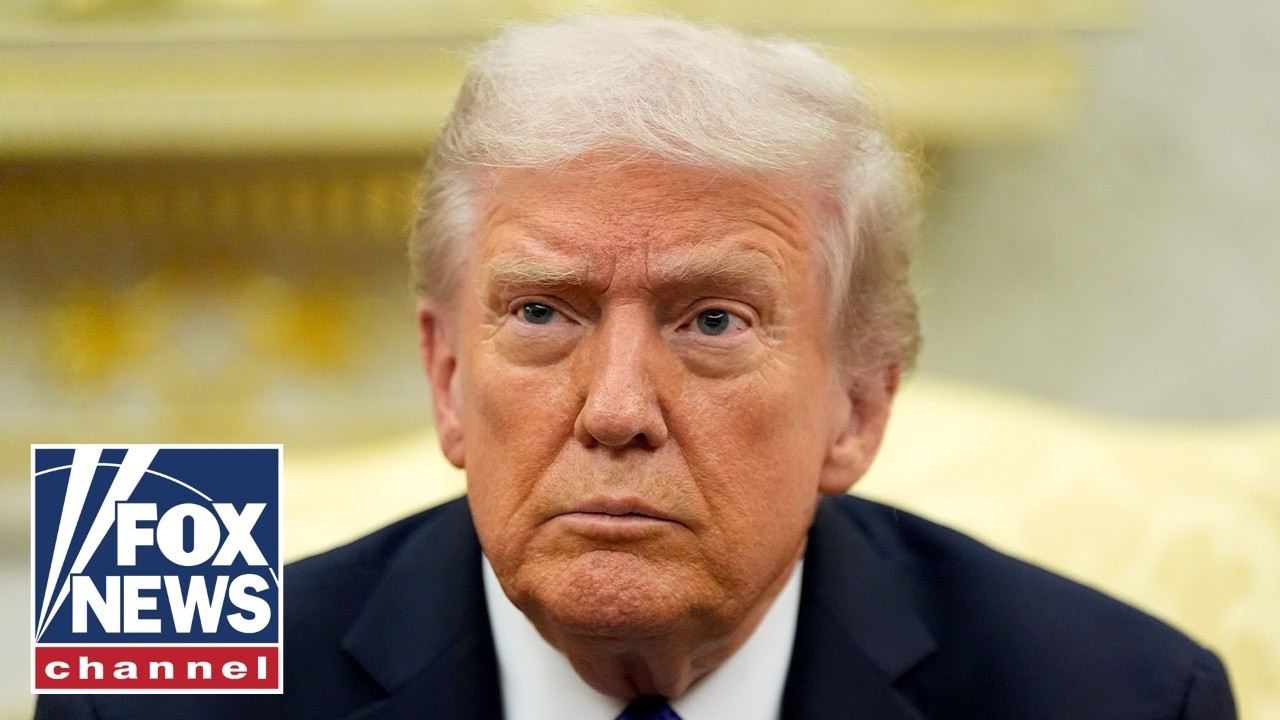
On Thursday, 23 July, after weeks of escalating attacks between the US and Iran, Donald Trump told a reporter that Iran hadn’t received “enough pain yet”, and he leveled a threat. “I am considering a massive attack. Bigger than ever before,” he warned. “I am close to making a decision.” Then, on Monday 27 July, he called it off.
A few days later, on Friday 31 July, Trump said: “We’ll be hitting them very hard. At some point, they’re going to say: ‘We just can’t take it any more.’” This time, it took him just one day to back down.
Here we go again. Ever since the US and Israel launched their latest war on Iran on 28 February, the people of the planet have been subjected to Donald Trump’s on-again off-again relationship with raining down catastrophic destruction on the nation. It started on 21 March, when Trump promised to hit Iranian power plants (a war crime, incidentally) unless Iran opened the strait of Hormuz. He delayed that plan for five days, and then another 10 days, before issuing his next threat.
That was on 7 April, when he wrote: “A whole civilization will die tonight, never to be brought back again.” A mere 10 hours later, he walked back that (genocidal) threat. On 17 May, he wrote: “For Iran, the Clock is Ticking, and they better get moving, FAST, or there won’t be anything left of them. TIME IS OF THE ESSENCE!” On 18 May, he wrote that he had been asked by Gulf leaders to “hold off on our planned Military attack of the Islamic Republic of Iran, which was scheduled for tomorrow”.
The approach seems as tedious as it does childish, constantly threatening one thing only to back down in a cringey, face-saving effort shortly thereafter. Let’s call it what it is: kindergarten diplomacy. From appearances, it would seem that Trump considers this a strategy. One can only assume he holds out hope that it will achieve an end to this catastrophic conflagration he and Benjamin Netanyahu began. The war is a massive failure, plunging his popularity along with American regional dominance in the Middle East. What’s clear is that Trump hasn’t a clue about how to exit a war he never should have started in the first place.
Leadership is needed when difficult decisions must be made, but Trump is not capable of such resolve. Instead, he seems primarily driven to make pronouncements based on the last person he talked to. When Netanyahu visited him in the Oval Office on 21 July, the Israeli prime minister discussed three options for the war with Trump, according to reports: “a (negotiated) deal, continuing the blockade and economic pressures, and a massive strike”, is how a senior Israeli official described the meeting to Reuters. (Let’s not forget that Netanyahu helped convince Trump to start this war back in February.) Two days later, Trump threatened a massive strike (then called it off, then threatened it again). When the president’s threat reappeared, Saudi Arabia’s Crown Prince Mohammed bin Salman called Trump on 1 August to argue for de-escalation. Guess what? To no one’s surprise, Trump backed down again.
Nixon had his madman theory, in which he sought to project an image of himself as unhinged and irrational to frighten the Soviet Union into concessions. Trump, whether he knows it or not, is turning indecision into his own presidential doctrine.
Such indecision is probably in part a reflection of Trump’s unflagging desire to please influential people around him. Trump’s deep-seated need to be liked by those he perceives to be powerful or popular (see: Trump’s meeting with Zohran Mamdani) is, I think, often underappreciated. But there is more behind Trump’s indecision as well.
This administration cannot make any of the necessary decisions on Iran because it, along with Trump’s Maga base and the larger Republican party, has been split, as if by a lightning bolt, by the question. Vice-President JD Vance has been the most skeptical in the president’s inner circle of the war. Ever aware of the political winds, the vice-president is said to be carefully watching the rising rightwing criticism of Israel, due in part to this war.
Vance went on the popular podcast The Joe Rogan Experience in mid-July and claimed that there was an Israeli government campaign to shape popular opinion in the US about the war. “There are some people within their system, we know beyond a shadow of a doubt, who are manipulating and trying to change American public opinion to keep the war going on indefinitely,” he said. “Not toward any objective, but just indefinitely.”
Ever the faithful lieutenant to Trump, Marco Rubio, on the other hand, told Lara Trump on Fox News that the Iranian regime “has never faced a president like President Trump, which is someone that actually takes action”.
Trump’s son-in-law and US negotiator Jared Kushner (along with Vance and their fellow negotiator Steve Witkoff) favors reducing the conflict, thereby lowering gas prices and limiting the danger to US armed forces, but just until after the midterm elections, when the war could potentially be ramped up again, according to Israel Hayom.
The chairperson of the joint chiefs of staff, Gen Dan Caine, who counseled the president against the war in the first place, is now warning that stockpiles for air defense interceptors are dangerously low due to the war in Iran, putting the men and women in the US military at greater risk.
Meanwhile, the Memorandum of Understanding that the US signed with Iran in June has been the subject of fierce Republican opposition, with the Louisiana Republican senator Bill Cassidy calling it “the worst foreign policy blunder in decades”. Even Trump loyalists such as the Texas senator Ted Cruz criticized the memorandum, saying: “The president is receiving some very poor advice on this deal.” And the Maga faithful have grown cold on the war, with only about a third of its voters believing the war is worth the economic cost, according to a Politico poll.
Add to this the fact that CNN is now reporting that US military leadership is basically out of ideas about how to proceed with Iran at this point and is soliciting, via a crowdsourcing-type email sent to a group of military analysts, “new creative and unconventional ways to pressure and punish Iran”. The report also explains that Trump “has been considering strikes akin to a ‘fireworks’ display’”, which would suggest “a symbolic victory that would allow him to exit the war without actually accomplishing one of his initial aims: ridding Iran of its nuclear program”.
Charting a course through the stormy winds of political decision making is what presidents must do all the time. A debacle like the war in Iran, begun with a terrible decision and bringing much unnecessary harm to the people of the region, must eventually be followed by a brave one, however painful it is to this nation or its leadership. A responsible president would make such a choice, even when difficult, and explain the reasoning to the nation.
We, unfortunately, do not have serious leaders. And so we are left with kindergarten diplomacy.
-
Moustafa Bayoumi is the author of the award-winning books How Does It Feel To Be a Problem?: Being Young and Arab in America and This Muslim American Life: Dispatches from the War on Terror. He is professor of English at Brooklyn College, City University of New York, and a Guardian US columnist










Comments