
 German (DE)
  English (US)
  Spanish (ES)
  French (FR)
  Hindi (IN)
  Italian (IT)
  Russian (RU)
  2 hours ago
A Kurdish man who was force fed over the course of eight months while on hunger strike in US immigration detention has spoken out about it for the first time, describing how much the process harmed him physically and psychologically.
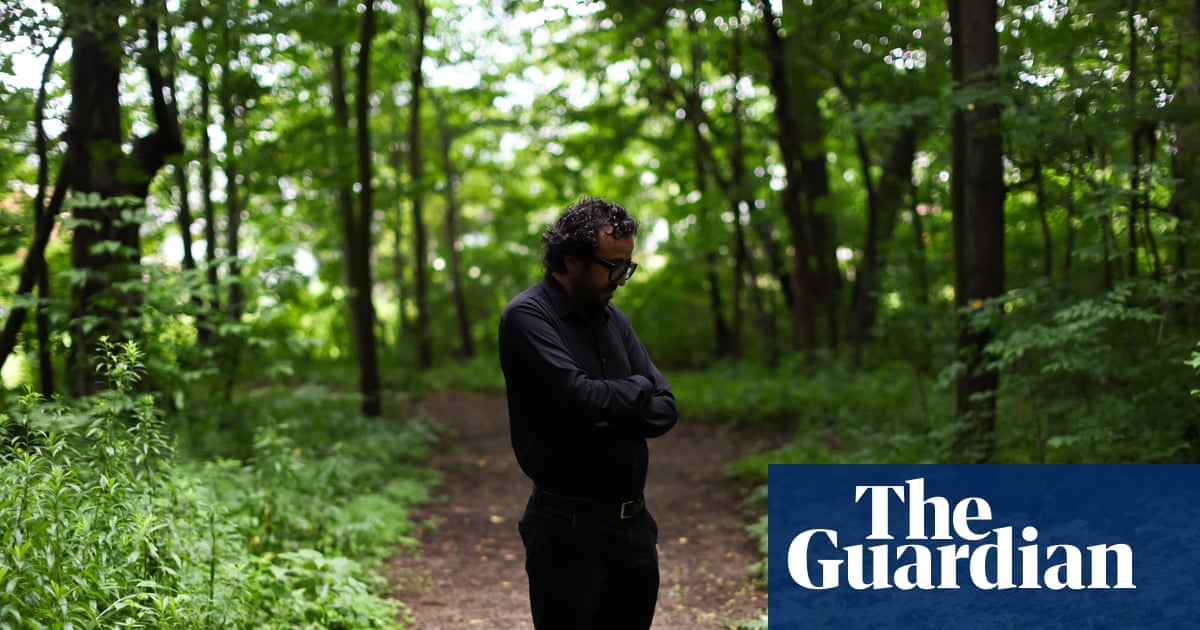
Gabar Choli, a film-maker and activist now living in Canada after being deported, described how he endured the coercive treatment – a practice widely considered torture by international human rights groups – often twice a day after being detained by US Immigration and Customs Enforcement (ICE) when his asylum application was denied.
“It just broke me, mentally broke me,” Choli said in an exclusive interview with the Guardian. “It came to a point that I decided to write my body an apology letter.”
ICE officials force-fed Choli at the Port Isabel federal detention center in Los Fresnos, south Texas, from late May 2025 until he was deported in January of this year, a Guardian investigation found. Choli had resorted to a hunger strike to protest conditions at the facility and to push for a resolution to his immigration case.
He described how a team of detention center guards would physically restrain him while ICE medical staff forcibly inserted a feeding tube through his nose and down his esophagus and pumped nutritional liquid into his stomach.
“I was respectful. I just told them I am protesting for humane treatment, nothing else,” Choli said. “But they were determined to break me.”
Much of what happens in ICE detention has been hidden from public view over successive administrations.
An investigation by the Guardian last week found that the second Trump administration used court orders in plans to subject at least 10 hunger strikers in ICE detention to involuntary medical procedures.
However, it has since emerged that the number is even higher. DHS sources told the Guardian over the weekend that between January 2025 and 4 August, 2026 ICE obtained court orders for involuntary medical treatment for 18 hunger strikers. The Guardian has previously found that while some people are force-fed, some give in and eat at the last minute when presented with a court order.
DHS sources also said that ICE “provides involuntary medical treatment only to prevent imminent life-threatening harm or death”.
In court records reviewed by the Guardian in relation to Choli’s case and other hunger strikers, “involuntary medical treatment” is used as an umbrella term that includes the option of force-feeding.
According to court records related to Choli, ICE requested the court give the agency permission “to conduct routine physical examinations and routine laboratory testing, administer hydration, and if necessary, use restraints to accomplish this involuntary monitoring, treatment and administration of nutrients, fluids and medication(s), by way of intravenous measures and/or a nasogastric tube”.
ICE and the Department of Homeland Security (DHS), its parent agency, did not respond to specific questions about Choli’s case and had not responded to questions about force-feeding for the prior articles in the investigative series, but on Friday night sent a statement by email in response to the Guardian’s reporting and requests for comment.
“ICE respects an individual’s right to refuse medical treatment where appropriate,” an unnamed DHS spokesperson said. “However, when an individual’s medical condition presents a serious risk of death or permanent harm, or when other compelling legal or operational interests are implicated, ICE may seek judicial authorization for appropriate medical interventions consistent with applicable law. Any involuntary medical treatment is undertaken only pursuant to legal authority and under the direction of qualified medical professionals.”
“ICE is committed to ensuring the safety, security, and well-being of all individuals in its custody,” the spokesperson added.
Dozens of pages of federal court records verify that Choli was subjected to force-feeding, including declarations by ICE doctors and officers. Combined with interviews with medical and legal experts and an interview by phone with Choli himself , much of the secretive process is revealed. His case could be the longest documented case of force-feeding in ICE detention to date.
Choli arrived in Blaine, Washington state, in 2022. He had been living in Vancouver where he was a film-maker and activist campaigning for an independent nation of Kurdistan, having come to Canada from what he considers occupied territory in Iran. He said he requested asylum in the US due to death threats for his political activism while in Canada, and lived in Los Angeles with a work permit while his case was in process. But he was arrested during an ICE check-in on 25 February 2025 – the month after Donald Trump returned to the White House – after his asylum case failed.
He began a hunger strike in detention in California and was transferred to Texas. DHS and ICE then requested an emergency court order from a federal judge to force-feed him and perform other medical procedures, such as involuntary intravenous hydration, involuntary blood draws and urine analysis tests through forced catheterization, documents from the southern district of Texas federal court seen by the Guardian show.
“I am not suicidal,” Choli wrote in a letter to the federal judge overseeing his proceedings. “I am using hunger strike as the only available option to protest the abuse and mistreatment.”
DHS and ICE said in court records that force-feeding Choli was necessary for his health, but also that his prolonged hunger strike posed “a serious threat to the security and good order” of the detention center. They further accused Choli of attempting to “manipulate the immigration system” by striking.
During his first force feeding sessions, he recalled in an interview occasions where a nurse working for ICE “shoved the tube so hard” that “he tore my nose from the inside.” After such sessions “they would take me to solitary cell and I would just choke on my blood and drink the blood from inside [my throat],” he added. Many of his court records are sealed, so the Guardian is not able to corroborate some details in Choli’s account.
He did not have legal representation throughout the eight month ordeal. The federal judge presiding over his case, Rolando Olvera, denied Choli’s request for legal assistance and extended the force-feeding order several times at ICE’s request, according to records filed in the southern district of Texas federal court.
Choli suffered injuries and medical complications, including swollen sinuses, damage to his esophagus and stomach problems, court records show.
“That is just not medical care, that is torture,” Dr Chanelle Diaz, an assistant professor of medicine at Columbia University’s medical center, told the Guardian. Diaz has reviewed cases of other detained immigrants subjected to force-feeding and advocated for their release.














Comments