
 German (DE)
  English (US)
  Spanish (ES)
  French (FR)
  Hindi (IN)
  Italian (IT)
  Russian (RU)
  2 hours ago
It was a normal Tuesday morning for Mohamed when he left his San Diego, California, house for his daily exercise in mid-January. But as he walked around the Colina del Sol park, four US Immigration and Customs Enforcement (ICE) agents approached and encircled the middle-aged father, who is using a pseudonym out of fear of retaliation from federal agents. The officers, Mohamed said, who wore jackets with ICE emblazoned on them and balaclavas that obscured their faces, asked for his green card before they began drilling him with questions about what he was doing in the park.
“I was terrified,” Mohamed, a lawful permanent resident from Somalia, said through a translator. The ordeal ended shortly thereafter, but the experience has left a lasting impact on him. “I have high blood pressure,” Mohamed said about the encounter he believes was based on racial profiling. “I used to do my daily exercises; now I don’t even do that any more because I’m scared.”
The Guardian spoke to several US citizens and legal permanent residents who said that they were racially profiled by ICE and US Customs and Border agents in recent weeks following the Trump administration’s immigration crackdown that has swept the nation. The incidents have led to lasting stress, they said, with some of them taking drastic measures to ensure their safety including sleeping with their passports, or only traveling at night. They feel they have little recourse to hold the agents accountable for what they perceive as mistreatment.
Community organizers told the Guardian that federal agents have targeted the Black and brown neighborhoods that they serve in Minnesota, New York, Washington state, California and Illinois. And immigration enforcement agents have patrolled Home Depot stores, mosques, daycares, street vending areas and construction sites. As a result, organizations have increased training to prepare people if they are detained, have equipped businesses with signs attempting to ward off ICE and have offered whistles to residents so that they can alert their neighbors when federal agents are nearby.
In recent weeks, the Trump administration has focused its immigration-enforcement efforts on Somalis. About 2,000 ICE officers and 800 US Customs and Border Protection agents have been deployed in the Minneapolis area, which has the largest Somali population in the US. The Trump administration also began arresting immigrants in Maine this month, with a focus on the thousands of Somalis who have settled in the state beginning in the early 2000s. Additionally, it announced that in March it would end the temporary protected status designation for Somalis in the US, which has provided work authorization and protection from deportation for migrants from the country.
The main recourse for challenging racial profiling is through the Federal Tort Claims Act, which allows people to sue the federal government for harm caused by federal employees, said Thomas A Saenz, the president and general counsel at the Mexican American Legal Defense and Educational Fund. But a recent supreme court ruling may have complicated how racial-profiling allegations are handled. In September 2025, supreme court justices allowed immigration enforcement agents in southern California to interrogate anyone who they thought may be in the country illegally, and noted that perceived race or ethnicity can be a relevant factor along with others.
In recent months, the amount of people held in detention reached an all-time high. As of 8 January 2026, ICE held 68,990 people in detention, according to data published by the agency. “Anytime you impose a target for a number of arrests and detention, you’re going to encourage the use of unconstitutional shorthands like racial profiling,” Saenz said. “It’s not at all clear that this administration cares whether they’re in compliance with the constitution or not.”
“Allegations that ICE engages in ‘racial profiling’ are disgusting, reckless and categorically FALSE. This type of garbage is contributing to our officers facing a more than 1,300% increase in assaults against them,” said Tricia McLaughlin, the Department of Homeland Security’s spokesperson, in an email to the Guardian. “A person’s immigration status makes them a target for enforcement, not their skin color, race or ethnicity. Law enforcement uses ‘reasonable suspicion’ to make arrests, as allowed under the fourth amendment to the US constitution. The supreme court has already vindicated us on this position.”
‘Anybody could snatch him off the street’
Last month, Fernando was driving on a two-way street in Nebraska when he said that he was pulled over by ICE agents in the morning. They told Fernando, a US citizen who is only using his first name out of fear of retaliation, that he fit the description of a Hispanic male whom they were looking for. The four officers interrogated him over the course of an hour, he said.
“As soon as it happened, I kind of laughed it off,” Fernando said. “I was kind of like, ‘This is pretty funny.’ You don’t expect it to happen to you until it does.” But after he gave them his Real ID, he said they became visibly irritated and insinuated that it was fake. A veteran, Fernando shared his name, rank, branch of service and social security number, but he said the officers were unfazed. They demanded that he step out of the car, Fernando said, and as he did so, they threw him to the ground and laid their body weight on top of him. They yelled that he was interfering with an investigation, as Fernando continued to ask what they were looking for. Not long after, he said that the agents stood up, threw his ID to the ground, flipped him off and drove away.
The incident rattled Fernando. He said he becomes anguished whenever he sees a Dodge Durango with tinted windows – the same car that stopped him that day. Now he tries to only travel at night so that he won’t be targeted by agents during the day.
“It feels like a slap in the face. I gave nine years of my life to a country for me to be racially profiled and be questioned about my citizenship. It makes me emotional. It makes me feel like all of that was in vain,” Fernando said. “One of the guys that stopped me was a younger Hispanic guy, and it was like, ‘Hey, we’re supposed to be on the same team. I don’t understand why you would become the aggressor.’”
Over the past few weeks, he said that he’s called the US Department of Homeland Security office in Nebraska or ICE every couple of days to try to report the incident, but that he’s never received a call back. “It makes it a lot more difficult to report,” Fernando said, “than it does to actually try to chase down a ghost.”
In Tampa, Florida, Sara, who is of Persian descent, said that she believes ICE officials followed her because they perceived her as Latina. In March 2025, Sara, a US-born citizen who is using a pseudonym out of fear of being further targeted, said that a white SUV followed her car upwards of 15 times for a month. “It was extremely rattling,” Sara said, “to the point where I carried our passports with us everywhere and then even started to sleep with them. I felt very fearful because of what was going on in Tampa and what it seemed like was racial profiling and me looking like I’m of Hispanic background.”
Sara said she eventually stopped being followed, but that the experience greatly affected her mental health – as it was happening, she couldn’t sleep or eat, and her hair began falling out. “I do worry about our nation and about the rights of people,” Sara said. “How things are being approached with such violence, that’s very frightening to me.
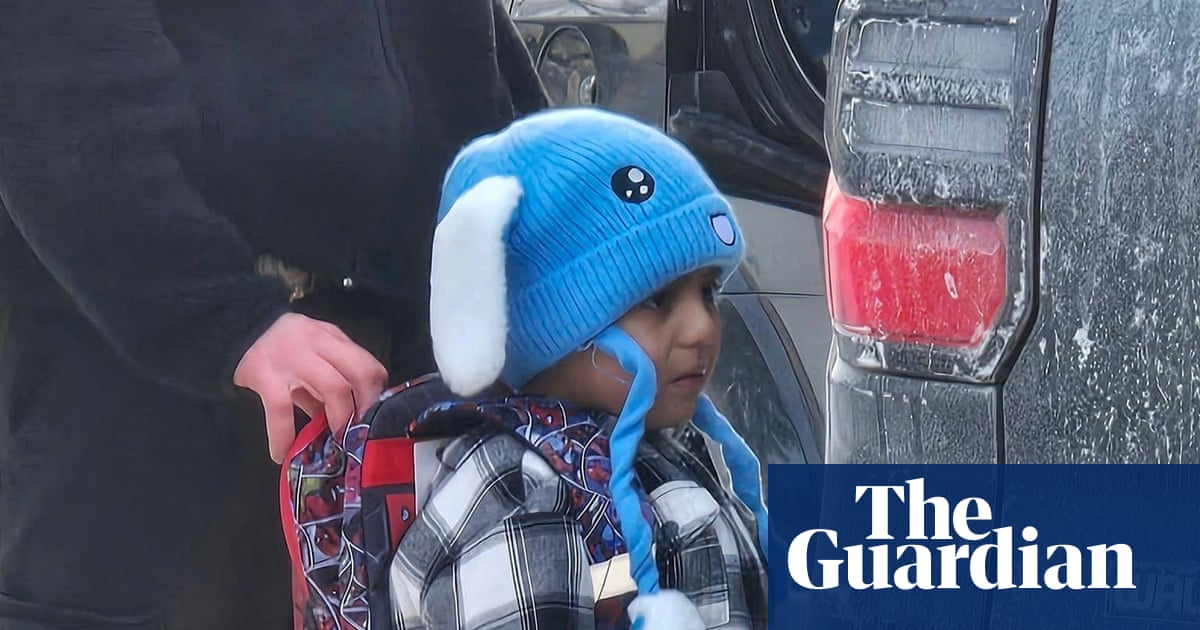
In Maryland, the threat of immigration enforcement led one family to change their daily routine to ensure their children’s safety. Kate, a European woman who is a US citizen and is using a pseudonym, is the guardian of four Guatemalan teens. During the winter and spring of 2025, she began walking the youngest child, a fifth grader, to school because she feared that he may be targeted by immigration enforcement agents due to his appearance.
“[ICE agents] were threatening to come to schools and to come into neighborhoods and I was really worried for a while,” Kate said. “At that time he was 11. He’s a little kid. Anybody could snatch him off the street.” Now that he’s in sixth grade, Kate said that she allows the child to walk to school with his older cousins. But she’s still worried that the children’s biological family could be detained by ICE.
Organizations throughout the nation have come to refugees and immigrants’ aid by offering them support in areas where federal agents have been known to patrol. Any Huamani, an immigration defense coordinator at the Brighton Park Neighborhood Council in Chicago, said that her non-profit has hosted more than 50 “know your rights” trainings in the area since Trump took office last year. Since ICE launched Operation Midway Blitz, its immigration crackdown in Chicago last fall, Huamani said that she has seen an uptick in racial profiling of Black and brown community members. In October, she said that she witnessed two Spanish-speaking people be abducted by ICE back-to-back within a couple of minutes.
The organization has set up a table outside of Home Depot to help day laborers by offering them information about what to do if they’re detained, as well as hand warmers, toe warmers and whistles so that they can warn people when they see ICE.
In Minnesota, the sound of whistles wafts through the Cedar-Riverside neighborhood, as community members alert their neighbors that ICE agents are patrolling the area. Volunteers in green vests are stationed near mosques and Somali-owned businesses in the area, which has a large Somali population, said Suleiman Adan, the deputy executive director at Cair Minnesota, a Muslim civil rights organization.
Adan said that community members have also shared that ICE has patrolled the Karmel Mall, where many Somalis frequent. “It’s like you’re looking for game,” he said about ICE’s tactics. “It’s like you’re hunting; who can I prey on today?”
“Right now, it’s like ‘to hell with the constitution’,” said Adan. “Freedom for whom is really the question.”










Comments