
 German (DE)
  English (US)
  Spanish (ES)
  French (FR)
  Hindi (IN)
  Italian (IT)
  Russian (RU)
  3 hours ago
After the assassination of Charlie Kirk in September, Donald Trump and others pledged a no-holds barred crackdown on leftwing activists.
“We have radical left lunatics out there and we just have to beat the hell out of them,” Trump said after Kirk’s shooting. Top White House officials, including JD Vance and Stephen Miller, repeatedly publicly vowed that a crackdown was coming. In particular, the government focused on “Antifa.” short for antifascist, is not an organization but rather an ideology that broadly describes a variety of left-leaning beliefs.
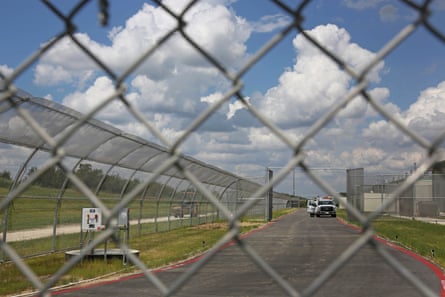
About a month later, the administration had its first trophy. The justice department announced it was bringing terrorism charges against two people in Texas who were part of a “North Texas antifa cell”. Prosecutors said the cell had planned an attack at ICE’s Prairieland detention facility and ended with two correctional officers being shot at and a police officer getting non-fatally shot. Ultimately, 18 people were charged – some donning all black gear, masks and radios – and the government said they had carefully plotted the attack.
It was the first time the government had ever filed terrorism charges against antifa. In total, 15 people were charged with providing material support for terrorism. They also face state charges as well as numerous other federal charges relating to rioting, carrying an explosive, firearms, and attempted murder of a federal employee.
The US attorney in Texas’s northern district appeared on Fox News the next day and alleged that people in the supposed cell “want to overthrow the United States government”.
“As @POTUS has made clear, Antifa is a left-wing terrorist organization. They will be prosecuted as such,” US attorney general Pam Bondi tweeted the day the charges were announced in October.
There is no doubt a police officer was shot at the protest. Prosecutors have also brought charges against people they say helped the alleged shooter escape. But the case has drawn considerable alarm because of the way that prosecutors have sought to create a criminal enterprise – a “North Texas antifa cell” – among a group of demonstrators who were uninvolved in the shooting. Legal experts say it is a thinly-veiled effort to crack down on leftwing groups and deter protesters. Six defendants have already pled guilty to providing material support to terrorists.
“It should concern everyone else in the country, because their community, their circles, might be next,” said Xavier de Janon, who is the director of mass defense at the National Lawyers Guild and has been closely following the case. “This precedent could result in people facing terrorism charges for doing very simple mainstream activism.”
The case is more complex than Trump officials have let on, according to a Guardian review of court records and interviews with defense lawyers and family members. The evidence so far raises considerable questions about whether those charged believed they were going to a protest that would result in violence or destruction of federal property. Family members and lawyers for several of those charged said in interviews the defendants had nothing to do with antifa. And experts say the terrorism charges the government has filed have nothing to do with the ideology of the defendants.
Perhaps most significant in the Texas case is the way that prosecutors have sought to create a criminal enterprise – a “North Texas antifa cell” – among a group of demonstrators, some of whom say they did not know each other and met for the first time at the protest. Prosecutors have pointed to leftwing zines and flyers seized from the protesters, their use of the encrypted messaging app Signal, all black clothing worn at the protest, and general discussion of firearms to argue that those at the protest were part of a terror cell.
As Donald Trump and his allies look to crack down on leftwing groups, the provision may offer a new cudgel for the Trump administration to go after political opponents.
“I do think there is reason to be concerned that the administration is trying to find ways to become that aggressive with its prosecutions, which would really be abandoning first amendment principles,” said Francesca Laguardia, a professor at Montclair State University who studies terrorism prosecutions.
“The novelty is not really a new use of an old statute, but more actively thinking to use the statute at all,” she added. “The novelty allows for prosecutions of people who are not associated with established terrorist organizations.”
A spokesperson for the US attorney’s office for the northern district of Texas, which is handling the case, declined to comment. A justice department spokesperson did not return a request for comment.
Amber Lowrey wasn’t surprised when she got a call on 5 July and found out her sister Savanna Batten had been arrested.
She knew Batten had planned to go to a protest the night before at a local ICE facility. Batten had been going to protests for years and had been arrested before “for blocking doors and things like that”, Lowrey said. Her sister loved animals, wasn’t violent, didn’t like guns, and would barely say a curse word. So whatever Batten had been arrested for, Lowrey figured it couldn’t be too serious. But as the day went on, Lowrey began to see news stories about the protest. A police officer had been shot. She began to worry. “Oh, no, Savanna what have you gotten yourself into?” she thought.
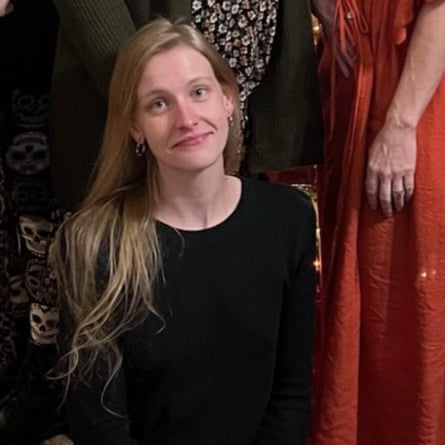
In July, Batten was one of about a dozen people federally charged with attempted murder of a federal officer and discharging a firearm in connection with a crime of violence. Little happened in the case in the weeks after.
A few months later, after Kirk’s death, the government released a new indictment against Batten and several of the other activists who were charged. Now, they accused Batten of being part of a “North Texas antifa cell” and brought new terrorism charges against the activists.
Amber noticed the justice department began highlighting antifa – something she said her sister had nothing to do with – on social media.
“The charges the Grand Jury has leveled against these defendants, including material support for terrorists, address the vicious attack perpetrated by an anti-ICE, anti-law enforcement, anti-government, anarchist group,” Nancy Larson, the acting US attorney for the northern district of Texas, said in a November statement. “We are firm in our resolve to protect our law enforcement officers and federal facilities against organized domestic terrorist cells.”
“We were just like ‘wait a minute, what is going on here?”Lowrey said. “I promise you there is no antifa cell.”
“I thought at first it’s a misunderstanding,” she said.
On 4 July, Batten drove to Prairieland detention facility, about 30 minutes south from her home in Fort Worth, with two friends, according to court documents. The plan was to stage a noise demonstration, setting off fireworks in solidarity with immigrants detained inside. By the time she got there, about half a dozen other protesters had already arrived. Among the protesters were 11 firearms, prosecutors would later say.
A little after 10.30pm, the protesters began setting off fireworks, according to court documents. Some of the protesters began spray painting a guard booth, vehicles in the parking lot, damaged the tires on a government van, and broke a security camera, according to a plea agreement in one case. Just before 11pm local police arrived on the scene as two unarmed correctional officers attempted to talk to the protesters, according to the criminal complaint filed earlier this year.
What happened next is not exactly clear. Prosecutors say one of the protesters ran towards Benjamin Song, a local activist who prosecutors say was the leader of the group. Song allegedly yelled “get to the rifles”, and began shooting at the officers with an AR-15 rifle that had a modified binary trigger, which allowed him to fire off more rounds quickly. An Alvarado police officer was shot in the neck and would later recover.
Lowrey said Batten wasn’t close to the shooting when it happened. Prosecutors say she was arrested later at an intersection nearby with six others. “They were dressed in black, military-style clothing, some had on body armor, some were covered in mud, some were armed, some had radios,” prosecutors said in court papers.
Zachary Evetts, another protester, was arrested around 2am walking along the side of the road and police say they found him with a black balaclava mask, safety goggles and tactical gloves. Meagan Morris, who told KERA she played on her Nintendo Switch while the protest took place, was arrested in her car after she drove away when gunshots started. Police said they found two guns, a ballistic helmet, a loaded gun magazine, a hand-held radio and two bulletproof vests in the car.
Prosecutors also may focus on the all black gear many of the protesters wore in an effort to prove the material support for terrorism charge. Some of the protesters who have pled guilty have stipulated to prosecutors they dressed in all black knowing it would make it more difficult for police to arrest them for damaging government property.
The opening paragraphs of the indictment lays out the government’s description of what antifa is, describing it as “a militant enterprise made up of networks of individuals and small groups primarily ascribing to a revolutionary anarchist or autonomous Marxist ideology, which explicitly calls for overthrow of the United States government, law enforcement authorities, and systems of law”, prosecutors wrote.
But whether or not the defendants were part of a larger group is not relevant to the terrorism charge they face, experts said. In order to prove someone is guilty of material support to terrorists, prosecutors must simply show that they intended to commit one of several specific crimes.
“The actual language of the statute does not require a nexus to terrorism or a terrorist organization,” Laguardia said. “Clearly they’re going to use this case in terms of communication with the public to build out this idea that antifa has become a terrorist organization.”
In this case, prosecutors allege the protesters provided material support for three crimes of terrorism: attempting to destroy government property by using an explosive, destroying government property in excess of $1,000 and attempting to kill an employee of the United States.
The key to the case is likely to be whether the participants intended to commit or assist those crimes. In court documents, for example, prosecutors have focused on the fact that the participants wore all black and covered their faces, an intentional effort to conceal their identities from law enforcement.
“Is some discussion of a target location going to be sufficient? Or discussion of a weapons cache, is that going to be sufficient?” said Thomas Brzozowski, who worked as counsel for domestic terrorism in the justice department’s national security division. “That’s the $50,000 question.”
They have also highlighted that two of the protesters went to the ICE facility earlier in the day earlier in the day and sent pictures of a security camera and details about the gate surrounding the facility.
Patrick McClain, a lawyer for Evetts – one of the people alleged to have done reconnaissance at the site – said the scouting was done for a different reason.
“He went to a site to see what it is because they were concerned about safety,” he said. “What is this place like? None of them had been there.” He similarly said they wore all black for safety reasons. “Look how protesters are being treated across the country by federal agents.” He added that his client was not part of any so-called antifa cell.
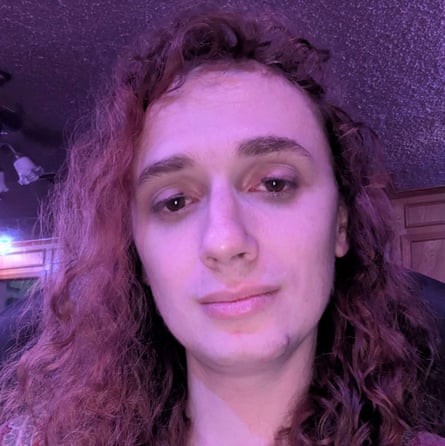
Those who know the defendants say there was no intent to commit violence that night. Lydia Koza, 32, whose wife Autumn Hill, 30, was arrested after the protest, was home when a few protesters gathered at their home before heading to Prairieland. Prosecutors said their house was a staging ground to gather guns and other gear. Koza and Hill, like several of the people arrested, are transgender.
“My understanding is that they were going to go and try to make some noise to let people in Prairieland detention center know they had not been forgotten,” she said. “I am supremely confident no violence was planned at this event.” Shortly before going out, she gave her number to a few of the people who had gathered to call in case they were arrested. She described her and her housemates as “a bunch of fucking nerds”.
Asked why the protesters were carrying guns if there was no intention of violence, Koza speculated they were for self-defense.
“A lot of the time rightwing counter protesters will try to show up at leftist protests to counter protests. And a lot of the time the rightwing counter protesters will be armed,” she said. “My understanding is basically that they were going to leave the guns in the car or in some place where they could get them, but they would not be carrying the guns per se,” she said.
Prosecutors have painted the protest in a vastly different light, portraying the demonstrators – some of whom had never met each other – as far-left extremists who planned violence on the evening of 4 July. They have pointed to two different group chats on Signal, the encrypted messaging platform, where they say the activists used aliases and auto-deleted messages as they planned the event.
In one of those chats, titled “4th of July party!”, prosecutors say a group of six of the activists scouted out the detention facility in the days leading up to the protest, mapping out the perimeter, doorbell cameras nearby, and the closest police station. According to the indictment, Maricela Rueda, one of the activists in the chat, asked if they would be bringing guns to the protest, expressing concern that doing so “might make the situation more hot”. Song allegedly replied that having a rifle would intimidate law enforcement since “cops are not trained or equipped for more than one rifle, so it tends to make them back off”.
Song posted a flyer for the protest in a larger activist chat describing the protest as a noise demonstration and asked those in the group to only share it with “trusted folks.” The night of 3 July, Song went to the house where Hill and Morris lived to review the gear they were going to bring to the protest. Hill asked Song if he would be bringing guns to the protest, and Song said he would because he didn’t intend to go to jail, according to the indictment. He repeated that several times over the course of the night, prosecutors say, “putting everyone there on notice of his intent to shoot at police rather than be arrested”.
Koza was there that night, and said that while she didn’t hear all of the conversations that night, she didn’t recall Song making that comment. She also rejected the characterization that the remark signaled an intent to shoot police and believed Song didn’t intend to shoot police.
“I don’t think this individual had any intention of shooting at cops,” she said. “I think that it was much more of a ‘don’t get shot yourself’.”
In a statement of facts accompanying a guilty plea last month, Seth Sikes, another protester who pled guilty to providing material support to terrorists, told prosecutors that Song’s role was to use his rifle to intimidate law enforcement so that the protesters could escape. Two other defendants, who also pled guilty to providing material support to terrorists, told prosecutors Song’s role was to alert the protesters to police.
Lowrey said that in the days after Savanna was arrested, she spoke with her on the phone in jail and that her sister didn’t even know there had been a shooting.
“She just kept saying ‘no something’s wrong. This is not what happened. Let’s try to be calm and let everything shake out’ and she was very much like ‘this is not a big deal,’” Lowrey said. McClain, Evetts’ lawyer, also said there was no intention of violence.
Prosecutors also allege the use of Signal itself is suspicious because it allowed those who participated in the protest “to hide their involvement in illegal conduct”. But both Koza and Lowrey said that is a gross overreading of using Signal, which is now fairly widely used amid broader concerns about government surveillance. Earlier this year, it was revealed that the defense secretary, Pete Hegseth, and other top government officials used the app to communicate.
“I’m a 42-year-old mom, about as straight-laced as they come and I use Signal,” Lowrey said.
Koza said she and Hill use Signal for everyday things like grocery lists and there wasn’t a nefarious reason many people in their group chats didn’t use their real names. “That’s just what you do when you’re on a group chat with your friends, you make up goofy nicknames that you call each other,” she said. Hill’s moniker on Signal was “not beating the little creature allegations”, which Koza said was an inside joke of sorts that referenced how those who knew her thought she was adorable.
Prosecutors have also pointed to materials seized to try and paint the group as a terror organization. The original indictment, from July, included a picture of a flag obtained at the scene that says “resist fascism, fight oligarchy” with a fist reaching upwards. Prosecutors also point out in the indictment that Batten and two of the people she arrived with were involved in printing “insurrectionary materials called ‘zines”. Another defendant, Daniel Sanchez-Estrada, wasn’t at the attack. But authorities arrested him afterwards for moving a box of zines after one of the protesters called him from jail. He was charged with conspiracy to conceal documents and corruptly concealing a document or record.
After her initial reaction to Batten’s arrest, Lowrey has since learned more about the case and become more convinced in the wrongness of her sister’s prosecution. “They just want to make an example of people and silence anyone who, who you know, opposes the government. They want to silence dissent, criminalize dissent, really. And that is why I think they’re doing it,” she said.
When she realized Batten would be in jail for a while, she went to her apartment with her mom to tidy things up. In the microwave, she found a cherry cobbler, apparently baked by Batten that day for her and her friends to eat that evening when they returned from the protest. It was covered in mold.
“She has 10 hermit crabs, she has a cat – you’re asking me to believe she walked out of her apartment and abandoned her animals that she probably loved more than her own life and she baked a cherry cobbler,” she said. “None of this says I’m walking out into what is essentially a suicide mission.”











Comments