
 German (DE)
  English (US)
  Spanish (ES)
  French (FR)
  Hindi (IN)
  Italian (IT)
  Russian (RU)
  2 hours ago
After moving to Ohio in 2013, Ibragim Chakhalidze’s father set up a trucking company just miles from where two of the country’s major road freight arteries – the I-70 and the I-75 – meet.
Formerly farmers who had come to the US from south-east Russia through a government refugee program, he says trucking has been in his family’s and the wider Ahiska Turk community’s blood for decades.
“Trucking was part of what we did before we moved to the United States, so we continued that here,” he says. Over the past 20 years, the Ahiska Turk community in south-west Ohio, centered on Dayton, has built dozens of trucking businesses in a region devastated by the fallout of the Great Recession.
But after 13 years of working in the industry, that multi-generational link to trucking has been cut. Several months ago, Chakhalidze left the trucking world.
“It was getting tougher and tougher. It’s very tough to find somebody to do trucking. I feel like most of the immigrants went to the hardest [industry], which was truck driving,” he says.
“One of the reasons I sold my truck was because I didn’t have a driver. A lot of people have sold their trucks.”
At a time when tariff uncertainty is driving the cost of imported goods up for all, freight costs are increasing dramatically on the back of the administration’s crackdown on thousands of immigrant truck drivers.
With road freight responsible for 70% of all cargo by weight in the US, ICE officers have been targeting truck stops, weigh stations and immigrant truckers as they drive behind the wheel.
An estimated 9,500 drivers have been taken off the roads in recent months for failing English language proficiency requirements alone.
Industry analysts say the crackdown may be sending drivers out of entire regions of the country, specifically in the midwest, which is home to America’s main transport arteries that link the east coast with the south and western regions of the country.
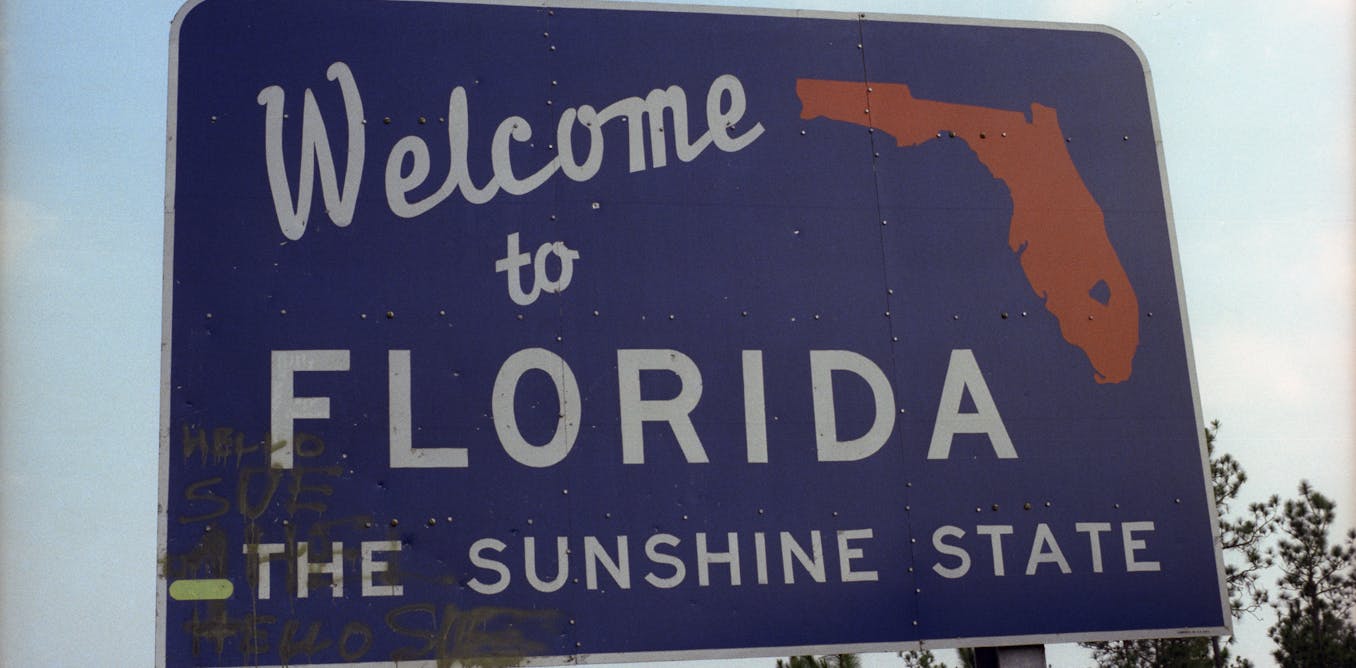
Last summer, ICE agents went as far as deploying highway weigh stations in Florida as enforcement check points. Reports suggest that companies have also faced difficulty recovering freight and vehicles, often valued at millions of dollars per load, after their drivers are detained.
As part of the crackdown, last month transportation secretary Sean Duffy announced the shutting down of 550 commercial driving schools. That’s despite the number of fatalities involving large trucks declining in 2023 and the first half of 2024, the most recent period with available data.
An estimated 17% of commercial semi-truck drivers in the US are foreign-born. Trucking is especially attractive to immigrants from blue-collar backgrounds.
“Safety and workforce stability must go hand in hand. Broad restrictions on immigrant drivers risk harmful profiling and deepening severe labor shortages,” says Jennie Murray, president and CEO of the National Immigration Forum, a nonprofit.
“We should ensure rigorous training, vetting and compliance, not limit access to legally authorized drivers who are essential to our economy.”
In separate incidents last fall, an undocumented immigrant truck driver and an asylum seeker from India and Serbia respectively were arrested and charged in relation to the deaths of other road users in Indiana and California. While their lawyers say their involvement amounts to tragic accidents, the Trump administration and rightwing news outlets have placed these tragedies at the center of the government’s anti-immigrant policies.
Advocates say there’s a danger of tarring all immigrant drivers with the same negative brush.
“Foreign-born drivers are essential to keeping US supply chains moving. Their contribution is especially important as the workforce ages (the average truck driver is now 47) and fewer younger workers enter the field,” says Murray.
“Without foreign-born truck drivers, delivery delays, higher freight costs and supply chain disruptions would worsen.”
While the Trump administration is targeting undocumented migrant truck drivers for deportation, many immigrant commercial drivers have been issued legal commercial driving licenses by state authorities across the country. Nineteen states and Washington DC issue driving licenses to individuals regardless of their immigration status.
“It’s chaos. The problem is these issues were manufactured by the government by loosening up the rules and regulations by the administration,” says Raman Dhillon of the California-based North American Punjabi Trucking Association.
“These drivers who do not know how to speak English – they did not get their license from somewhere else; they got it from the DMVs. [So] what do you expect?”
On 20 February, Duffy announced that individuals applying for commercial driving licenses, be it as truck or bus drivers, would have to conduct the driving test in the English language.
“When we get on the road, we should expect that we should be safe,” he said. “And that those who drive those 80,000-lb big rigs, that they are well-trained, they’re well-qualified, and they’re going to be safe.”
Dhillon says that foreign-born commercial truck drivers are vital to the economy, especially during times of need. “Why was there an influx of [immigrant] drivers in 2020? It’s because nobody from here was willing to work in Covid,” he says. “They got established and now the same drivers, the same people are becoming an issue just because everybody else wants to work.”
An analysis written for freight giant JB Hunt and published last fall found, in part, that, “Immigration control programs will add costs to an industry already under pressure from increasing costs.”
Dhillon, whose organization represents many of the hundreds of thousands of Sikh and Punjabi commercial drivers working around the country, believes that in the next five years up to 200,000 drivers lacking legal domicile or work permits could be taken off the road.
“If we include the English proficiency [requirement] in there, it’s probably 600,000 drivers taken out,” he says. “That’s going to start affecting the prices; they’re going to slap it on the commodity.”
For the Ahiska Turk community in Ohio, a link that went back generations may be coming to a close.
“I know a lot of people that had five, six drivers and then all of a sudden they didn’t have any,” says Chakhalidze, adding that community members are turning to opening cafes and restaurants for work instead.
“So they sold their equipment … because they didn’t have any other option to support their families.”

















Comments