
 German (DE)
  English (US)
  Spanish (ES)
  French (FR)
  Hindi (IN)
  Italian (IT)
  Russian (RU)
  2 hours ago
Texas could become the hottest battleground state in the country, if the results of both Republican and Democratic primaries are anything to go by.
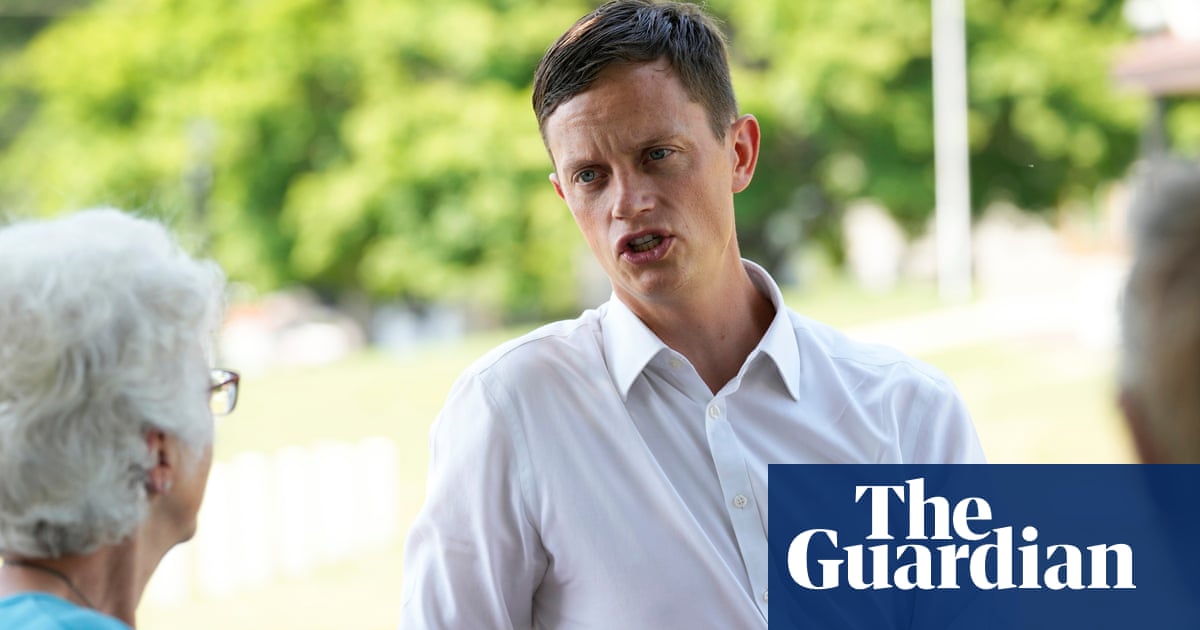
Democrat James Talarico, a progressive Presbyterian seminarian, will face off against Trump’s favored candidate, the scandal-plagued attorney general, Ken Paxton. The matchup has liberals salivating. Paxton, dogged by corruption charges, impeachment hearings and an affair that left his marriage in tatters, is considered by some in his own party as “the worst possible top-of-the-ticket” candidate. Meanwhile, Talarico, a fresh-faced, clean-cut millennial, who quotes scripture to justify his progressive beliefs, seems like the perfect foil, at least according to Democratic party leaders.
No wonder, then, that Talarico pulled in a massive fundraising haul immediately after Paxton won his party’s nomination. This combined with his already impressive war-chest of about $27m is a good indication that Democratic donors are betting big on Talarico to turn Texas blue. But the reality is that blue-collar voters, not blue-blooded donors, will decide the outcome of the race. And Talarico has a lot of work to do to win over working-class Texans.
It’s true that a bevy of early polls show Talarico slightly ahead. But if you dig into the results you’ll notice that these surveys skew toward highly engaged and highly educated voters. Consider a recent poll from Public Policy Polling that has Talarico leading Paxton by seven points; only 22% of voters sampled have less than a college education. Or a recent University of Texas poll which has Talarico up eight points; only 27% of respondents lack a degree. Polls like these could be giving Democrats a false sense of confidence by overrepresenting college-educated voters who increasingly skew liberal.
Indeed, in the primary election Talarico did best with highly educated voters, and abysmally with those voters who lack any college experience. And while primary contests are different animals than a general election, those trends could be cause for alarm. The fact is Texas is a blue-collar state. More than 60% of voters there do not have a college degree. Winning the working-class vote isn’t optional.
To be sure, Talarico should be applauded for focusing his campaign on the issues that matter most to ordinary Texans: the rising cost of living and the top-heavy gilded age inequality that keeps us stuck in a low-growth, low-wage economy. Working-class voters appreciate these kinds of progressive economic appeals, and many of the policies that Talarico advocates are broadly popular. But this alone may not be enough to sway a jaded and increasingly frustrated working class.
Talarico’s personal style is far more professorial than populist. That’s not surprising. He has a master’s degree from Harvard University and worked as a non-profit “ed-tech” executive before his career in politics. At times, he sounds as if he’s doing an impersonation of Barack Obama: “I ran for office not to be served [pause] but to serve …” In television interviews he looks wooden and rehearsed, spouting cliches and spinning tough questions. Despite campaigning against the billionaires and corrupt elites, he comes off as the consummate Washington insider.
What about his unique brand of Christianity? Democrats don’t ordinarily run seminarians for the Senate. It’s almost as if Texas liberals, outnumbered and aware of the yawning red-blue divide – especially on the questions of faith and flag – elected a preacher imagining he could have magic appeal to Trump-exhausted Republicans and swingy Texas Latinos. That’s to say, it’s hard to shake the feeling that it’s something of a political act. He ought to be careful here. The only thing more condescending than assuming that religious people are provincial, and therefore stupid, is assuming that because they are religious they would surely follow a preacher.
Worse, his fluency in foundation-funded progressivism has led him to embrace a kind of cultural politics that appeal only to genteel Austin-area liberals and virtually no one else. He’s been hammered by Republican attack ads for saying “God is nonbinary.” Talarico insists that the quote was taken out of context, though I can’t imagine the context in which it would be an intelligent thing to say. Liberals might find such attacks unfair but they could do real damage.
Ultimately, these faults are not his own. They are downstream from a larger social problem and symptoms of a broader Democratic party illness. The trouble is that the party’s leadership, and its major decision-makers, are overwhelmingly drawn from the world of white-collar foundations and white-shoe law firms.
As a result, liberal leaders have separated themselves from the popular classes. So much so that even when they have begun to swallow (with great indigestion) a populist message, they can’t help but regurgitate the slogans in a dialect that smacks snobbish. Unfortunately for him, that will be a liability among blue-collar voters who much prefer working-class candidates to manicured Ivy-educated professionals.
Of course, he can’t change who he is. He can, instead, speak intelligently about the issues. In this regard, he benefits from his opponent’s faults. Paxton, a millionaire backed by billionaires, is the epitome of a corrupt and out-of-touch elite. He has, it seems, no meaningful solutions to the crises that face blue-collar Texans or the American working class more broadly.
His campaign materials routinely attack former president Joe Biden, seemingly unaware of who is in the White House. As for his economic program, it consists of making America “the crypto capital of the world” by loosening regulations and “empowering crypto innovators”. Whatever that might mean, it won’t help lower the cost of a new home or bring back family-sustaining wages. Still, Paxton poses as a populist who has been battered by the Washington DC establishment; while many working-class voters are fed up with Trump, Texas is still a conservative state, and his kind of populism could have real purchase.
For Talarico to take full-advantage of Paxton’s failings, he ought to be more programmatic. Yes, “affordability” is all the rage in liberal circles. But what’s missing from that agenda, if one could even call a loose collection of poll-tested talking points an agenda, is a coherent theory of how to bring back high-wage American jobs.
Cutting Trump’s tariffs and expanding a few tax breaks is far too timid a program to address the causes of our economic sclerosis – causes Talarico himself admirably identifies: lopsided wealth inequality, stagnant wage growth, depressed demand. Instead of a one-sided (and ultimately futile) focus on cutting consumer costs, Talarico ought to put forward a program that focuses more on what it will take to significantly raise wages for millions of workers. Instead of a kneejerk anti-tariff position he ought to outline what a world after globalism might look like. What we need is not one policy or slogan but a new productivist vision of our future economy.
Texas happens to be just the place to make such a case.
In the last year, the state experienced the largest building boom in the country. Building-trades unions have grown in leaps and bounds as a result. The growth is largely the product of huge datacenter buildouts. Those buildouts have been controversial, but the development demonstrates the power of big infrastructure investment to raise the wages of thousands of workers practically overnight.
There is no reason such investments ought to be limited to those made by our Silicon Valley and Wall Street overlords. Generational public investments in new energy generation; to unite and upgrade the electrical grid; to fix crumbling roads, schools buildings, bridges and tunnels could have the very same effect. Policies like these combined with a jobs-first trade agenda and a Made-in-America industrial policy could give the labor movement the leverage it needs to strengthen worker wages across the state.
And they would go a long way to persuade working-class Texans that Talarico is the man for the job.
-
Dustin Guastella is a research associate at the Center for Working Class Politics and the director of operations for Teamsters Local 623


















Comments