
 German (DE)
  English (US)
  Spanish (ES)
  French (FR)
  Hindi (IN)
  Italian (IT)
  Russian (RU)
  2 hours ago
In a matter of weeks, Francesca Hong, an unlikely candidate for governor in one of the country’s most heated battleground states, will test a message that is at once radical and, to many, incredibly practical: the government should help pay for childcare.
“When we talk about free childcare, you can connect to folks whether it’s on an economic argument or just purely that it’s the right thing to do for our kids,” said Hong, a democratic socialist running in Wisconsin’s Democratic primary on 11 August. “I always like to remind folks: if we don’t take care of our kids, who’s going to take care of us?”
For 50 years, US childcare policy lived in the welfare drawer with programs such as Head Start, a free early learning initiative for low-income families, and subsidies focused on keeping poor mothers in the workforce. Anything broader was often shut down by conservatives advocating for families’ “personal choice” over government-run childcare. And while Democratic lawmakers, often women, campaigned on the need for affordable childcare – presidential hopefuls Hillary Clinton, Elizabeth Warren and Kamala Harris made it central to their platforms – they had little success.
Then something shifted as the cost of care surpassed college tuition and a pandemic hangover pushed caregivers, and their wallets, to their limits: childcare became a middle-class problem that could no longer be ignored. In November, Zohran Mamdani made universal childcare a cornerstone of his New York mayoral campaign, and two centrists, Abigail Spanberger and Mikie Sherrill, won the governorships in Virginia and New Jersey, respectively, running on the same plank. In March, New Mexico became the first state to offer free childcare for all. In the nation’s capital, Janeese Lewis-George won the mayoral primary this summer with universal childcare among her top priorities.
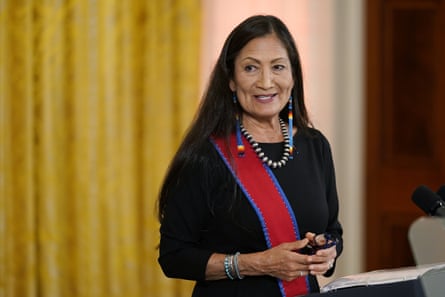
“We’re in an era of real affordability issues,” said Deb Haaland, former secretary of the interior who is currently running for governor of New Mexico. “Universal childcare is good for our economy – it creates jobs, it helps parents go to work without worrying about their children.”
Behind these wins, though, are decades of painstaking organizing. Compounding crises, coupled with organizers’ longstanding work, have catapulted childcare from the sidelines to a kitchen-table issue as politically potent as the price of eggs or a grocery bill. Now, candidates vying for office in the midterm elections are seizing the moment to build on half a century of advocacy and win contests to give families some relief.
Georgetown professor Joan Lombardi, who has advocated for early childhood policy across presidential administrations, distilled the moment into three parts: “First, for more parents today, childcare is their everyday reality. Second, affordability is driving it. And third, we have new innovations coming out of states and communities that can help inform policy decisions.”
From radioactive policy to winning platform
The US almost had a federally funded childcare system more than 50 years ago: Congress passed the Comprehensive Child Development Act, but Richard Nixon refused to sign it, fearing the alienation of his conservative base. At the time, one-third of women with children under age six worked.
In the aftermath of the veto, veteran civil rights activist Marian Wright Edelman founded the Children’s Defense Fund, which kept the vision of universal childcare alive, laying the groundwork for politicians’ childcare policy platforms since the 1970s and other legislative wins, such as the 1990 Child Care and Development Block Grant, which gave low-income families a voucher to pay for childcare.
As more working mothers joined the halls of Congress, so did the push for federal childcare policy. Patty Murray, a senator from Washington state and former preschool teacher with two children, introduced the Child Care for Working Families Act in every Congress since 2017, but it took the pandemic to accelerate her cause: the bipartisan American Rescue Plan in 2021 infused $39bn into childcare – the first time Washington DC paid providers directly for operating costs rather than subsidizing individual slots.
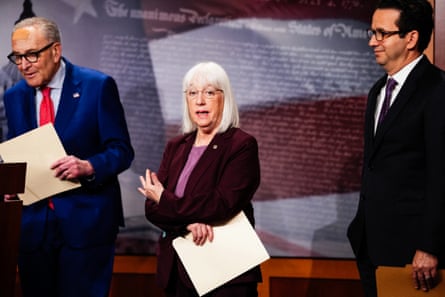
“Childcare facilities shut down, so our nurses couldn’t work, our essential employees couldn’t work,” she said. “And almost overnight, people realized how essential it was.”
Solutions to affordability issues – the high costs of rent, groceries and childcare – have only continued to resonate with voters over the past year. In a sign of the times, the political action committee Campaign for a Family Friendly Economy is pouring $50m into races this midterm cycle. Even the Senate Democratic leadership is making childcare a pillar of their affordability agenda.
“It’s not something people plan for the way they plan for buying a first home – suddenly it falls on their shoulders and they’re figuring it out alone,” Sondra Goldschein, executive director for Campaign for a Family Friendly Economy, said about childcare. “This appeals to people who are older and younger, Democrats and Republicans, people in cities and in suburban and rural areas. It’s just top of mind.”
Universal childcare in the midterms
While there is still no federal law that supports childcare for all families who need it, organizers are pushing states – and running candidates in those states – to fill the vacuum.
In Wisconsin, Hong, a leading candidate for governor, has made a payroll-funded universal childcare guarantee a key part of her platform – a message that particularly resonates after $110m in pandemic-era childcare funding ran out last month.
“We have not seen childcare, paid leave, elder care as part of infrastructure,” Hong said. “It is the care economy that allows us to have communities.”
Hong’s plan would provide free childcare up to 400% of the federal poverty level, a 7% cap on childcare spending for all families and loan-forgiveness programs for early educators. “We cannot have a sustainable workforce without affordable childcare for working families,” Hong said.
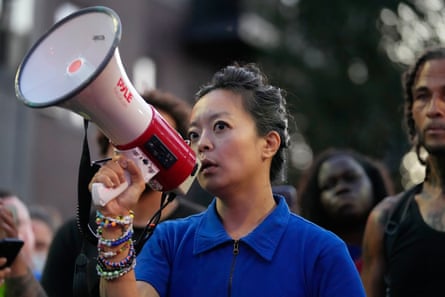
In DC, parents and childcare providers protested after outgoing mayor Muriel Bowser cut early childhood educators’ pay and initiated an enrollment freeze in the city’s childcare-subsidy program for low-income families.
“We coordinated the largest-ever day of early learning program closures in March – ‘a day without childcare’ – culminating in about 150 people rallying in subzero temperatures,” said Travis Ballie, executive director of the Under 3 DC coalition. “We did all that because this was existential – not just to preserve what we’d won, but because losing it would set us back.”
Lewis George, the democratic socialist who won the Democratic primary for DC mayor in June, has heard voters’ concerns and promised to take a different tact. Her platform for “childcare for all” would build a subsidy toward universal affordable care on top of universal pre-K for all three- and four-year-olds in the district.
“People don’t want to hear what government can’t do – they want to hear what government can do, how government will solve their problems,” said Lewis George.
How one state won childcare for all
New Mexico is perhaps the most-cited example of where the vision of universal childcare has been realized – and it took more than a decade of organizing to make happen.
Before Javier Martinez was the speaker of the House in New Mexico, he was a community organizer helping immigrant families obtain driver’s licenses. “We’d look at this room full of little kids, and the parents themselves were saying: ‘It’s impossible to find childcare,’” he said.
Immigration advocacy groups, such as New Mexico Voices for Children and Olé, led the charge for the state to pay for universal childcare in an innovative way: through a land grant funded by oil and gas revenue. In session after session, the legislature refused to hold a hearing on the issue, said Martinez. “I got to the point where, looking from the outside in, I thought: ‘Is this the best we can do as a legislature, as Democrats especially?’” he said. That’s when he decided to run for office in 2014.
When the childcare plan remained stymied by three fiscally conservative Democratic state senators, organizers targeted their re-election in 2020. “Our coalition pushed hard and ran good people,” said Martinez. “Once those three people were out of the equation, this thing flew right by.”
In 2022, organizers successfully put a state constitutional amendment on the ballot establishing a right to early childhood education funded by the land grant. A state law established universal early childcare earlier this year.
Martinez said that New Mexico’s circumstances are sometimes viewed as exceptional: “Some people have pooh-poohed our idea because they say: ‘Well, not everybody has oil and gas.’ No, but everybody has poor people. You [need to] organize poor people in genuine ways.”
Not all pro-universal childcare candidates are winning their races in the midterms. In Colorado and California, progressive candidates lost their primaries to incumbents and longtime local politicians. In New York, the lieutenant governor Antonio Delgado laid out a clear universal childcare vision for the state but lost to his competitor, incumbent Kathy Hochul, who had adopted a version of his plan after seeing Mamdani become New York City mayor on a similar platform.
For organizers, affordable childcare is more than a winning platform and a goal in the current midterm cycle. “Childcare is having a moment,” said Helene Stebbins, executive director for the early childhood advocacy group Alliance for Early Success. “Let’s build it. Let’s solidify it. But let’s recognize that that’s not the solution, or the end, for building that infrastructure.”









Comments