
 German (DE)
  English (US)
  Spanish (ES)
  French (FR)
  Hindi (IN)
  Italian (IT)
  Russian (RU)
  2 days ago
The new year opened with a pair of scenes that illustrated the great divide within the US and the stakes of the ongoing contest over its future. On 1 January, in a star-studded inauguration ceremony of uncommon pomp and optimism, Zohran Mamdani, the 34-year-old democratic socialist, was sworn in as the new mayor of New York and delivered a speech that declared the era of small government and centrist inhibition to be over, and a new dawn of ambitious social welfare programs to begin.
The new mayor’s inauguration is the culmination of a decade of growth from the Democratic party’s insurgent left wing, and results from a feat of organizing within the country’s largest city that relied upon mass mobilization from downwardly mobile and economically disenfranchised millennial and gen Z voters. It was hailed as a generational shift in US politics, inaugurating a new, 21st-century vision for the party.
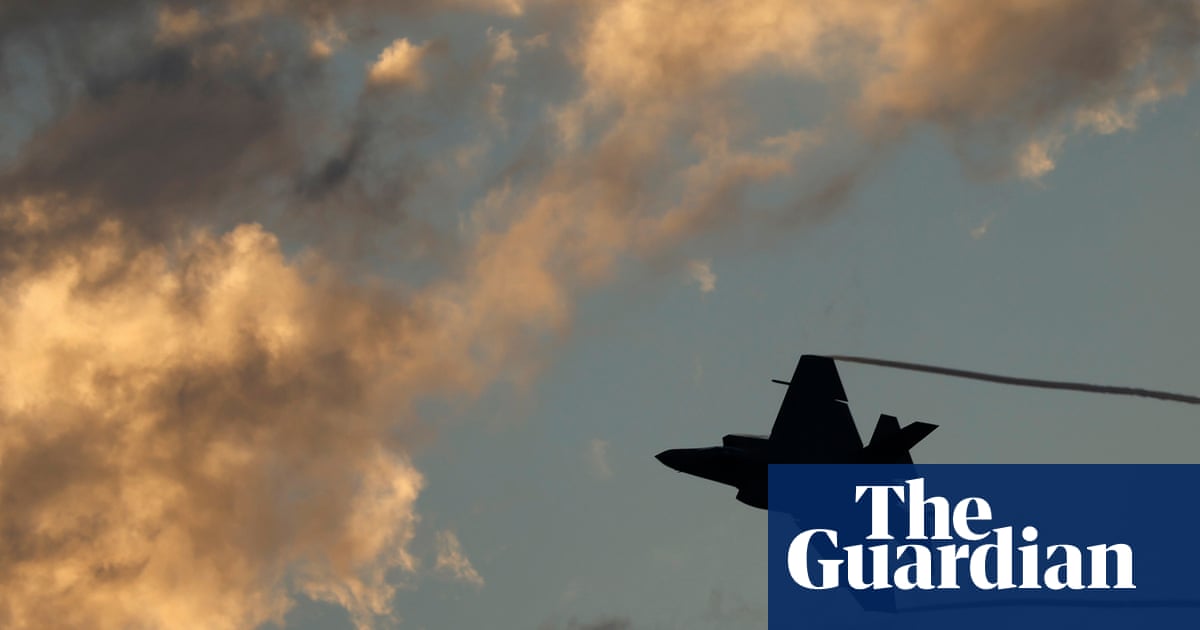
And less than two days later, from his Mar-a-Lago resort, Donald Trump, who was once thought to represent a decisive shift for his own Republican party, announced that his administration had carried out an action that seemed characteristic of the old, Bush-era past. An abrupt overseas bombing campaign and the kidnapping of a foreign head of state, Venezuela’s Nicolás Maduro, were facilitated without UN or congressional approval, in plain violation of international law and the US constitution. The raid was meant to inaugurate a regime change in the South American country and to facilitate a neocolonial-style mass theft of that country’s oil and mineral resources.
One project was produced by a massive grassroots organizing effort; the other was conducted with virtually no attempt to persuade the public or manufacture consent. One promised greater dignity for Americans; the other offered them only the pleasures of vicarious domination and the infliction of suffering on faraway others. One gestured toward the possibility of a new politics to produce a more fair and optimistic future. The other was an eerie echo of that past, a violent pantomime of an era of American imperial expansion that had long been declared over. But both will reshape the domestic political contest that looms ahead: the 2026 midterms.
They say that prediction is the lowest form of journalism, which of course does not stop many journalists from engaging in it. But the opening days of 2026 have rapidly reshaped the coming electoral contests in November that will define American politics this year.
On the one hand, a young, insurgent left wing will face the first major test of its ability to govern in executive office, watched by the keen eye of a sometimes hostile national media and a national electorate unsure of the left’s ability to govern. And on the other, a diminished president – under the sway of a neoconservative remnant in the form of secretary of state Marco Rubio – has turned to military force in an effort to shore up his own popularity amid broken promises, a struggling economy and plummeting poll numbers.
Despite his solid victory in New York and his broad popularity with younger voters, Mamdani will face an uphill battle in convincing Americans that his approach to politics offers a viable future. Meanwhile Republicans, facing Trumpism’s disastrous present, have returned to the most violent and foolhardy ambitions of their past.
Because let’s be clear: Trump is pursuing regime change in Venezuela because he is politically weak and he thinks, as struggling autocrats so often do, that he can shore up his domestic popularity with a foreign military adventure.
The past year was not a good one for Trump: his restoration to power was initially met with widespread compliance, but he quickly destroyed much of American soft power, both domestically and abroad; spoiled his political capital in the US by deploying troops to major cities and pursuing an ostentatiously sadistic mass deportation agenda; and presiding over an economy that is struggling in every era except AI investment – an unpopular industry whose products seemingly do little beside to immiserate Americans’ lives and degrade their dignity.
His signature tariffs have hurt both foreign relations and domestic consumer power; a struggle has emerged within his coalition as his underlings and followers jockey for position. There’s speculation about his health, and he has been damaged by ongoing scandals relating to his close association with the dead financier and convicted sex trafficker, Jeffrey Epstein. As 2025 drew to a close, the consensus was that his party was headed toward a thrashing in next year’s midterms.
From this position, Trump is probably hoping that he can rally Americans around the flag by going to war. Rubio has a past generation’s bloodlust for war and a shockingly naive belief – contradicted by all evidence and bitter recent experience – in the US military’s capacity to ensure a stable regime change abroad; he seems to see Venezuela as a stepping stone to overthrowing the government of Cuba, the birthplace of his parents.
Pete Hegseth, the US defense secretary, has a vision of military action that appears about as sophisticated as that of a child who has recently watched an action movie and keeps making enthusiastic explosion noises that spray his parents with spit.
They are stupid, cruel, petty men – men of great narcissism, little intellect and no character. They have no plan for an exit; their minds are empty except for their fantasies of glory and domination. They are exactly who Trump will listen to. The White House seems to think that this is the example that will persuade Americans to vote for Republicans in November. I doubt it.
Meanwhile, the left’s new standard-bearer will be facing his own challenges. Mamdani’s campaign centered three policy proposals: rent freezes on rent-stabilized unit’s in the city’s famously unaffordable housing stock; free bus fares; and universal childcare. The campaign promises have the virtue of being precise, actionable and measurable markers of progress and improved quality of life for thousands of New Yorkers.
This is, ironically, also their liability: Mamdani’s promises were so concrete that he has robbed himself of the opportunity to take a politician’s favorite route: to declare a victory after a partial or compromised accomplishment, or even after a total defeat. The buses will be free, or they won’t be; the pre-K program will be extended to two-year-olds, or it won’t be; the rents will be frozen, or they will go up again.
No small number of city hall watchers, both outside of Mamdani’s party and within it, will be rooting for him to fail. As an example of the potential of leftwing and democratic socialists to govern and deliver on their promises, it will be crucial that he succeed. Meanwhile, as the midterms approach, the example of Mamdani – who will not be standing for election this coming November – will be cast as a reflection on every single Democrat who is.
Candidates will petition for his endorsement or throw him under the bus, depending on their own needs in the moment – a few of them might do both over the coming year. He will be made a symbol of the Democratic party. Voters will be looking to see what kind of example he sets.
It is part of the fraught history of this country that there have always been these competing impulses in American politics: between collectivism and extraction, solidarity and domination, egalitarianism and hierarchy, optimism and cruelty. Rarely has the choice been so stark between the standard bearers of the two parties. Often, they have looked more alike than this. At the outset of 2026, they look quite different.
-
Moira Donegan is a Guardian US columnist












Comments