
 German (DE)
  English (US)
  Spanish (ES)
  French (FR)
  Hindi (IN)
  Italian (IT)
  Russian (RU)
  2 hours ago
It was a surreal morning at the US supreme court.
For more than two hours, the nation’s highest court considered arguments over whether Donald Trump – via an executive order – could tear down an idea that has been fundamental to the story and trajectory of the United States: that almost anyone born on US soil is an US citizen.
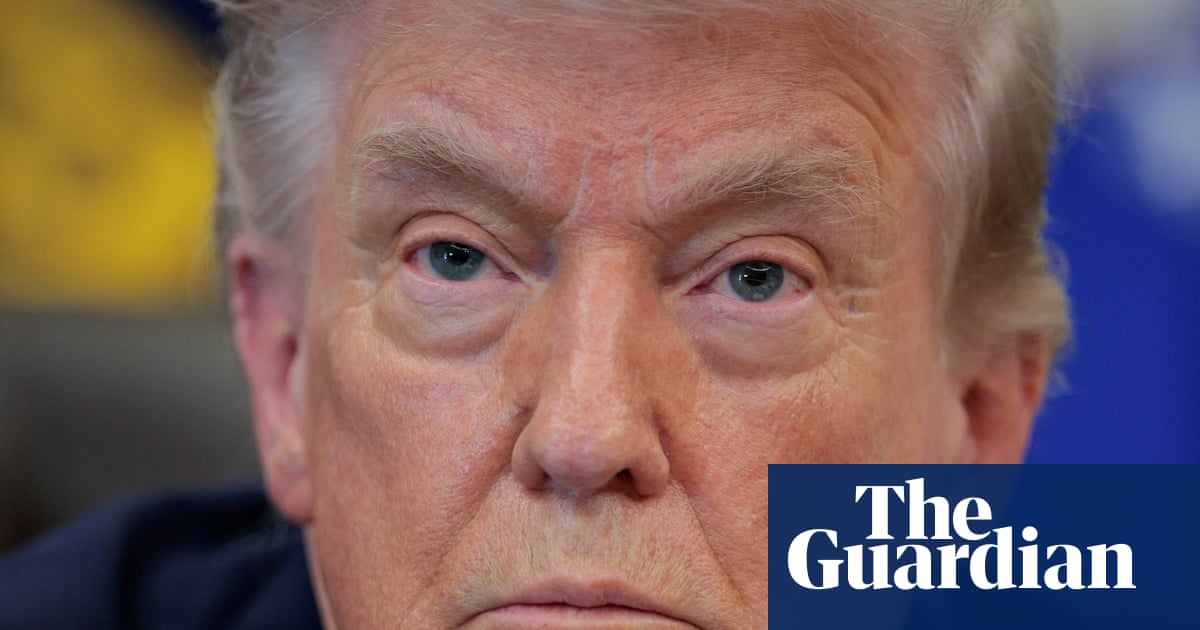
The US president himself was in the room – the first sitting president to attend oral arguments at the court – coming face to face with justices that he has long berated and pressured to fall in line with his agenda. His attendance was a striking signal of just how significant this case is.
The egalitarian, universal rule that anyone born in the US is a US citizen was enshrined in the 14th amendment of the US constitution in 1868, and was affirmed by the supreme court 128 years ago. A ruling in favor of the Trump administration would cataclysmically redefine what it means to be an American.
In practical terms, it would mean that an estimated 250,000 babies born in the United States each year would be stripped of their citizenship. Some would be stateless. Legal experts warn that this outcome could pave the way for casting off citizenship from millions of people who already have it.
A final decision is expected in June, and after the oral arguments concluded, a majority of the justices remained skeptical of Trump’s efforts to restrict birthright citizenship. The chief justice, John Roberts, at one point, noted that the administration’s evidence that the 14th amendment did not broadly apply struck him as “very quirky”. Elena Kagan, a justice, said that the administration’s legal representative, solicitor general John Sauer, was “looking for some more technical, esoteric meaning” in the citizenship clause.
But the court’s conservative justices also grilled Cecillia Wang, a lawyer for the American Civil Liberties Union, which brought the legal challenge to Trump’s order – raising the prospect that the details of this decision could be legally complicated and have far-reaching implications regardless of the overall outcome.
The arguments also raised alarming questions about who should and would be considered American.
It has become clear how Trump, who has launched a mass deportation campaign, arresting and uprooting families who have been living in the US for decades and moved to sharply restrict paths to legal citizenship, might answer those questions.
But most Americans support the principle of birthright citizenship. And many Americans – including those in the country’s highest position of power – owe their own family trajectories to this principle.
Justice Alito raised language in the Civil Rights Act of 1866, which was introduced after the abolition of slavery and offered a template for the 14th amendment, that a person born in the United States who is “not subject to any foreign power” receives birthright citizenship. He posed a hypothetical about a child born in the US to an Iranian undocumented immigrant, who would become an Iranian national at birth. “Is he not subject to any foreign power?” Alito asked.
Wang said, no. And moreover, she pointed out, “that means that children of Irish, and Italian immigrants would also not be citizens.” What she didn’t say explicitly is that the justices’ own family stories were profoundly shaped by the US principle of birthright citizenship. Alito, the only first-generation American on the supreme court, was born in Italy and came to the US as a baby and was naturalized at age 10. His colleague Roberts’s grandfather was born in the US to Slovakian parents, who were not naturalized at the time, according to research by the New York Times. Justice Clarence Thomas’s great-grandfather became a US citizen after the ratification of the 14th amendment – which conferred citizenship to formerly enslaved Black people and their descendants.
Sauer relied on a fringe conservative argument that the 14th amendment was intended only to apply to “newly freed slaves and their children, not on the children of aliens who are temporarily present in the United States or of illegal aliens”.
Wang, who was born in Oregon after her parents emigrated legally to the US from Taiwan as graduate students, cited extensive evidence of the long-held interpretation of the 14th amendment’s guarantees of citizenship broadly, to all, by birth.
After the arguments concluded, Wang told reporters: “I come out of the court today with the thought of my parents and so many of our parents and ancestors.”











Comments