
 German (DE)
 English (US)
 Spanish (ES)
 French (FR)
 Hindi (IN)
 Italian (IT)
 Russian (RU)
 4 hours ago
A federal judge on Friday morning said she would issue a preliminary injunction to block construction of Donald Trump’s proposed so-called “triumphal arch” as a huge presence near some of the most famous and sacred sites in the Washington DC area.
Judge Leonie Brinkema in Alexandria, Virginia said during a hearing on Friday that the US president’s pet project was a “rushed job” that lacked a legal basis.
Brinkema said the administration had not conducted proper analysis of the environmental and economic impact of the project, such as the effect on airspace at nearby Reagan Washington national airport.
“That just hasn’t been done in the case because it’s been such a rushed job,” the judge said, according to Reuters.
Brinkema is the second federal judge to take issue with the 250ft arch that the US president hopes to install on Memorial Circle near Arlington national cemetery.
Earlier this month, Judge Tanya Chutkan in Washington temporarily blocked construction of the triumphal arch, saying the administration needed congressional approval before moving forward. Chutkan raised concerns about the costly construction as well as disruptions it could cause to traffic at the cemetery.
Chutkan extended her order this week, barring the administration from initiating any construction or demolition until the beginning of December.
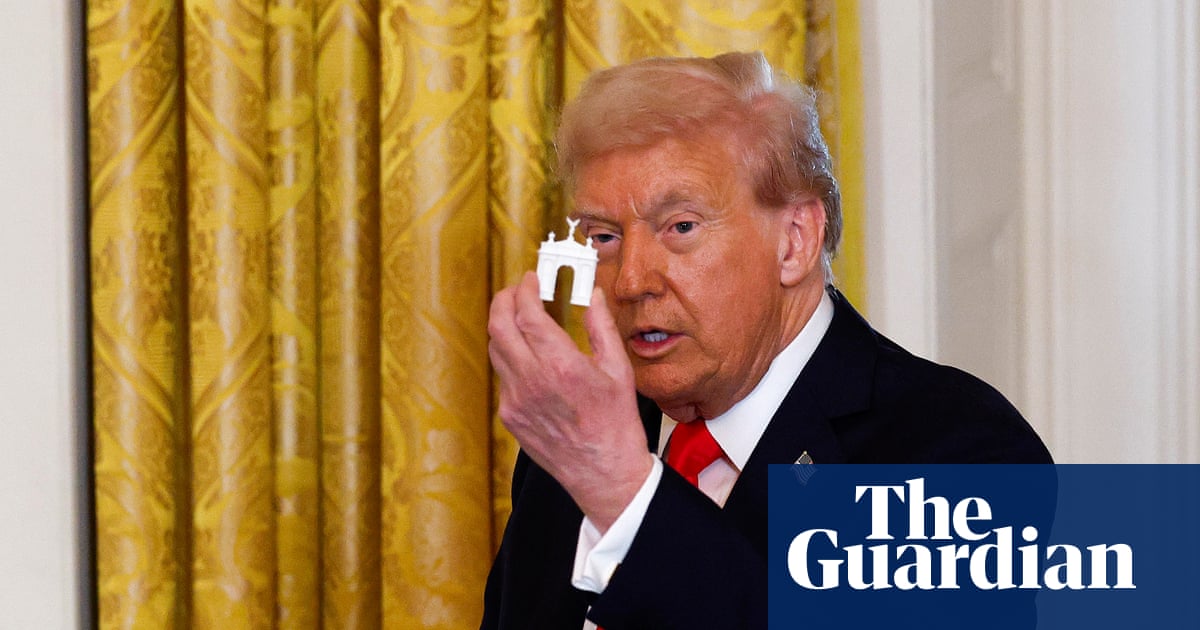
Over the last year, Trump has boasted about building an arch in the middle of the nation’s capital to mark the US’s 250th anniversary.
He has sought to hurriedly build the arch, arguing it is for national security purposes because it will include a military complex.
Trump’s arch has been met with legal challenges from veterans groups, local governments and individuals such as members of the Kennedy family. Critics have taken issue with the arch’s enormous size and location, believing it would hurt the symbolic relationship between the Lincoln Memorial and Arlington national cemetery.
Challengers have argued the US president needed authorization from Congress before constructing the arch. But lawyers for the administration claim they don’t because Congress approved the construction of a pair of columns at the location in 1925, though the columns were never built.
On Friday, Brinkema said the administration’s argument about the 1925 congressional authorization of columns was weak.
“It hurts your credibility with the court by focusing on that,” the judge told government lawyers. “This is a project that lacks congressional approval.”















Comments