
 German (DE)
  English (US)
  Spanish (ES)
  French (FR)
  Hindi (IN)
  Italian (IT)
  Russian (RU)
  3 hours ago
President Donald Trump and Congress agreed to separate funding for the Department of Homeland Security from a larger spending bill that enables the federal government to continue operations. They now face a self-imposed deadline of Feb. 13, 2026, to negotiate potential changes to immigration enforcement.
The fact that funding for the department – and in particular Immigration and Customs Enforcement, or ICE – has become politically contentious represents a new turn on Capitol Hill.
Funding for ICE has increased substantially over the past year, with the number of its agents more than doubling.
On July 4, 2025, Trump signed a massive tax-and-spending package that increased annual funding for ICE from US$8 billion in 2024 to $28 billion in 2025.
During the first year of Trump’s second term, Republican majorities in the House and Senate have taken a hands-off approach to oversight of what is now the nation’s most highly funded law enforcement agency.
I am a professor of government who studies Congress and its oversight role. Since ICE’s funding increase, the Senate has held just one public hearing on ICE, according to my own unpublished data. Although the House has held a few routine oversight hearings of DHS, none have focused on ICE or Customs and Border Protection.
Traditional role for Congress
Congress holds longtime, well-established constitutional authority to oversee and investigate the executive branch and other political institutions. Having authorized funding for federal programs, it typically – if inconsistently - conducts substantial oversight to ensure its policies are being carried out successfully and as lawmakers originally intended.
Following the January 2026 killings of Renee Good and Alex Pretti in Minneapolis, Minnesota, members of Congress from both parties have called for investigations.
However, “investigations” is a broad term that encompasses several options. The Justice Department announced on Jan. 30, 2026, that it is pursuing a civil rights investigation into Pretti’s death. That same day, DHS announced that the FBI is leading the federal probe into his death, with assistance from ICE.
But Congress could also establish an independent, bipartisan commission to examine the killings and make recommendations for laws and regulations to prevent future deaths and ensure quick accountability. Some notable examples of congressional commissions include one that investigated the terrorist attacks of Sept. 11, 2001, and a 2010 commission that recommended $4 trillion worth of budget changes to address the national debt.
Or Congress could take the lead itself.
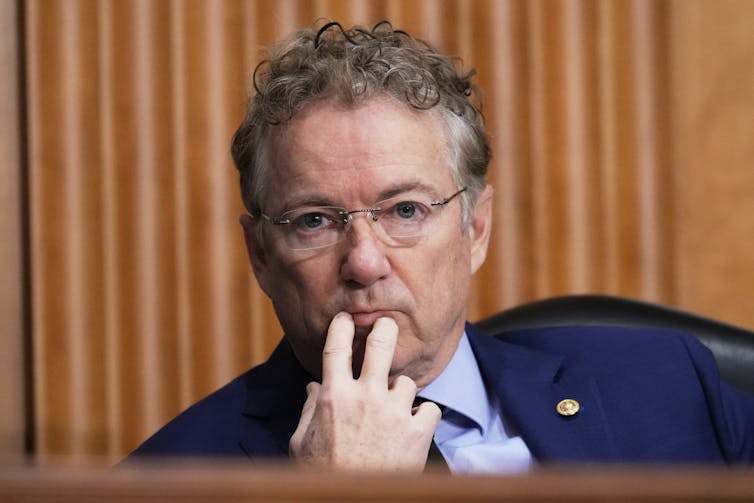
Rand Paul, the Republican chair of the primary oversight panel in the Senate, and New York Republican Rep. Andrew Garbarino, the chair of the House Homeland Security Committee, have asked top immigration officials to testify this month. But other congressional Republicans have remained vague about what shape the investigations should take and which branch of government should lead them.
Who’s in charge of oversight?
The debate over which branch of government should investigate government failures is a long-standing one.
Early in the republic’s history, under President George Washington, a federal militia suffered a massive defeat at the hands of Native American tribes at the Battle of Wabash in 1791. Congress was unsure of its constitutional authority to investigate the disastrous encounter: Did the separation-of-powers system prevent Congress from investigating another, independent branch of government? Or did the Constitution’s system of checks and balances imply that the Washington administration could not credibly investigate itself?
Ultimately, the House opted to establish its own investigative committee, and Washington, setting an important precedent, agreed to turn over requested information.
There are several benefits to Congress leading its own inquiries, whether in lieu of, or in addition to, federal agency investigations. For one, even highly combative committee hearings are valuable arenas for information gathering and processing, helping members of Congress thoroughly understand an issue and thus make informed and effective policy changes.
An in-depth committee investigation of the Minneapolis killings could make it more likely that new restrictions and oversight mechanisms are written into law.
Investigations can be bipartisan
Additionally, Congress’ subpoena power is a legally binding tool that enables committees to draw necessary information from the agencies they are investigating. This information, presented at hearings and in committee reports, becomes part of the historical record and serves as an important resource for future investigations both within and outside Congress, including scholarship.
For instance, the final reports of the House Select Committee to Investigate the January 6th Attack in 2022 and the House Committee on Benghazi in 2016 provide exhaustively detailed timelines of the respective attacks that do not exist anywhere else.
Republican-led investigations into the Minneapolis killings, and continued oversight of ICE and CBP, would also lend credibility to both the party and the independence of the legislative branch.
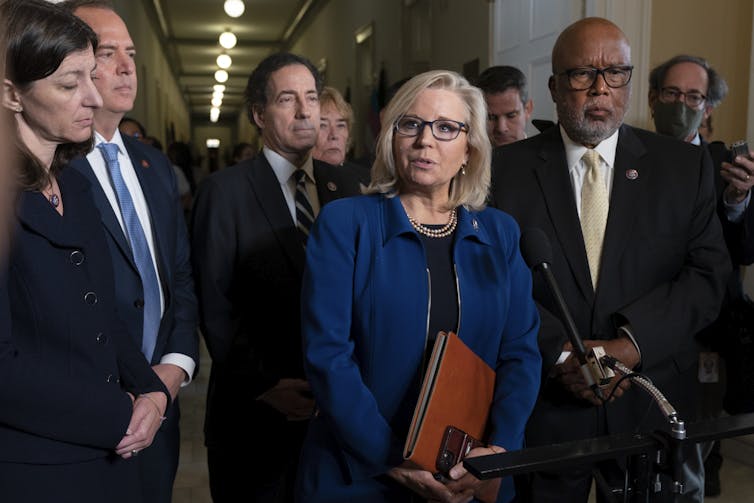
Political scientists have found that committees are less likely to investigate the executive branch when the president is from their own party. However, significant bipartisan probes do occur even in a highly polarized era. In 2005, for instance, Virginia Republican Rep. Tom Davis launched an inquiry into the George W. Bush administration’s response to Hurricane Katrina, despite facing pushback from the White House.
More recently, in 2018, the Republican-controlled House Committee on Oversight and Government Reform investigated Republican Gov. Rick Snyder’s handling of the Flint water crisis in Michigan, earning praise from Democrats on the panel.
Risks of grandstanding
However, while Congress has investigative powers, it does not have any enforcement authority. Congress can recommend criminal charges after an investigation, but only the Justice Department can bring indictments.
There are also significant political risks to committee-led inquiries, particularly public hearings. Political scientists have found that investigations of the executive branch diminish the president’s approval rating.
Additionally, members of Congress often engage in performative outrage and grandstanding during public hearings, which tends to help individual members’ electoral prospects but does little to enhance collective public faith in Congress’ legitimacy or its ability to conduct independent and fact-based inquiries.
Given the continuing partisan divide over ICE and the agency’s increased presence in Minneapolis and other cities, it’s possible that congressional hearings could devolve into rancor and name-calling. However, public opinion polling has found that ICE has become a liability for Trump and the Republican Party.
With the 2026 midterm elections coming up, Republicans in Congress may not be able to afford to stay silent.
















Comments