
 German (DE)
  English (US)
  Spanish (ES)
  French (FR)
  Hindi (IN)
  Italian (IT)
  Russian (RU)
  4 hours ago
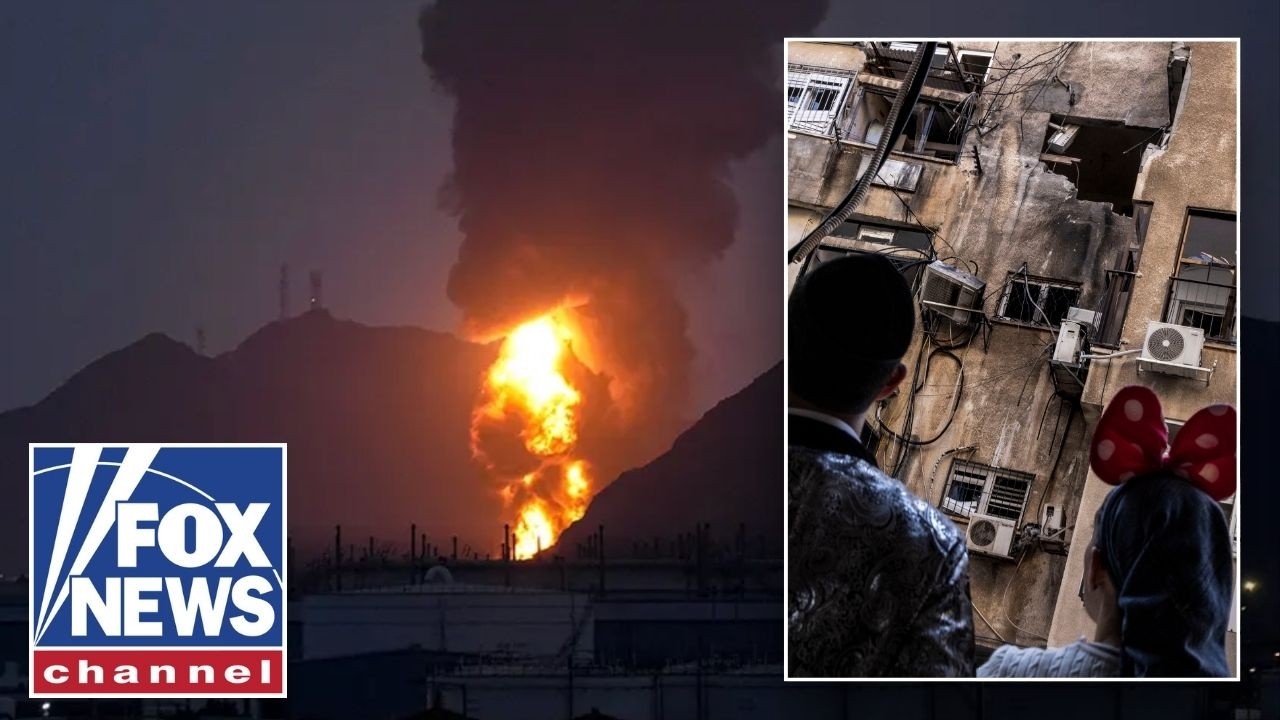
When the bombing of Iran began on Feb. 28, 2026, the Trump administration had not informed the American people exactly what it was prepared to achieve.
Was the attack intended to degrade Iran’s nuclear program? Trump had declared that “obliterated” after last June’s bombing.
Was it to slow Iran’s ballistic missile program? U.S. intelligence assesses that Iran is years away from any ballistic missile that could strike the United States.
Was it to show support for Iran’s opposition, as Trump’s earlier “HELP IS ON ITS WAY” posts on Truth Social suggested? A bombing campaign that was bound to kill innocent Iranians, including 175 people at a girls elementary school near a military base, seemed an odd form of support.
I am a scholar and former practitioner of intelligence and national security policy in the White House. I believe there are lessons in effecting political change in Iran that can be taken, ironically, from the very U.S.- and British-led clandestine campaign in the mid-20th century that set Iran on the road to the intense anti-Western and anti-American sentiment that has characterized its government policy for decades.
How does this end?
President Trump has said he wants regime change in Iran but has articulated no strategy for achieving that end.
Strategy is the connection between means and ends. For waging a war, it means asking whether the military means available match the desired military outcome. In trying to effect political change, it means asking whether the instruments employed will produce the desired change.
As journalist Fareed Zakaria put it, “‘Bomb and hope’ is not a strategy.”
Looking at the last U.S. effort at regime change in Iran – the CIA’s 1953 covert program to oust Prime Minister Mohammad Mossadegh and strengthen Shah Mohammad Reza Pahlavi’s rule – offers insight into what might have been … and what still might be this time around in Iran.
Mossadegh had moved to nationalize the Anglo-Iranian Oil Company – effectively, British oil interests. Britain responded with an an oil embargo and a severe economic squeeze on Iran.
Western powers feared that prolonged Iranian instability could open the door to Soviet influence in the oil-rich country – a central Cold War concern.
By early 1953 the U.S. government, under President Dwight D. Eisenhower, authorized the CIA to prepare a covert plan to remove Mossadegh and restore effective power to the shah, who at the time held a more ceremonial role. British intelligence had been pushing a similar agenda, and the two services collaborated on both the strategy and its implementation.
The operational details, especially those declassified in recent decades, paint a striking picture of a carefully planned clandestine political intervention that was successful, rather than a simple military invasion.
A far cry from ‘bomb and hope’
The British-American budget for the joint plan was modest by military standards. It was aimed at propaganda and influence operations, and it sought to shape public perception and political support.

It was composed of three elements. First it funded newspapers and printed propaganda designed to discredit Mossadegh, portraying him as corrupt or sympathetic to communism. The propaganda also promoted fears of instability and communist infiltration.
Second, according to declassified histories, agents staged “false flag” incidents – attacks attributed to communists, for example – to stoke fear and backlash against Mossadegh among religious and conservative groups.
Third, the coup planners attempted to engage influential clerical leaders and organizations to amplify anti-Mossadegh sentiment.

Shaping the crowds on Tehran’s streets proved critical to the operation. The CIA organized demonstrators to pose as pro-shah protesters, including paying individuals to chant slogans and confront Mossadegh supporters.
These orchestrated demonstrations climaxed on Aug. 19, 1953, when pro-shah forces and sympathetic leaders in the Iranian military – with CIA financial and logistical backing – seized key points of the country, confronted Mossadegh loyalists and helped topple his government. Estimates suggest around 200 to 300 people were killed in the chaotic fighting in Tehran.
What might have been, and what might be
The Mossadegh coup occurred in a less transparent world. However – and regardless of how you feel about it – the coup suggests the value of having a strategy to accomplish political change and, beyond Israel, bringing allies along if possible.
So far, Trump has called for the Iranian military and the Revolutionary Guard to lay down their arms. But the Trump administration has provided no guidance on how to do so, or to whom to do so.
Surely, the administration should be able to devise a plan for potential political change in Iran. It has insight from the years it has spent negotiating a nuclear deal with Iran. Recent events suggest the extent of Israeli, if not American, penetration of Iran.

In 2018, for instance, Israel’s Mossad national intelligence agency broke into an Iranian facility and stole archives on Iran’s nuclear activities, 55,000 pages and another 55,000 files stored on CDs.
In June 2025, Israel conducted covert drone operations deep inside Iran, in concert with airstrikes on Iranian missile and military infrastructure. Mossad reportedly established an undercover drone network and launched explosive drones to neutralize air defenses and missile launchers before the main attack.
The successful targeting of Ayatollah Ali Khamenei and his close associates in the latest round of airstrikes suggests the extent of likely Israeli monitoring of Iranian communications by Mossad and the CIA.
Crises tend to put pressure on governments to open communications channels, and the take from any successful eavesdropping might be passed to opposition groups to help them organize and avoid capture.
If Israel can smuggle explosive drones into Iran, it should be able to make the satellite internet provider Starlink and its kin available to enable the opposition to better – and more safely – organize.
It is late in the day to emulate the Mossadegh coup with information operations, and it is probably more difficult in an era of ubiquitous social media, not newspapers. But it’s not too late to try.
I believe those brave opposition elements in Iran, who have been killed by their government and bombed by the United States and Israel, deserve no less.







Comments