
 German (DE)
 English (US)
 Spanish (ES)
 French (FR)
 Hindi (IN)
 Italian (IT)
 Russian (RU)
 1 hour ago
A California county elections official is speaking out about the Department of Justice’s campaign against purported “voter fraud”, saying federal officials provided him a disorganized list of names filled with inaccuracies – and threatened to criminally prosecute him if he didn’t take action.
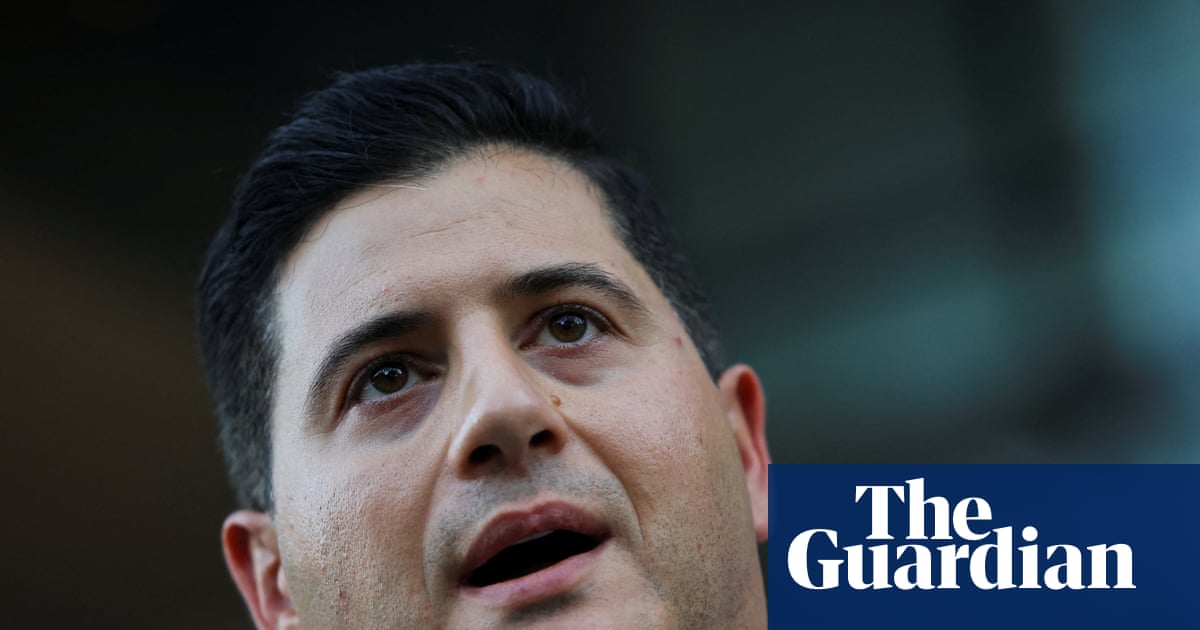
Keaton Denlay, the county clerk-recorder for Butte county, a region north of Sacramento, said a federal agent on Friday hand-delivered what appeared to be a printout of a “poorly formatted Excel spreadsheet with missing and jumbled information”. The DoJ claimed the list was of 47 “likely” noncitizens who were unlawfully registered to vote and demanded the county set aside their ballots. But Denlay said the document was riddled with errors and lacking crucial details, and he declined to act on it.
The DoJ’s letter to Denlay, which the Guardian reviewed, said: “If persons knowingly tabulate ballots cast by individuals identified by federal agencies as noncitizens, they risk becoming aiders and abettors to a federal crime.”
“Taking all this information as a whole, it kind of becomes absurd, so I’m not losing any sleep over it,” Denlay said in an interview on Wednesday, referring to the government’s threats. “I know that as long as I am doing what I need to do to uphold my oath that I took when I took office, that I’m doing the right thing. I’m going to continue doing my job the way that supports Butte county and our voters.”
Denlay, in a lengthy statement, provided a first-hand account of the chaos and confusion wrought by the DoJ’s escalating crusade against California election officials, suggesting the federal government’s efforts to go after alleged noncitizen voters was extraordinarily sloppy and misguided.
DoJ officials have spent the final weeks of the midterm elections aggressively targeting California, alleging 20,000 voters in the state “are likely noncitizens” and suing to stop those ballots from being counted. State officials have strongly rejected the DoJ’s claims, saying prosecutors were using unreliable data and risking disenfranchising US citizens, and arguing the federal government lacked authority to interfere with California elections in this manner.
The DoJ escalated its attacks in recent days, sending letters directly to county registrars across California demanding they set aside certain ballots and saying local leaders had 48 hours to respond. And DoJ leaders have repeatedly made public statements threatening to charge election officials with crimes, sparking a rebuke from a federal judge weighing the DoJ’s lawsuit.
Denlay, the clerk-recorder and registrar of voters for a county of 209,000 people, said that on Friday at about 3.30pm, an individual identifying himself as a Department of Homeland Security (DHS) agent dropped off paperwork at his office, including a DoJ “demand letter” that misspelled his name as “Danlay”, two declarations and a two-page list of names.
The DoJ’s letter said it was providing Denlay with a list that “contains 47 likely aliens” who were unlawfully registered and demanded his office provide federal prosecutors with more information on those individuals, such as social security numbers. “For individuals whom you cannot independently confirm citizenship status, we request that you immediately instruct the appropriate elections official to segregate – not cancel – those individuals’ vote-by-mail ballots until their citizenship status can be determined,” the letter said.
The letter gave a 48-hour deadline.
But the underlying list did not match the summary in the DoJ’s letter, Denlay said. A two-page list was “two copies of the same list”, and although the DoJ said it had identified 47 names, the list only contained 46 names, including one repeated twice, according to Denlay. Of the 45 distinct names on the list, 32 of them were not individuals on Butte county’s active voter rolls and were not sent ballots, he said.
Seven of the names lacked sufficient information for him to cross-reference with his voter rolls – for example, only having a partial name, a partial address, no date of birth, no driver’s license number or no social security digits.
“This left six names out of the alleged 47 that may, according to DoJ, be ineligible to vote,” Denlay wrote in his statement, which he published on the county’s website. He noted that under California law, if someone is disputing a voter’s eligibility, “the challenger shall have the burden of establishing extraordinary proof of the validity of the challenge at the time the challenge is made”.
“Given the overall inaccuracy of the list provided and its lack of specificity, I believe the Department of Justice has not met that burden,” Denlay wrote.
The DoJ letter to Denlay was signed by Eric Grant, US attorney for the eastern district of California, which includes Butte county. Lauren Horwood, a spokesperson for the office, declined to comment on Denlay’s statement. A DHS spokesperson did not respond to an inquiry.
Recounting the ordeal on Wednesday, Denlay said he experienced a “rollercoaster of emotions” after receiving the letter: “I’ve got somebody identifying themselves as a federal agent handing me what they claim is evidence of voter fraud. So I have to take that seriously. We can’t just brush that off.” Claims of serious election crimes should be supported by concrete evidence, he said, “but as I reviewed the statement and the list, it didn’t appear that that’s actually what I was handed … There wasn’t any actionable information for me there.”
The list itself was hard to decipher, he said, noting it seemed to be a printout of a badly formatted spreadsheet where the columns weren’t wide enough and sometimes seemed to cut off information. “That causes issues when you’re trying to verify it against a database and the fields don’t match or there’s missing information,” he said.
Denlay said he never received a digital copy of the spreadsheet and has had no further communication with the DoJ. He said he took it upon himself to personally review the records so his staff could remain focused on the election, he added.
Other California county officials have spoken out about receiving similar DoJ letters. Francisco Diaz, the registrar of voters for San Benito county in California’s central coast region, said his office received a list of 33 names and found some weren’t currently registered to vote in the county: “We will not be intimidated by agents with guns for simply doing our jobs, nor will we be rushed into compromising confidential voter data.”
The Orange county registrar of voters said he did not initially receive the letter from federal prosecutors, because officials had delivered it to the county’s clerk-recorder, a position that handles marriage licenses and property deeds, not elections, CalMatters reported.
Legal experts have said the DoJ was making empty threats designed to intimidate officials, and that California election leaders were following the law when they declined to comply with the DoJ’s demands.
Denlay said he wanted voters to feel confident in the state’s election procedures: “If voters are on the active voter list, it means they’ve met all the criteria under California and federal law to be eligible voters. If somebody is going to try and take that away, even temporarily or whatever they wanted us to do here, California law is very clear that a challenger shall have the burden of establishing extraordinary proof … this list didn’t even come close to that.”
Denlay added: “Election officials, whether me or anybody else in the state, are doing everything we would normally do to secure a successful election.”












Comments