
 German (DE)
  English (US)
  Spanish (ES)
  French (FR)
  Hindi (IN)
  Italian (IT)
  Russian (RU)
 Bill and Hillary Clinton agreed on Monday to testify in a House investigation into the convicted sex offender Jeffrey Epstein, days before the chamber was expected to vote to hold them in contempt of Congress.
The concession follows a tense back-and-forth between the Clintons and the Republican James Comer, chair of the House oversight committee, who on Monday said that he would insist both Clintons sit for a sworn deposition before the committee in order to fulfill the panel’s subpoenas.
“They negotiated in good faith. You did not,” Angel Ureña, a spokesman for the Clintons, replied to Comer, in a post on social media. “They told you under oath what they know, but you don’t care. But the former president and former secretary of state will be there. They look forward to setting a precedent that applies to everyone.”
The House was headed towards potential votes this week on criminal contempt of Congress charges against the Clintons. If passed, the charges threatened the Clintons with substantial fines and even incarceration if they were convicted.
“The Clintons do not get to dictate the terms of lawful subpoenas,” Comer said.
For months, the Clintons had refused to appear before the Republican-led panel, arguing that the subpoenas were legally “invalid” and “unenforceable” and accusing Comer of targeting them as part of Donald Trump’s retribution campaign against his political enemies.
A committee letter to the Clintons’ attorneys indicates the pair had offered for Bill Clinton to conduct a transcribed interview on “matters related to the investigations and prosecutions of Jeffrey Epstein” and for Hillary Clinton to submit a sworn declaration.
The Republican-controlled oversight panel had advanced criminal contempt of Congress charges last month, in response to the Clintons’ refusal to testify in Congress.
On 12 January, attorneys for the Clintons had issued a letter to Comer on why they would not be testifying. They called the subpoenas “invalid and legally unenforceable, untethered to a valid legislative purpose, unwarranted because they do not seek pertinent information, and an unprecedented infringement on the separation of powers”.
The demand for testimony “runs afoul of the clearly defined limitations on Congress’s investigative power propounded by the supreme court of the United States”, they wrote, adding: “It is clear the subpoenas themselves – and any subsequent attempt to enforce them – are nothing more than a ploy to attempt to embarrass political rivals, as President Trump has directed.”
Nine of the committee’s 21 Democrats joined Republicans in support of the charges against Bill Clinton as they argued for full transparency in the Epstein investigation. Three Democrats also supported the charges against Hillary Clinton.
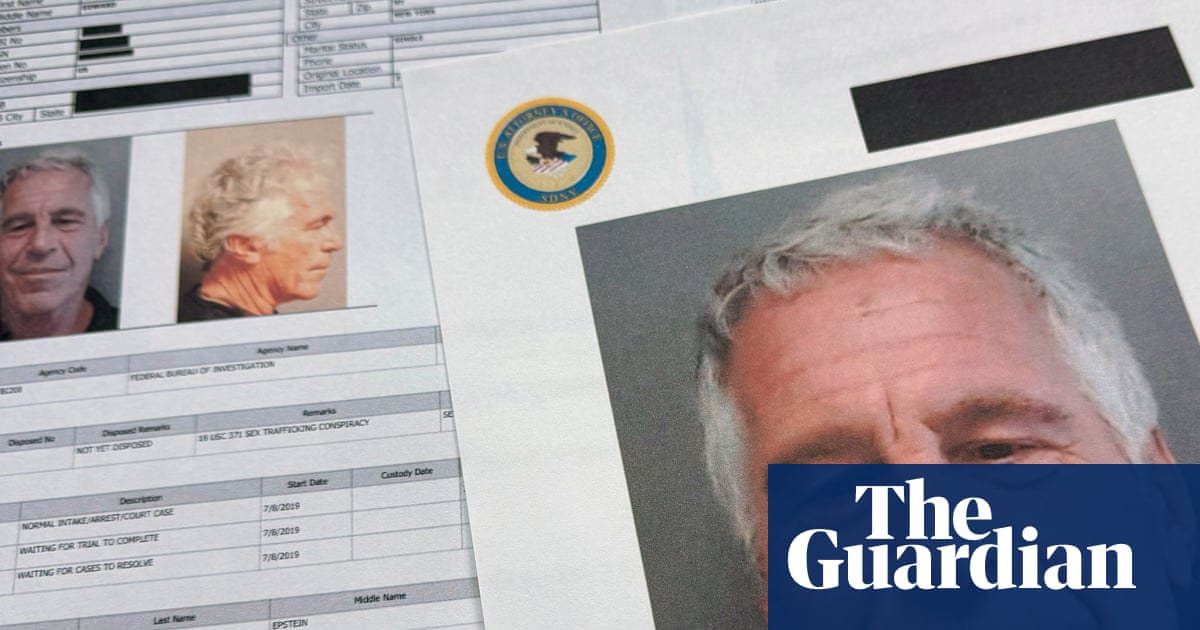
Bill Clinton’s relationship with Epstein has re-emerged as a focal point for Republicans amid the push for a reckoning over Epstein, who killed himself in 2019 in a New York jail cell as he faced sex-trafficking charges.
Clinton, like a bevy of other high-powered men, including Trump, had a well-documented social relationship with Epstein in the late 1990s and early 2000s. He has not been accused of wrongdoing in his interactions with the late financier.
On Friday, more than 3m files related to Jeffrey Epstein were released by the Department of Justice, including more than 2,000 videos and 180,000 images. The files included a series of emails between the billionaire Elon Musk and Epstein, indicating a friendlier relationship than was previously known.
Following the drop of the latest batch of files, Democrats have promised to fight what they are calling a “full-blown cover-up” of the Epstein files after the Trump administration on Sunday effectively declared its investigation into the disgraced late financier and sex trafficker was closed.
Many senior Democrats, as well as the Republican congressman Thomas Massie of Kentucky, say that millions more pages of information are being withheld by the justice department.
After Bill and Hillary Clinton were subpoenaed in August by the House oversight committee, their attorney had tried to argue against the validity of the subpoena. However, as Comer threatened to begin contempt of Congress proceedings, they started negotiating towards a compromise.
Still, the Clintons remained highly critical of Comer’s decision, saying that he was bringing politics into the investigation while failing to hold the Trump administration accountable for delays in producing the Department of Justice’s case files on Epstein.
The Associated Press contributed reporting













Comments