
 German (DE)
  English (US)
  Spanish (ES)
  French (FR)
  Hindi (IN)
  Italian (IT)
  Russian (RU)
  3 hours ago
It’s just an eighth of an acre, but for Lawrencia Rogers, the plot where she grows broccolini, lettuce and beans on land once tilled by poorhouse residents in eastern Iowa is the closest she has come to living her dream.
Iowa is one of the most agriculturally productive states in the country, but getting into farming is not easy, particularly for people like Rogers who have no family connections to the business. It’s nonetheless been a lifelong passion for the 33-year-old Iowan: at age six, she planted a rosebush that’s still alive today, and managed to grow cantaloupe on a strip of dirt and chain-link fence next to the driveway of her grandmother’s house.
A path into the career materialized in March, when Rogers began a two-year fellowship with agricultural non-profit Iowa Valley Resource Conservation and Development (RC&D), that was funded by the US Department of Agriculture (USDA).
“It was honestly like school for farmers,” Rogers recalled. She was provided a plot of land, access to equipment and advisers who could help with everything from setting up irrigation to managing crop failures. It offered her a living wage, health insurance and paid time off.
Unbeknown to Rogers, it was also the sort of program that Donald Trump was seeking to root out from the government. Two and a half weeks after she started the fellowship, the USDA cancelled the non-profit’s $2.5m grant, calling it “wasteful spending” that ran afoul of the administration’s policy against diversity, equity and inclusion (DEI) programs.
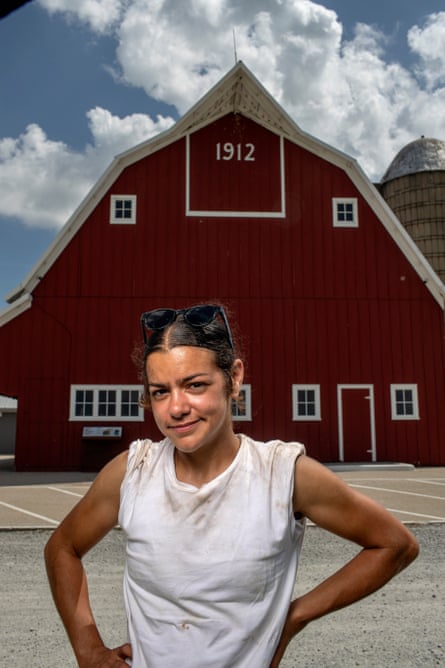
Last month, a federal judge ordered the USDA to reinstate $127m in grants previously awarded to Iowa Valley RC&D and other organizations nationwide, but the damage was done: the non-profit had put the fellowship on hold, their plans to build out the curriculum and take on more trainees set back.
“You feel like a slingshot,” said Jason Grimm, Iowa Valley RC&D’s executive director. “You’re just getting bounced back and forth.”
Trump wooed farmers in the presidential election two years ago with promises to be their champion in Washington DC, only for the side-effects from his tariff regimen and the war with Iran to rock agriculture nationwide. Small-scale producers of livestock and food say they have been uniquely affected by policy shifts at the USDA, which has laid off staff and dismantled initiatives created under Joe Biden, fueling accusations that it is prioritizing large, corporate-owned farms over their businesses.
“The continued canceled funding that we’re seeing from USDA continues to be the cherry on top for many organizations and farmers that are already up against really hard times,” said Anna Pesek, who farms poultry, pigs and flowers in eastern Iowa and serves on the board of Iowa Valley RC&D.
It’s a dynamic that could come into play in November’s midterm elections in Iowa, a Republican-dominated state where Democrats believe they may have a shot at winning its open US Senate seat and the governor’s mansion, as well as three House seats. The first congressional district situated around Iowa City in south-eastern Iowa will be at the heart of this contest, where the Republican incumbent, Mariannette Miller-Meeks – who won re-election two years ago by roughly a mere 800 votes – is for a third time facing Democratic challenger Christina Bohannan.
All signs point to farming and food looming large in the minds of voters.
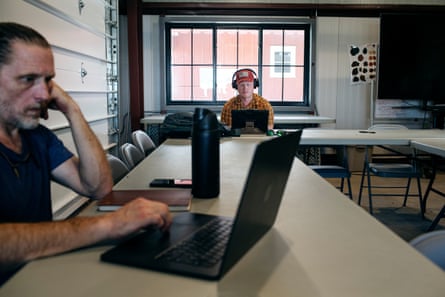
“I haven’t seen any activity in the current administration that actually is beneficial for the small producer and the small-business entities,” said James Nisly, who produces chicken, fresh vegetables and dairy products at his farm south of Iowa City. He estimated he lost 20% of his cashflow and many of his buyers when the USDA cancelled a Biden-era program that purchased locally produced food for schools and food banks.
“All of the the policy activity that I’ve seen is hugely beneficial to the very large corporations, and detrimental to the small-business operators.”
Industry turmoil
With agriculture accounting for a third of Iowa’s economic output and a fifth of its jobs, Democrats hope they can convince voters in a state that has become increasingly red during the Trump era to blame the president for the turmoil in farming.
After Trump last year levied tariffs on trading partners globally, China began buying fewer soybeans from US farmers, a decision that rocked Iowa. The state is the second-largest producer of the crop in the country, and the tariffs’ impact forced farmers to scramble to find buyers as prices fell.
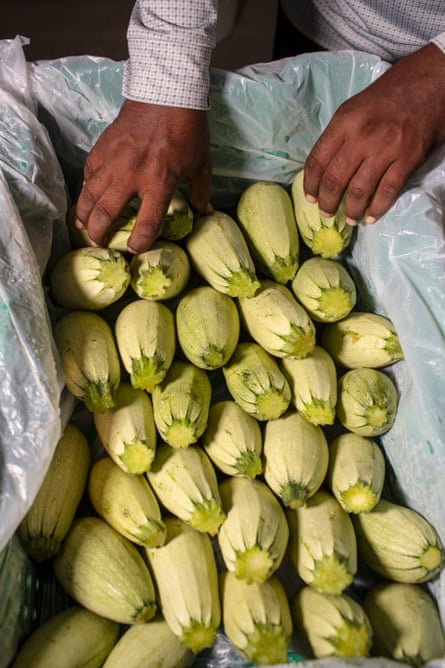
The war with Iran has driven upwards the costs for fertilizer, gasoline and especially diesel, which powers the trucks and tractors that are the backbone of the agricultural supply chain. Even before the conflict began, Iowa’s farm economy was showing indications of strain: 18 farms declared bankruptcy in 2025, a 220% increase from the year prior and one of the highest raw totals in the country, according to the American Farm Bureau Federation.
The USDA plays a major role in the health of farms nationwide, but has pulled back on funding and staffing under secretary Brooke Rollins. An analysis of government data by the National Sustainable Agriculture Coalition and public policy firm Prospect Partners found that the department lost a total of 20,000 employees nationwide since Trump returned to office, amounting to 17% of its staff in Iowa, amid the Trump administration’s campaign to shrink the federal workforce.
Last year, the department canceled a longstanding program intended to support minority farmers as well as the Local Food Purchase Assistance Cooperative Agreement Program (LFPA) and the Local Food for Schools Cooperative Agreement Program (LFS), which funded purchases of local produce by food banks and schools.
A USDA spokesperson described the LFPA as “a pandemic-era program” that was not intended to be permanent, while noting that other food-purchasing programs remain active and funded. Food farmers in Iowa say both the LFPA and LFS had become important sources of revenue.
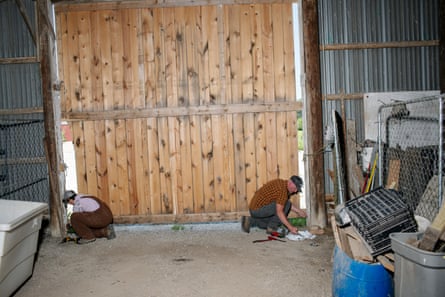
“It’s a really classic example where we have … seemingly endless amounts of money for commodity production, and seemingly endless amounts of money to hand out to the handful of corporations controlling the majority of the agricultural landscape, and then no funding when it comes to programs that actually make money,” said Pesek, who estimated the programs’ cancellations cost her farm 10% of its income and nearly all of her large buyers.
“These are programs that we see a return on investment in, because small and mid-sized businesses and new farmers put money into our communities.”
Farmers describe a department that has developed an unreliable streak under Trump. Nisly said that he was awarded a grant last year under the USDA’s Resilient Food System Infrastructure program to buy new refrigerated trucks.
“Three days after I made my first purchase on that program, they froze those funds,” he said.
The money was unfrozen weeks later and, “I was able to go through with that assistance that I received there”, Nisly said. “But that was rather nerve-racking.” A USDA spokesperson declined to comment on why the program’s funds were frozen.
When the department announced $1bn in assistance earlier this year for growers of speciality crops, Carly McAndrews, a vegetable farmer in Iowa City, went to her local USDA office to apply.
“Nobody knew how to help me, because they had just learned about it from the Trump administration, but the deadline was that Friday, so it was like a functionless program, in my experience,” she said.
In response to a request for comment, a USDA spokesperson said “the department has experienced no lapse in service to the American people” and that its employees “continue to deliver high‑quality services and programs without interruption, ensuring that our commitments to farmers, families, and rural communities remain fully met”.
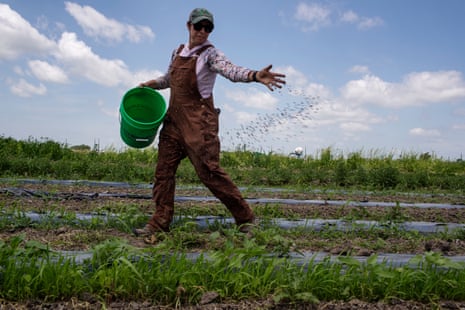
The fellowship Rogers was enrolled in was part of the Increasing Land, Capital, and Market Access Program, a $300m effort created under Biden to assist “underserved producers” – typically military veterans, or farmers with limited experience or money.
Matt Russell, who served as a top USDA official in Iowa under Biden, said that administration made priorities of expanding the base of farmers it supported and addressing the department’s own history of discrimination.
“There was an interest in building on that kind of looking at the past and seeing if there were things to do going forward that could change that dynamic,” said Russell, who is now the executive director of the Iowa Farmers Union.
“Can we get more farmers, can we get more Americans farming, can we get more diversity in Iowa, in American agriculture? And I’m talking diversity of scale, diversity of crops, diversity of where things are being grown.”
The population of Iowa’s rural areas has been declining for years – the average age of its farmers is just shy of 58, according to the USDA’s most recent agricultural census – and the focus on commodity crops means the state imports the vast majority of its food.
“Most of the participants that would be graduating from our program, they’re going to find land, or they’re going to start businesses in smaller rural areas of Iowa,” Grimm said.
He disputed the USDA’s claim that the program was a DEI initiative. “There was no requirement of a specific cultural or racial background to be able to participate in our programs,” he said.
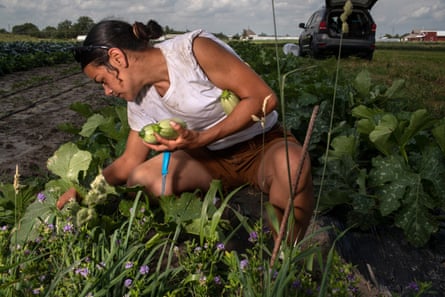
To Rogers, the news that she was being laid off because of the administration’s hostility to DEI felt like “an extra slap in the face”. Her father is Egyptian, while the second fellow hired had immigrated from Sudan. Both got the job, Rogers said, because they were the best qualified.
“It’s not that nobody else wanted these positions, because there were other applicants,” she said. “People are not begging to be farmers in the grand scheme of things, but we are.”
A USDA spokesperson declined to comment on the land access program, citing pending litigation.
Rogers has access to her plot until December, albeit without the instruction she believes would have helped her make the most of it.
“I have never had a decision on such a level impact my life literally overnight in such a drastic way,” she said. “So, if that wasn’t a rude awakening to pay more attention and, I don’t know, maybe be more vocal or take more action, I don’t know what could be.”












Comments