
 German (DE)
  English (US)
  Spanish (ES)
  French (FR)
  Hindi (IN)
  Italian (IT)
  Russian (RU)
 President Donald Trump didn’t hide it.
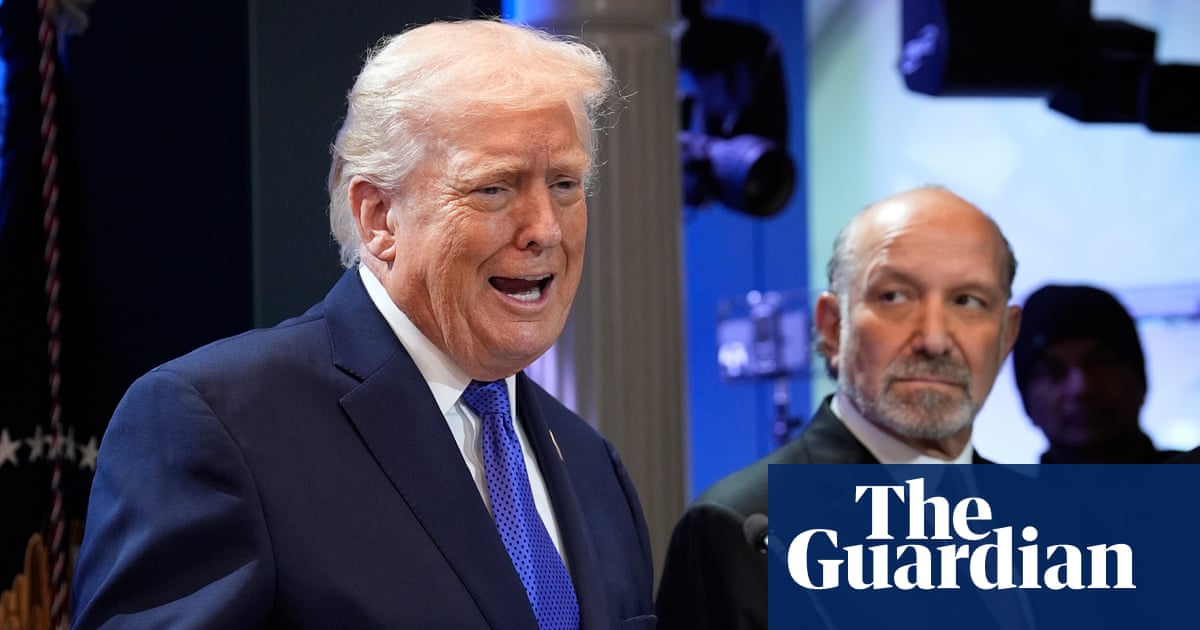
It’s a “disgrace,” he said during a breakfast with governors, looking at a note that told him his administration had just suffered a humiliating rebuke at the hands of a conservative Supreme Court, according to a governor who was in the room, granted anonymity to share details of the meeting.
Trump cut his remarks short and walked out of the room with his favorite presidential power and, by extension, his agenda, on a knife’s edge — four days ahead of the most important speech of the year.
The president’s primetime address to Congress on Tuesday was supposed to set the stage for a tough but disciplined midterm campaign focused on the administration’s efforts to lower costs for everyday Americans and tout his first-year accomplishments. Instead, he heads to the Hill amid a torrent of negative news.
Economic growth is flagging. U.S. military assets are massing in the waters around Iran in anticipation of a potential strike that many in the president’s base find odious. A major government agency is shut down over an immigration standoff with Democrats sparked after federal agents killed two U.S. citizens. “Make America Healthy Again” activists are furious over Trump’s order boosting domestic production of the herbicide glyphosate. The scandal surrounding Jeffrey Epstein, the late convicted sex offender, continues to swirl.
And now, the nation’s highest court has dealt the president what some allies see as the most humiliating and devastating blow of his second term. Six justices, including two Trump appointees, said Friday that the president does not have the ability to unilaterally impose tariffs on trading partners in the event of an international economic emergency, a power that the court made clear resides with Congress.
“This is the signature economic policy, we’re four days away from the State of the Union, and he has just been rejected by the court in a pretty serious public way,” said Allison Smith, a lobbyist and former trade official in the Biden administration.
The tariff decision comes as Trump’s approval rating hovers near its second-term low, and eight months ahead of an election in which Republicans are trying to hold on to their thin majority in the House.
Even as the president is expected to celebrate a slew of positive economic data during Tuesday’s address, his administration will be forced to contend with slower than expected GDP growth and the loss of the president’s favorite economic and national security tool.
A frustrated Trump on Friday fumed to reporters about the Supreme Court’s rebuke, suggesting that some of the justices were influenced by an unnamed cabal of “foreign interests” that had bullied them into a “deeply disappointing” and "ridiculous" decision.
“I would not want to be in the Oval Office right now,” said one person close to the White House, who like others in this story was granted anonymity to speak candidly, minutes after the decision came down.
A second person close to the White House, a former Trump official, described it as a “stunning defeat.”
“Obama had a stunning rebuke. Roosevelt had a stunning rebuke,” the person said. “Presidential powers have their limits.”
The blow to Trump’s tariff agenda comes as he is also struggling to retain the upper hand on his other major domestic priority — deportations. Democrats have refused to fund the Department of Homeland Security unless the White House agrees to reform how federal immigration officers operate, and polling shows a growing backlash to some of the heavy-handed tactics that immigration officers have employed.
The Trump administration was forced to shift gears in January, sending White House border czar Tom Homan to Minnesota to de-escalate tensions with local authorities, in what was widely seen as a retreat for the administration.
Trump, meanwhile, is sending aircraft carriers, fighter jets and surveillance planes to the Middle East in preparation for possible military action in Iran.
Elements of his base traditionally skeptical of military intervention have largely tolerated the targeted actions he has taken during his second term — including the arrest of Venezuelan dictator Nicolás Maduro and a strike on Iranian nuclear facilities. A more extensive operation in Iran risks alienating them.
An overseas operation would also distract from the White House’s efforts to sell its affordability initiatives to Americans, who do not want to see the U.S. embroiled in conflict abroad.
“You don’t want to go into a State of the Union with a foreign policy issue hanging over your head,” a third person close to the White House said.
Meanwhile, the Supreme Court ruling has blunted Trump’s preferred geopolitical tool. Trump has lobbed tariff threats at a wide range of trading partners as he sought the upper hand in international relations — ranging from his attempts to isolate leadership in Cuba and Iran to his brazen attempt to acquire Greenland.
The court’s decision undercuts that ability to wield tariffs in the heat of the moment, typically as a way to extract concessions from countries on unrelated issues.
"The hardest part of this ruling for him is going to be the way in which it has taken away his magic tariff Sharpie,” said Peter Harrell, a former Biden official. “He can't just threaten tariffs on a whim."
But as Trump has traveled the country to celebrate his successes — and to convince voters that they should elect Republicans — he’s battling with an American populace that firmly believes the economy isn’t working in their favor.
He has talked about how his tariffs have helped end wars and loaded up the country’s coffers. He’s floated plans to use tariffs to provide direct payments to veterans, farmers and small businesses — and even issue a tariff rebate — none of which have come to fruition.
Yet Trump remains unbowed. On Friday, he pledged to reimplement his tariffs, warning that they could end up even higher than before.
“The president has multiple tools in his toolbox,” Treasury Secretary Scott Bessent said at the Dallas Economic Club Friday afternoon, adding that other tariff authorities “will result in virtually unchanged tariff revenue in 2026.”
Elena Schneider contributed to this report.














Comments